
UK Welfare Reform Bill Passes Amid Controversy and Concessions
In This Article
HIGHLIGHTS
- The UK government's welfare reform bill passed by 75 votes, with last-minute concessions to appease Labour rebels.
- The bill ends mandatory reassessments for those with severe disabilities but maintains cuts to universal credit for new claimants.
- Personal Independence Payment (Pip) changes are delayed until a review in autumn 2026, sparking skepticism among disabled individuals.
- Activists and affected individuals express concerns over the government's commitment to genuinely considering disabled people's input.
- The welfare reform has left many, like Elspeth Edwards and Tim Boxall, in a state of uncertainty and anxiety about their financial futures.
The UK government's welfare reform bill has passed in the House of Commons by a margin of 75 votes, following a series of last-minute concessions aimed at quelling dissent among Labour MPs. The bill, which has been a source of anxiety for many reliant on disability benefits, introduces significant changes to the welfare system, including the end of mandatory reassessments for individuals with severe disabilities.
Impact on Disability Benefits
The welfare reform bill has sparked a wave of concern among those dependent on disability benefits. Elspeth Edwards, a 21-year-old from Worcestershire, described her experience as living in an "anxious void," uncertain about her future due to potential changes in her welfare support. Edwards, who suffers from severe fatigue and pain, relies on £600 per month in welfare and has been unable to plan for her education or future due to financial instability.
Personal Independence Payment Review
The bill's passage has delayed changes to the Personal Independence Payment (Pip) until a comprehensive review is completed in autumn 2026. This delay has been met with skepticism by many, including Sarah Finnegan, who fears that the government's promises to consider disabled people's input may not be genuine. Finnegan, who is housebound with severe ME, relies on Pip to support her daily needs and care for her young daughter.
Activists' Reactions and Concerns
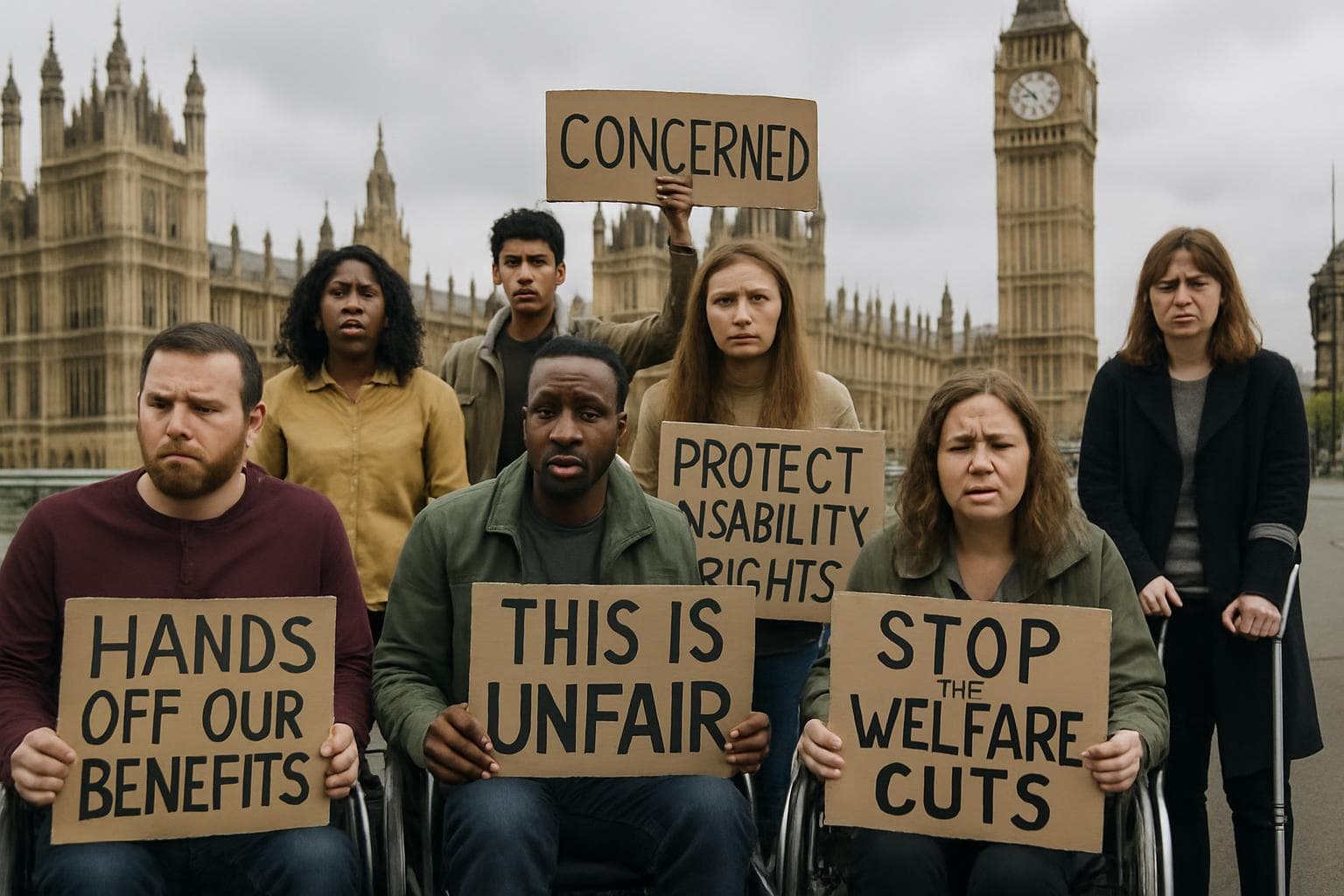
Activists and individuals affected by the bill have voiced their disappointment and distrust in the government's approach. Tim Boxall, who attended a protest outside Westminster despite his multiple sclerosis, criticized the government's "smoke and mirrors" tactics. Ellen Clifford from Disabled People Against Cuts echoed these sentiments, questioning the sincerity of the government's commitment to co-producing the Pip review.
Universal Credit Changes
Despite the concessions, the bill maintains significant cuts to universal credit for new claimants, a point of contention for many. Charlotte Hughes, who is unable to work due to health issues, expressed concern over the government's focus on cost-cutting, fearing it may undermine the needs of disabled individuals.
WHAT THIS MIGHT MEAN
The passage of the welfare reform bill marks a critical juncture in the UK's approach to disability benefits. As the government prepares for the Pip review in 2026, the involvement and input of disabled individuals will be crucial in shaping future policies. However, skepticism remains high, with many questioning the government's commitment to genuinely considering their voices.
Politically, the bill's passage may have implications for the government's relationship with disabled communities and advocacy groups. The ongoing debate over welfare cuts and disability rights is likely to continue, potentially influencing future legislative efforts and public opinion.
As the review process unfolds, experts suggest that the government must prioritize transparency and inclusivity to rebuild trust and ensure that the welfare system adequately supports those in need.
Images from the Web

Related Articles

Diplomatic Tensions Rise as Trump Criticizes Starmer's Iran Policy

Prince Andrew's Ties to Epstein Under Scrutiny Amid Calls for Inquiry

Government Criticized for Mishandling Maccabi Tel Aviv Fan Ban

Prince Andrew's Arrest Intensifies Scrutiny on Royal Succession and Prince William's Future Role

UK Government's SEND Reforms: A Critical Turning Point for Special Education

UK Government Considers Removing Andrew Mountbatten-Windsor from Royal Succession Amid Arrest
UK Welfare Reform Bill Passes Amid Controversy and Concessions
In This Article
 Ethan Brooks| Published
 HIGHLIGHTS
- The UK government's welfare reform bill passed by 75 votes, with last-minute concessions to appease Labour rebels.
- The bill ends mandatory reassessments for those with severe disabilities but maintains cuts to universal credit for new claimants.
- Personal Independence Payment (Pip) changes are delayed until a review in autumn 2026, sparking skepticism among disabled individuals.
- Activists and affected individuals express concerns over the government's commitment to genuinely considering disabled people's input.
- The welfare reform has left many, like Elspeth Edwards and Tim Boxall, in a state of uncertainty and anxiety about their financial futures.
The UK government's welfare reform bill has passed in the House of Commons by a margin of 75 votes, following a series of last-minute concessions aimed at quelling dissent among Labour MPs. The bill, which has been a source of anxiety for many reliant on disability benefits, introduces significant changes to the welfare system, including the end of mandatory reassessments for individuals with severe disabilities.
Impact on Disability Benefits
The welfare reform bill has sparked a wave of concern among those dependent on disability benefits. Elspeth Edwards, a 21-year-old from Worcestershire, described her experience as living in an "anxious void," uncertain about her future due to potential changes in her welfare support. Edwards, who suffers from severe fatigue and pain, relies on £600 per month in welfare and has been unable to plan for her education or future due to financial instability.
Personal Independence Payment Review
The bill's passage has delayed changes to the Personal Independence Payment (Pip) until a comprehensive review is completed in autumn 2026. This delay has been met with skepticism by many, including Sarah Finnegan, who fears that the government's promises to consider disabled people's input may not be genuine. Finnegan, who is housebound with severe ME, relies on Pip to support her daily needs and care for her young daughter.
Activists' Reactions and Concerns
Activists and individuals affected by the bill have voiced their disappointment and distrust in the government's approach. Tim Boxall, who attended a protest outside Westminster despite his multiple sclerosis, criticized the government's "smoke and mirrors" tactics. Ellen Clifford from Disabled People Against Cuts echoed these sentiments, questioning the sincerity of the government's commitment to co-producing the Pip review.
Universal Credit Changes
Despite the concessions, the bill maintains significant cuts to universal credit for new claimants, a point of contention for many. Charlotte Hughes, who is unable to work due to health issues, expressed concern over the government's focus on cost-cutting, fearing it may undermine the needs of disabled individuals.
WHAT THIS MIGHT MEAN
The passage of the welfare reform bill marks a critical juncture in the UK's approach to disability benefits. As the government prepares for the Pip review in 2026, the involvement and input of disabled individuals will be crucial in shaping future policies. However, skepticism remains high, with many questioning the government's commitment to genuinely considering their voices.
Politically, the bill's passage may have implications for the government's relationship with disabled communities and advocacy groups. The ongoing debate over welfare cuts and disability rights is likely to continue, potentially influencing future legislative efforts and public opinion.
As the review process unfolds, experts suggest that the government must prioritize transparency and inclusivity to rebuild trust and ensure that the welfare system adequately supports those in need.
Images from the Web
Related Articles
Diplomatic Tensions Rise as Trump Criticizes Starmer's Iran Policy
Prince Andrew's Ties to Epstein Under Scrutiny Amid Calls for Inquiry
Government Criticized for Mishandling Maccabi Tel Aviv Fan Ban
Prince Andrew's Arrest Intensifies Scrutiny on Royal Succession and Prince William's Future Role
UK Government's SEND Reforms: A Critical Turning Point for Special Education
UK Government Considers Removing Andrew Mountbatten-Windsor from Royal Succession Amid Arrest