
UK Welfare Reform Bill Passes Amidst Controversy and Concessions
In This Article
HIGHLIGHTS
- The UK government passed a controversial welfare reform bill with a reduced majority of 75, despite cross-party opposition.
- Labour's concessions on the welfare bill have left a £4.8bn gap in spending plans, raising speculation about potential tax increases.
- Disabled individuals, like Joanne Sansome, express concern over the impact of the new welfare policies on their benefits.
- The bill's passage has sparked a debate on the balance of power between the government and disabled citizens.
- Northern Ireland's ability to mitigate the impact of the reforms is limited due to resource constraints.
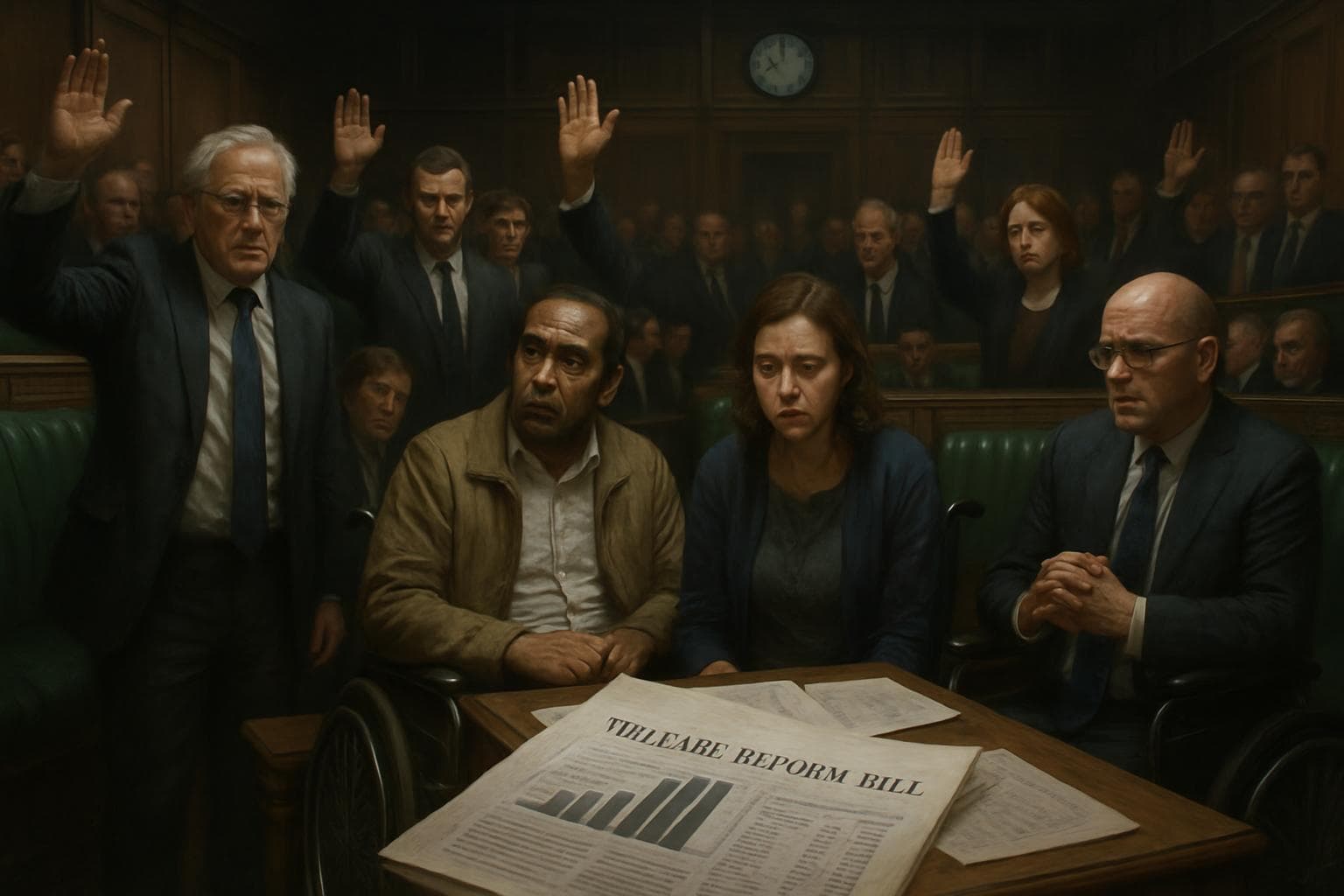
The UK government's contentious welfare reform bill has passed in Parliament, albeit with a significantly reduced majority of 75 votes. Despite facing substantial opposition from various political parties, including Labour and several Northern Ireland MPs, the bill was approved by 335 votes to 260. The reforms have sparked widespread concern among disabled individuals and advocacy groups, who fear the changes could adversely affect their benefits.
Concerns from the Disabled Community
Joanne Sansome, a Belfast resident with cerebral palsy, has voiced her anxiety over the proposed changes. Sansome, who relies on health and disability benefits, described Labour's plans as a "smokescreen" and expressed distrust in the government's handling of the issue. "The government is failing us on so many levels," she told BBC News NI, highlighting the potential reassessment of benefits under new criteria. Her sentiments are echoed by Andrew Hamilton from Bangor, who labeled the bill a "clear attack on disabled people."
Political Dynamics and Concessions
The passage of the bill has not been without its political ramifications. Labour's concessions to backbench rebels have left a £4.8bn gap in the party's spending plans, leading to speculation about possible tax increases. Pat McFadden, a cabinet minister, has declined to rule out such measures, citing "financial consequences" of the concessions. Rachael Maskell, a leading backbench rebel, noted a shift in power dynamics, suggesting that disabled people now have a stronger voice in Parliament.
Impact on Northern Ireland
The welfare system in Northern Ireland, although devolved, largely mirrors that of England and Wales. Communities Minister Gordon Lyons has stated that the Northern Ireland Executive lacks the resources to counteract Labour's plans. This limitation raises concerns about the region's ability to support its disabled population amidst the impending changes.
WHAT THIS MIGHT MEAN
The passage of the welfare reform bill sets the stage for potential political and economic shifts in the UK. As Labour grapples with the financial implications of its concessions, the possibility of tax increases looms, potentially impacting public sentiment and the party's future electoral prospects. Meanwhile, the disabled community's growing influence in parliamentary debates may lead to more inclusive policy discussions. In Northern Ireland, the lack of resources to mitigate the reforms could exacerbate existing challenges, prompting calls for increased support from the UK government. As the situation evolves, the balance between fiscal responsibility and social welfare remains a critical point of contention.
Images from the Web

Related Articles

Sisters Tragically Drown at Eryri National Park's Watkin Path

Labour MP's Husband Arrested in UK-China Espionage Probe

Saharan Dust to Illuminate UK Skies with Vivid Sunrises and Sunsets

Government Announces £4 Billion Overhaul of SEND Support in England

Tragedy Strikes County Armagh: Three Dead in Multi-Vehicle Collision

Prince Andrew's Ties to Epstein Under Scrutiny Amid Calls for Inquiry
UK Welfare Reform Bill Passes Amidst Controversy and Concessions
In This Article
 Ethan Brooks| Published
 HIGHLIGHTS
- The UK government passed a controversial welfare reform bill with a reduced majority of 75, despite cross-party opposition.
- Labour's concessions on the welfare bill have left a £4.8bn gap in spending plans, raising speculation about potential tax increases.
- Disabled individuals, like Joanne Sansome, express concern over the impact of the new welfare policies on their benefits.
- The bill's passage has sparked a debate on the balance of power between the government and disabled citizens.
- Northern Ireland's ability to mitigate the impact of the reforms is limited due to resource constraints.
The UK government's contentious welfare reform bill has passed in Parliament, albeit with a significantly reduced majority of 75 votes. Despite facing substantial opposition from various political parties, including Labour and several Northern Ireland MPs, the bill was approved by 335 votes to 260. The reforms have sparked widespread concern among disabled individuals and advocacy groups, who fear the changes could adversely affect their benefits.
Concerns from the Disabled Community
Joanne Sansome, a Belfast resident with cerebral palsy, has voiced her anxiety over the proposed changes. Sansome, who relies on health and disability benefits, described Labour's plans as a "smokescreen" and expressed distrust in the government's handling of the issue. "The government is failing us on so many levels," she told BBC News NI, highlighting the potential reassessment of benefits under new criteria. Her sentiments are echoed by Andrew Hamilton from Bangor, who labeled the bill a "clear attack on disabled people."
Political Dynamics and Concessions
The passage of the bill has not been without its political ramifications. Labour's concessions to backbench rebels have left a £4.8bn gap in the party's spending plans, leading to speculation about possible tax increases. Pat McFadden, a cabinet minister, has declined to rule out such measures, citing "financial consequences" of the concessions. Rachael Maskell, a leading backbench rebel, noted a shift in power dynamics, suggesting that disabled people now have a stronger voice in Parliament.
Impact on Northern Ireland
The welfare system in Northern Ireland, although devolved, largely mirrors that of England and Wales. Communities Minister Gordon Lyons has stated that the Northern Ireland Executive lacks the resources to counteract Labour's plans. This limitation raises concerns about the region's ability to support its disabled population amidst the impending changes.
WHAT THIS MIGHT MEAN
The passage of the welfare reform bill sets the stage for potential political and economic shifts in the UK. As Labour grapples with the financial implications of its concessions, the possibility of tax increases looms, potentially impacting public sentiment and the party's future electoral prospects. Meanwhile, the disabled community's growing influence in parliamentary debates may lead to more inclusive policy discussions. In Northern Ireland, the lack of resources to mitigate the reforms could exacerbate existing challenges, prompting calls for increased support from the UK government. As the situation evolves, the balance between fiscal responsibility and social welfare remains a critical point of contention.
Images from the Web
Related Articles
Sisters Tragically Drown at Eryri National Park's Watkin Path
Labour MP's Husband Arrested in UK-China Espionage Probe
Saharan Dust to Illuminate UK Skies with Vivid Sunrises and Sunsets
Government Announces £4 Billion Overhaul of SEND Support in England
Tragedy Strikes County Armagh: Three Dead in Multi-Vehicle Collision
Prince Andrew's Ties to Epstein Under Scrutiny Amid Calls for Inquiry