
UK Faces Economic Inactivity Crisis as Health-Related Worklessness Costs Employers £85bn Annually
In This Article
HIGHLIGHTS
- The UK faces an "economic inactivity crisis" with 800,000 more people out of work due to health issues since 2019, costing employers £85bn annually.
- Sir Charlie Mayfield's report suggests a £6bn annual investment by employers in workplace support to address health-related worklessness.
- One in five working-age adults are economically inactive, with long-term sickness being a primary reason for nearly 3 million individuals.
- The report emphasizes a shift towards shared responsibility for health between employers, employees, and health services.
- The government plans to implement Mayfield's recommendations with over 60 major employers participating in a pilot program.
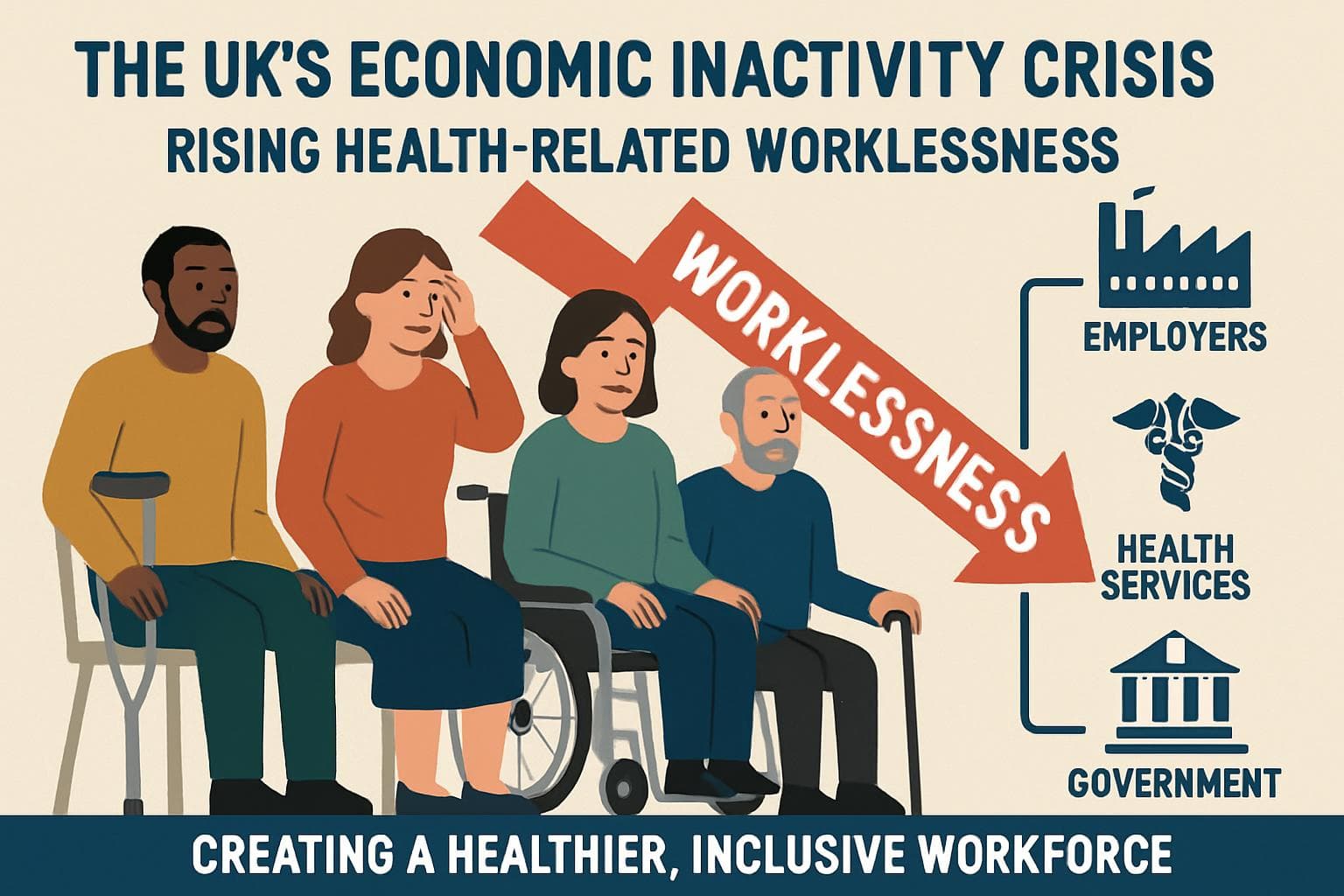
The United Kingdom is grappling with a burgeoning economic inactivity crisis, as highlighted in a recent report by Sir Charlie Mayfield, former John Lewis boss. The report reveals that 800,000 more individuals are out of work due to health conditions compared to 2019, imposing an £85bn annual burden on employers. This situation threatens the nation's economic prosperity, with one in five working-age adults currently classified as economically inactive.
Rising Health-Related Worklessness
The report, commissioned by the Department for Work and Pensions, underscores the urgent need for intervention to prevent an additional 600,000 people from leaving the workforce due to health issues by the decade's end. Sir Charlie Mayfield, who leads the government’s Keep Britain Working review, advocates for a £6bn annual investment by employers in occupational health and workplace support. "We need to fix this," Mayfield told The Guardian, emphasizing the necessity of a fundamental reset in how health is managed in the workplace.
Shared Responsibility for Health
A key recommendation from the report is the establishment of a shared responsibility model for health between employers, employees, and health services. This approach aims to reduce sickness absence, improve return-to-work rates, and enhance the disability employment rate. "Work is generally good for health and health is good for work," Mayfield stated, highlighting the mutual benefits of this partnership.
Government and Business Response
In response to the report, the government has announced a major partnership involving over 60 employers, including British Airways, Nando’s, and Tesco, to pilot Mayfield's recommendations. The initiative aims to address the unsustainable costs of economic inactivity due to ill-health, which currently impacts the exchequer, businesses, and individuals alike.
Personal Stories Highlight Challenges
The report also sheds light on personal stories, such as that of Loz Sandom, a 28-year-old with mental and physical health conditions, who has struggled to find employment. Sandom's experience underscores the need for employers to provide reasonable adjustments and support for disabled individuals. "It's such a shame because they're missing out on so many fantastic disabled people that can do fabulous jobs," Sandom remarked.
WHAT THIS MIGHT MEAN
The implementation of Sir Charlie Mayfield's recommendations could significantly alter the landscape of workplace health management in the UK. If successful, the pilot program involving major employers could serve as a model for broader adoption, potentially reducing the economic burden of health-related worklessness. However, the success of this initiative hinges on the willingness of businesses to invest in occupational health and the effectiveness of the proposed shared responsibility model. As the government and businesses collaborate on this front, the potential for improved return-to-work rates and a higher disability employment rate could lead to a more inclusive and resilient workforce.
Related Articles

Breakthrough Drug Offers Hope for Children with Severe Epilepsy
UK Authorities Warn Against Dangerous Illegal Skin Lightening Products

UK Government to Reform Asylum Seeker Support and Employment Policies
Trump Raises Import Tariffs to 15% After Supreme Court Setback

Arrest of Andrew Mountbatten-Windsor Captured in Iconic Photograph

UK Denies US Use of Military Bases for Potential Iran Strikes Amid Chagos Islands Dispute
UK Faces Economic Inactivity Crisis as Health-Related Worklessness Costs Employers £85bn Annually
In This Article
 Maya Singh| Published
 HIGHLIGHTS
- The UK faces an "economic inactivity crisis" with 800,000 more people out of work due to health issues since 2019, costing employers £85bn annually.
- Sir Charlie Mayfield's report suggests a £6bn annual investment by employers in workplace support to address health-related worklessness.
- One in five working-age adults are economically inactive, with long-term sickness being a primary reason for nearly 3 million individuals.
- The report emphasizes a shift towards shared responsibility for health between employers, employees, and health services.
- The government plans to implement Mayfield's recommendations with over 60 major employers participating in a pilot program.
The United Kingdom is grappling with a burgeoning economic inactivity crisis, as highlighted in a recent report by Sir Charlie Mayfield, former John Lewis boss. The report reveals that 800,000 more individuals are out of work due to health conditions compared to 2019, imposing an £85bn annual burden on employers. This situation threatens the nation's economic prosperity, with one in five working-age adults currently classified as economically inactive.
Rising Health-Related Worklessness
The report, commissioned by the Department for Work and Pensions, underscores the urgent need for intervention to prevent an additional 600,000 people from leaving the workforce due to health issues by the decade's end. Sir Charlie Mayfield, who leads the government’s Keep Britain Working review, advocates for a £6bn annual investment by employers in occupational health and workplace support. "We need to fix this," Mayfield told The Guardian, emphasizing the necessity of a fundamental reset in how health is managed in the workplace.
Shared Responsibility for Health
A key recommendation from the report is the establishment of a shared responsibility model for health between employers, employees, and health services. This approach aims to reduce sickness absence, improve return-to-work rates, and enhance the disability employment rate. "Work is generally good for health and health is good for work," Mayfield stated, highlighting the mutual benefits of this partnership.
Government and Business Response
In response to the report, the government has announced a major partnership involving over 60 employers, including British Airways, Nando’s, and Tesco, to pilot Mayfield's recommendations. The initiative aims to address the unsustainable costs of economic inactivity due to ill-health, which currently impacts the exchequer, businesses, and individuals alike.
Personal Stories Highlight Challenges
The report also sheds light on personal stories, such as that of Loz Sandom, a 28-year-old with mental and physical health conditions, who has struggled to find employment. Sandom's experience underscores the need for employers to provide reasonable adjustments and support for disabled individuals. "It's such a shame because they're missing out on so many fantastic disabled people that can do fabulous jobs," Sandom remarked.
WHAT THIS MIGHT MEAN
The implementation of Sir Charlie Mayfield's recommendations could significantly alter the landscape of workplace health management in the UK. If successful, the pilot program involving major employers could serve as a model for broader adoption, potentially reducing the economic burden of health-related worklessness. However, the success of this initiative hinges on the willingness of businesses to invest in occupational health and the effectiveness of the proposed shared responsibility model. As the government and businesses collaborate on this front, the potential for improved return-to-work rates and a higher disability employment rate could lead to a more inclusive and resilient workforce.
Related Articles
Breakthrough Drug Offers Hope for Children with Severe Epilepsy
UK Authorities Warn Against Dangerous Illegal Skin Lightening Products
UK Government to Reform Asylum Seeker Support and Employment Policies
Trump Raises Import Tariffs to 15% After Supreme Court Setback
Arrest of Andrew Mountbatten-Windsor Captured in Iconic Photograph
UK Denies US Use of Military Bases for Potential Iran Strikes Amid Chagos Islands Dispute