
UK's Nuclear Deterrent Expansion Sparks Protests and Debate
In This Article
HIGHLIGHTS
- The UK government plans to purchase 12 US-made F-35A fighter jets capable of carrying nuclear weapons, marking a significant expansion of its nuclear deterrent.
- The decision has sparked criticism from anti-nuclear groups, who plan mass protests, citing concerns over safety and lack of public consultation.
- The F-35A jets will join Nato's airborne nuclear mission, with the US retaining control over the release of nuclear weapons.
- The acquisition is expected to support 20,000 jobs and over 100 companies in the UK, according to Defence Secretary John Healey.
- The Campaign for Nuclear Disarmament warns that the move places the UK on the "nuclear frontline" and undermines democracy.
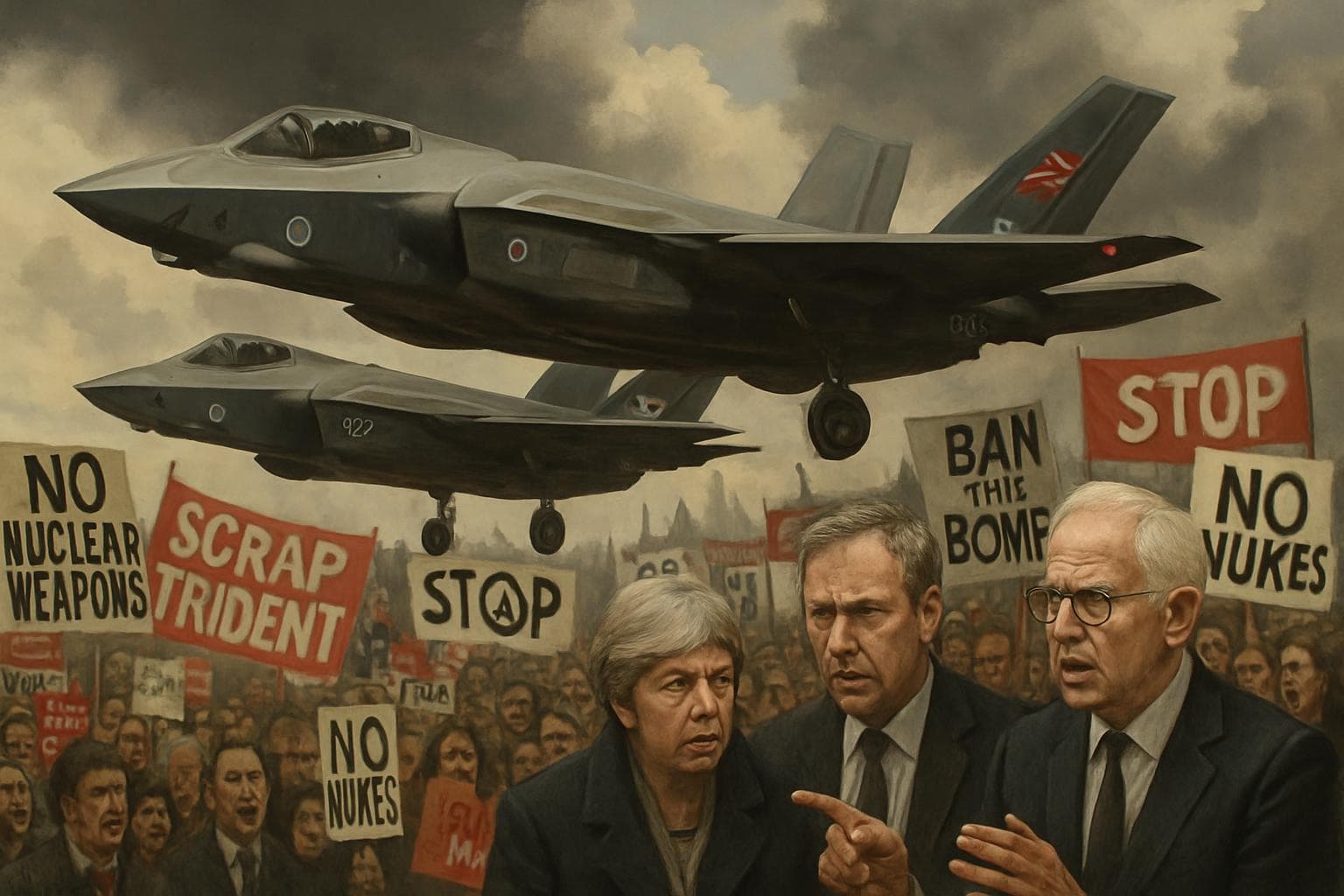
The UK government has announced plans to bolster its nuclear deterrent by acquiring 12 F-35A fighter jets from the United States, a move that has ignited both political and public debate. Prime Minister Sir Keir Starmer revealed the decision at a Nato summit in The Hague, emphasizing the need to respond to growing global nuclear threats. These advanced jets, capable of carrying both conventional and nuclear weapons, will join Nato's airborne nuclear mission, a strategic initiative involving allied aircraft equipped with American B61 bombs.
Strategic Strengthening and Economic Impact
The acquisition of the F-35A jets is described by Downing Street as the most significant enhancement of the UK's nuclear posture in a generation. Defence Secretary John Healey highlighted the economic benefits, noting that the program will support 20,000 jobs and involve over 100 companies across the UK. The jets will be stationed at RAF Marham in Norfolk, further solidifying the UK's commitment to Nato's collective deterrent strategy.
Public Outcry and Planned Protests
Despite the government's assurances, the decision has been met with strong opposition from anti-nuclear and anti-arms groups. The Campaign for Nuclear Disarmament (CND) is organizing mass protests, reminiscent of the Greenham Common peace camp of the 1980s. Sophie Bolt, CND's general secretary, criticized the lack of parliamentary debate and warned that the move places the UK on the "nuclear frontline," potentially compromising public safety.
Governance and Control Concerns
The deployment of these jets raises questions about governance and control, as the US will retain authority over the release of nuclear weapons. This arrangement has sparked debate in Parliament, with concerns about the UK's reliance on US approval for nuclear deployment. Border Security Minister Dame Angela Eagle assured that any participation in Nato's nuclear mission would require agreement from all 31 allies, maintaining a collective decision-making process.
WHAT THIS MIGHT MEAN
The UK's decision to expand its nuclear capabilities with the purchase of F-35A jets could lead to significant geopolitical and domestic implications. On the international stage, this move may strengthen the UK's position within Nato, reinforcing its commitment to collective security. However, reliance on US control over nuclear weapons could raise sovereignty concerns and fuel further debate.
Domestically, the planned protests by anti-nuclear groups could gain momentum, potentially leading to widespread public demonstrations. The government's handling of these protests and its ability to address public concerns about safety and democratic processes will be crucial in shaping public opinion.
As the UK navigates this complex landscape, the balance between national security and public sentiment will be pivotal in determining the long-term impact of this strategic decision.
Related Articles

UK Faces Dilemmas Amid Iran Conflict and China Spying Allegations

Diplomatic Tensions Rise as Trump Criticizes Starmer's Iran Policy

Tragic Loss on Yr Wyddfa: Two Young Hikers Found Dead

Prince Andrew's Ties to Epstein Under Scrutiny Amid Calls for Inquiry

Iran Postpones Khamenei Funeral Amid Escalating US-Israeli Strikes

Government Announces £4 Billion Overhaul of SEND Support in England
UK's Nuclear Deterrent Expansion Sparks Protests and Debate
In This Article
 Ethan Brooks| Published
 HIGHLIGHTS
- The UK government plans to purchase 12 US-made F-35A fighter jets capable of carrying nuclear weapons, marking a significant expansion of its nuclear deterrent.
- The decision has sparked criticism from anti-nuclear groups, who plan mass protests, citing concerns over safety and lack of public consultation.
- The F-35A jets will join Nato's airborne nuclear mission, with the US retaining control over the release of nuclear weapons.
- The acquisition is expected to support 20,000 jobs and over 100 companies in the UK, according to Defence Secretary John Healey.
- The Campaign for Nuclear Disarmament warns that the move places the UK on the "nuclear frontline" and undermines democracy.
The UK government has announced plans to bolster its nuclear deterrent by acquiring 12 F-35A fighter jets from the United States, a move that has ignited both political and public debate. Prime Minister Sir Keir Starmer revealed the decision at a Nato summit in The Hague, emphasizing the need to respond to growing global nuclear threats. These advanced jets, capable of carrying both conventional and nuclear weapons, will join Nato's airborne nuclear mission, a strategic initiative involving allied aircraft equipped with American B61 bombs.
Strategic Strengthening and Economic Impact
The acquisition of the F-35A jets is described by Downing Street as the most significant enhancement of the UK's nuclear posture in a generation. Defence Secretary John Healey highlighted the economic benefits, noting that the program will support 20,000 jobs and involve over 100 companies across the UK. The jets will be stationed at RAF Marham in Norfolk, further solidifying the UK's commitment to Nato's collective deterrent strategy.
Public Outcry and Planned Protests
Despite the government's assurances, the decision has been met with strong opposition from anti-nuclear and anti-arms groups. The Campaign for Nuclear Disarmament (CND) is organizing mass protests, reminiscent of the Greenham Common peace camp of the 1980s. Sophie Bolt, CND's general secretary, criticized the lack of parliamentary debate and warned that the move places the UK on the "nuclear frontline," potentially compromising public safety.
Governance and Control Concerns
The deployment of these jets raises questions about governance and control, as the US will retain authority over the release of nuclear weapons. This arrangement has sparked debate in Parliament, with concerns about the UK's reliance on US approval for nuclear deployment. Border Security Minister Dame Angela Eagle assured that any participation in Nato's nuclear mission would require agreement from all 31 allies, maintaining a collective decision-making process.
WHAT THIS MIGHT MEAN
The UK's decision to expand its nuclear capabilities with the purchase of F-35A jets could lead to significant geopolitical and domestic implications. On the international stage, this move may strengthen the UK's position within Nato, reinforcing its commitment to collective security. However, reliance on US control over nuclear weapons could raise sovereignty concerns and fuel further debate.
Domestically, the planned protests by anti-nuclear groups could gain momentum, potentially leading to widespread public demonstrations. The government's handling of these protests and its ability to address public concerns about safety and democratic processes will be crucial in shaping public opinion.
As the UK navigates this complex landscape, the balance between national security and public sentiment will be pivotal in determining the long-term impact of this strategic decision.
Related Articles
UK Faces Dilemmas Amid Iran Conflict and China Spying Allegations
Diplomatic Tensions Rise as Trump Criticizes Starmer's Iran Policy
Tragic Loss on Yr Wyddfa: Two Young Hikers Found Dead
Prince Andrew's Ties to Epstein Under Scrutiny Amid Calls for Inquiry
Iran Postpones Khamenei Funeral Amid Escalating US-Israeli Strikes
Government Announces £4 Billion Overhaul of SEND Support in England