
UK Faces Housing Dilemma for Asylum Seekers Amid Legal and Public Challenges
In This Article
HIGHLIGHTS
- The High Court granted Epping Forest District Council an injunction to stop asylum seekers from being housed at The Bell Hotel.
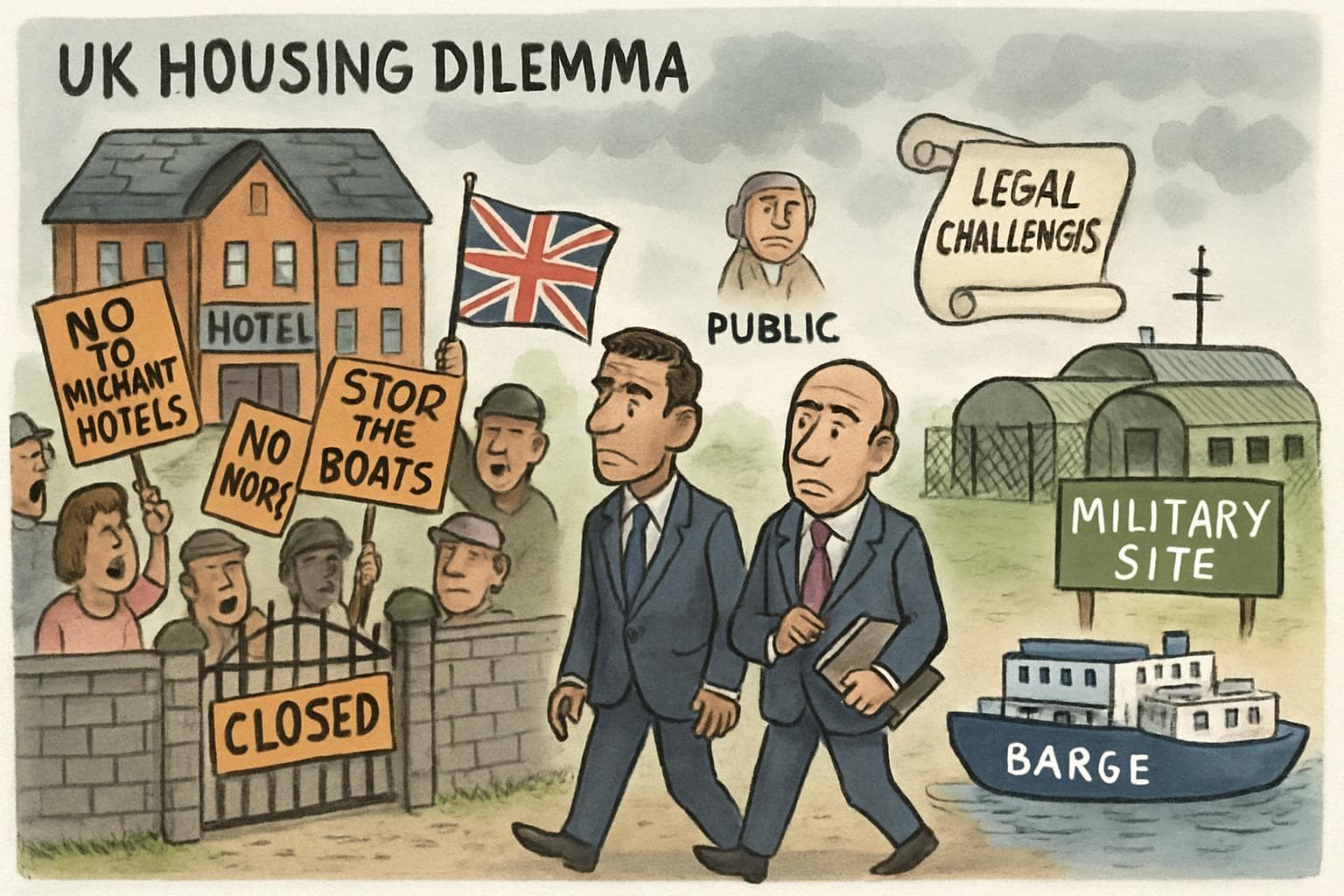
- The UK government is exploring alternative accommodations, including former military sites and barges, to house asylum seekers.
- Asylum seekers housed in hotels cost significantly more than those in other types of accommodation, with daily costs reaching £170 per person.
- Legal challenges from councils across England could pressure the government to find new housing solutions for migrants.
- Protests and public opposition have emerged in various areas, complicating the government's efforts to house asylum seekers.
The UK government is grappling with mounting pressure to find suitable housing for asylum seekers following a High Court ruling that blocked their accommodation at The Bell Hotel in Epping Forest. The decision, which came after local protests, has intensified the search for alternative solutions as the government aims to phase out the use of hotels by 2029.
Government's Housing Strategy Under Scrutiny
Home Office Minister Dan Jarvis has acknowledged the need for a "range of appropriate accommodation" for asylum seekers, moving away from the costly and controversial use of hotels. The government is considering options such as former military sites and barges, though specifics remain undisclosed. Jarvis emphasized that hotels were never intended as a long-term solution, a sentiment echoed by many local councils.
Financial and Social Implications
The financial burden of housing asylum seekers in hotels is substantial, with costs averaging £170 per person daily, compared to £27 for other accommodations. This has fueled criticism and calls for more sustainable solutions. The Migration Observatory highlights that the number of asylum seekers in government accommodation has more than doubled since 2019, underscoring the urgency of the issue.
Legal and Public Resistance
The High Court's ruling in favor of Epping Forest District Council has set a precedent, encouraging other councils to consider similar legal actions. Nigel Farage, leader of Reform UK, has urged councils to follow Epping's lead, while protests against asylum accommodations have been reported in various regions. These developments pose significant challenges to the government's housing strategy.
Future Prospects and Challenges
As the government navigates these legal and public hurdles, the need for a comprehensive and humane asylum policy becomes increasingly apparent. The situation remains fluid, with potential for further legal challenges and public protests. The government's ability to balance legal obligations, financial constraints, and public sentiment will be crucial in shaping the future of asylum seeker accommodation in the UK.
WHAT THIS MIGHT MEAN
The High Court's decision could trigger a wave of similar legal challenges, complicating the government's efforts to house asylum seekers. If more councils succeed in blocking hotel accommodations, the government may be forced to accelerate the development of alternative housing solutions. This could include increased investment in government-owned facilities or partnerships with private landlords, though both options present logistical and financial challenges.
Politically, the issue could influence public opinion and policy debates ahead of upcoming elections. The government's handling of asylum seeker accommodations may become a focal point, with opposition parties likely to scrutinize and challenge current strategies. As the situation evolves, the need for a balanced approach that addresses both humanitarian obligations and public concerns will be paramount.
Related Articles
UK Government to Reform Asylum Seeker Support and Employment Policies

Reform UK Aims to Reshape Welsh Politics with New Manifesto

Canada and Australia Forge Strategic Partnership Amid Global Uncertainty
Middle East Conflict Drives UK Energy Prices to New Highs

UK Faces Dilemmas Amid Iran Conflict and China Spying Allegations

UK Reinforces Military Presence in Cyprus Amid Middle East Tensions
UK Faces Housing Dilemma for Asylum Seekers Amid Legal and Public Challenges
In This Article
 Leila Hassan| Published
 HIGHLIGHTS
- The High Court granted Epping Forest District Council an injunction to stop asylum seekers from being housed at The Bell Hotel.
- The UK government is exploring alternative accommodations, including former military sites and barges, to house asylum seekers.
- Asylum seekers housed in hotels cost significantly more than those in other types of accommodation, with daily costs reaching £170 per person.
- Legal challenges from councils across England could pressure the government to find new housing solutions for migrants.
- Protests and public opposition have emerged in various areas, complicating the government's efforts to house asylum seekers.
The UK government is grappling with mounting pressure to find suitable housing for asylum seekers following a High Court ruling that blocked their accommodation at The Bell Hotel in Epping Forest. The decision, which came after local protests, has intensified the search for alternative solutions as the government aims to phase out the use of hotels by 2029.
Government's Housing Strategy Under Scrutiny
Home Office Minister Dan Jarvis has acknowledged the need for a "range of appropriate accommodation" for asylum seekers, moving away from the costly and controversial use of hotels. The government is considering options such as former military sites and barges, though specifics remain undisclosed. Jarvis emphasized that hotels were never intended as a long-term solution, a sentiment echoed by many local councils.
Financial and Social Implications
The financial burden of housing asylum seekers in hotels is substantial, with costs averaging £170 per person daily, compared to £27 for other accommodations. This has fueled criticism and calls for more sustainable solutions. The Migration Observatory highlights that the number of asylum seekers in government accommodation has more than doubled since 2019, underscoring the urgency of the issue.
Legal and Public Resistance
The High Court's ruling in favor of Epping Forest District Council has set a precedent, encouraging other councils to consider similar legal actions. Nigel Farage, leader of Reform UK, has urged councils to follow Epping's lead, while protests against asylum accommodations have been reported in various regions. These developments pose significant challenges to the government's housing strategy.
Future Prospects and Challenges
As the government navigates these legal and public hurdles, the need for a comprehensive and humane asylum policy becomes increasingly apparent. The situation remains fluid, with potential for further legal challenges and public protests. The government's ability to balance legal obligations, financial constraints, and public sentiment will be crucial in shaping the future of asylum seeker accommodation in the UK.
WHAT THIS MIGHT MEAN
The High Court's decision could trigger a wave of similar legal challenges, complicating the government's efforts to house asylum seekers. If more councils succeed in blocking hotel accommodations, the government may be forced to accelerate the development of alternative housing solutions. This could include increased investment in government-owned facilities or partnerships with private landlords, though both options present logistical and financial challenges.
Politically, the issue could influence public opinion and policy debates ahead of upcoming elections. The government's handling of asylum seeker accommodations may become a focal point, with opposition parties likely to scrutinize and challenge current strategies. As the situation evolves, the need for a balanced approach that addresses both humanitarian obligations and public concerns will be paramount.
Related Articles
UK Government to Reform Asylum Seeker Support and Employment Policies
Reform UK Aims to Reshape Welsh Politics with New Manifesto
Canada and Australia Forge Strategic Partnership Amid Global Uncertainty
Middle East Conflict Drives UK Energy Prices to New Highs
UK Faces Dilemmas Amid Iran Conflict and China Spying Allegations
UK Reinforces Military Presence in Cyprus Amid Middle East Tensions