
Serbian President Denies Involvement in Sarajevo 'Sniper Tourism' Allegations
In This Article
HIGHLIGHTS
- Serbian President Aleksandar Vučić denies allegations of involvement in "sniper tourism" during the Sarajevo siege.
- Italian prosecutors are investigating claims that foreigners paid to shoot civilians in Sarajevo in the 1990s.
- The allegations stem from a 2022 documentary and a complaint by Croatian journalist Domagoj Margetić.
- Vučić's spokesperson dismissed the claims as "malicious disinformation" aimed at damaging Serbia's reputation.
- The International Residual Mechanism for Criminal Tribunals has no information supporting the allegations.
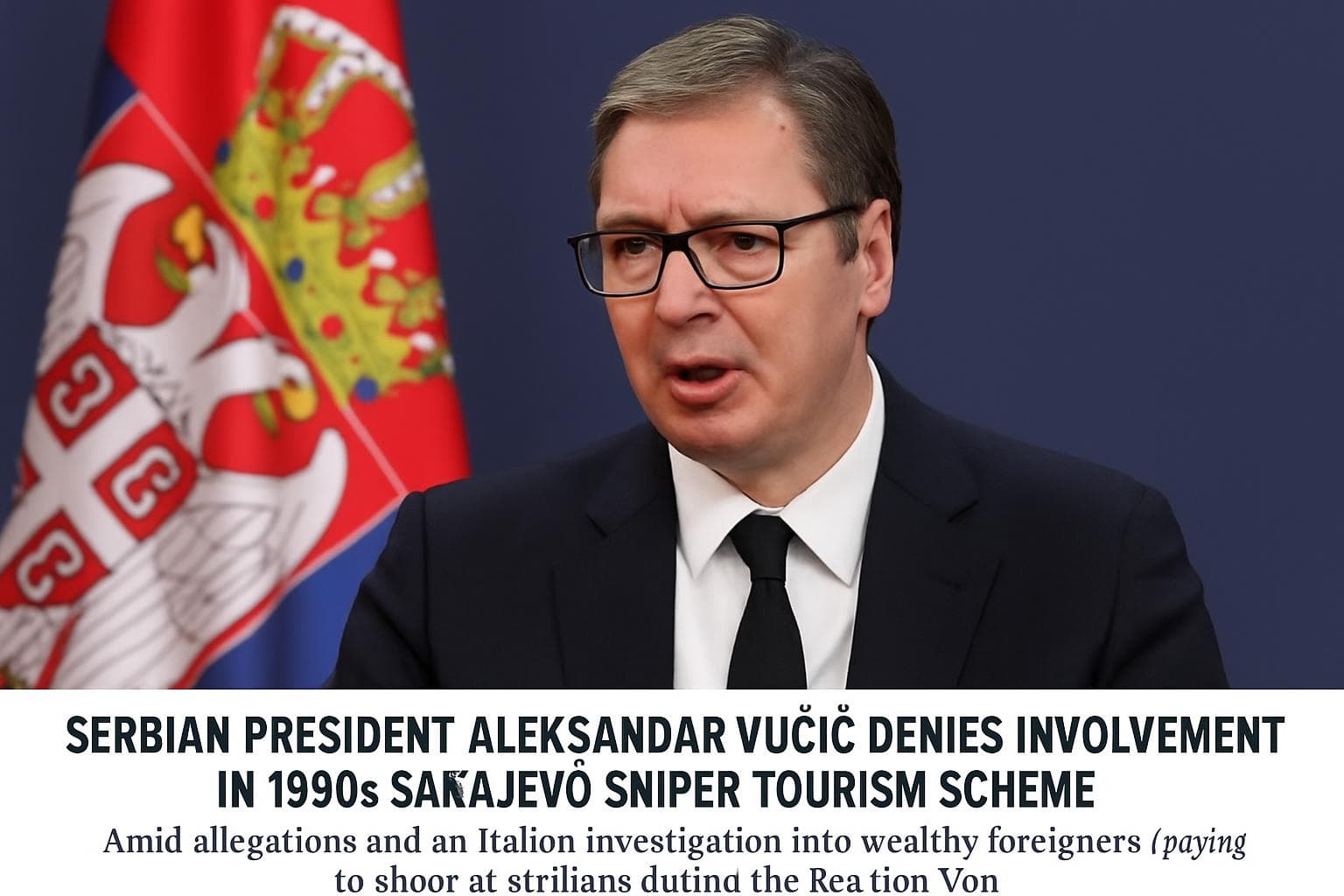
Serbian President Aleksandar Vučić has firmly denied allegations implicating him in a controversial "sniper tourism" scheme during the siege of Sarajevo in the 1990s. The claims, which have sparked an investigation by Italian prosecutors, suggest that wealthy foreigners paid to shoot at civilians in the besieged Bosnian capital.
Allegations and Denials
The accusations against Vučić surfaced following a complaint by Croatian journalist Domagoj Margetić, who alleged that Vučić was a "war volunteer" with Bosnian Serb forces. Margetić's claims are partly based on the 2022 documentary "Sarajevo Safari," which explores the grim phenomenon of "sniper tourism" during the Bosnian War. Vučić, speaking at a business conference in Belgrade, categorically denied the allegations, stating, "I have never killed anyone, wounded anyone, or done anything similar."
Investigation Underway
Italian prosecutors have launched an investigation into the alleged involvement of foreigners, including Italians, in the sniper activities. The inquiry follows a legal complaint by Milan-based writer Ezio Gavazzeni, who has been gathering evidence since the 1990s. The investigation aims to identify individuals who allegedly paid to participate in the killings, which were carried out by soldiers loyal to Radovan Karadžić, the former Bosnian Serb leader convicted of genocide.
Reactions and Context
Vučić's spokesperson, Suzana Vasiljevic, dismissed the allegations as "a textbook case of malicious disinformation," asserting that Vučić had no military involvement during the war. She emphasized that Vučić worked as a journalist and translator in Pale, without any contact with military operations. Despite the serious nature of the claims, the International Residual Mechanism for Criminal Tribunals has stated that it possesses no information about the alleged sniper tourism.
WHAT THIS MIGHT MEAN
The ongoing investigation by Italian prosecutors could lead to significant legal and diplomatic repercussions, particularly if evidence substantiates the claims of foreign involvement in the Sarajevo siege. Should the investigation progress, it may prompt further scrutiny of wartime activities in the Balkans and potentially implicate other individuals or groups. Experts suggest that the case could also impact Serbia's international relations, especially if the allegations against Vučić gain traction. As the investigation unfolds, it will be crucial to monitor any developments that might influence regional stability and historical narratives surrounding the Bosnian War.
Serbian President Denies Involvement in Sarajevo 'Sniper Tourism' Allegations
In This Article
 Sofia Romano| Published
 HIGHLIGHTS
- Serbian President Aleksandar Vučić denies allegations of involvement in "sniper tourism" during the Sarajevo siege.
- Italian prosecutors are investigating claims that foreigners paid to shoot civilians in Sarajevo in the 1990s.
- The allegations stem from a 2022 documentary and a complaint by Croatian journalist Domagoj Margetić.
- Vučić's spokesperson dismissed the claims as "malicious disinformation" aimed at damaging Serbia's reputation.
- The International Residual Mechanism for Criminal Tribunals has no information supporting the allegations.
Serbian President Aleksandar Vučić has firmly denied allegations implicating him in a controversial "sniper tourism" scheme during the siege of Sarajevo in the 1990s. The claims, which have sparked an investigation by Italian prosecutors, suggest that wealthy foreigners paid to shoot at civilians in the besieged Bosnian capital.
Allegations and Denials
The accusations against Vučić surfaced following a complaint by Croatian journalist Domagoj Margetić, who alleged that Vučić was a "war volunteer" with Bosnian Serb forces. Margetić's claims are partly based on the 2022 documentary "Sarajevo Safari," which explores the grim phenomenon of "sniper tourism" during the Bosnian War. Vučić, speaking at a business conference in Belgrade, categorically denied the allegations, stating, "I have never killed anyone, wounded anyone, or done anything similar."
Investigation Underway
Italian prosecutors have launched an investigation into the alleged involvement of foreigners, including Italians, in the sniper activities. The inquiry follows a legal complaint by Milan-based writer Ezio Gavazzeni, who has been gathering evidence since the 1990s. The investigation aims to identify individuals who allegedly paid to participate in the killings, which were carried out by soldiers loyal to Radovan Karadžić, the former Bosnian Serb leader convicted of genocide.
Reactions and Context
Vučić's spokesperson, Suzana Vasiljevic, dismissed the allegations as "a textbook case of malicious disinformation," asserting that Vučić had no military involvement during the war. She emphasized that Vučić worked as a journalist and translator in Pale, without any contact with military operations. Despite the serious nature of the claims, the International Residual Mechanism for Criminal Tribunals has stated that it possesses no information about the alleged sniper tourism.
WHAT THIS MIGHT MEAN
The ongoing investigation by Italian prosecutors could lead to significant legal and diplomatic repercussions, particularly if evidence substantiates the claims of foreign involvement in the Sarajevo siege. Should the investigation progress, it may prompt further scrutiny of wartime activities in the Balkans and potentially implicate other individuals or groups. Experts suggest that the case could also impact Serbia's international relations, especially if the allegations against Vučić gain traction. As the investigation unfolds, it will be crucial to monitor any developments that might influence regional stability and historical narratives surrounding the Bosnian War.