
Escalating Protests in Serbia Highlight Deepening Political Crisis
In This Article
HIGHLIGHTS
- Protests in Serbia have intensified, with violent clashes between anti-government demonstrators and police, leading to numerous injuries and arrests.
- The unrest was sparked by a tragic railway station collapse in Novi Sad last year, blamed on government corruption and negligence.
- Serbian President Aleksandar Vučić, supported by Russia, has rejected calls for early elections, labeling the protests as foreign-instigated plots.
- Allegations of police brutality have surfaced, with international bodies urging Serbian authorities to respect human rights and de-escalate tensions.
- The protests have drawn hundreds of thousands, demanding transparency, accountability, and an end to Vučić's 12-year rule.
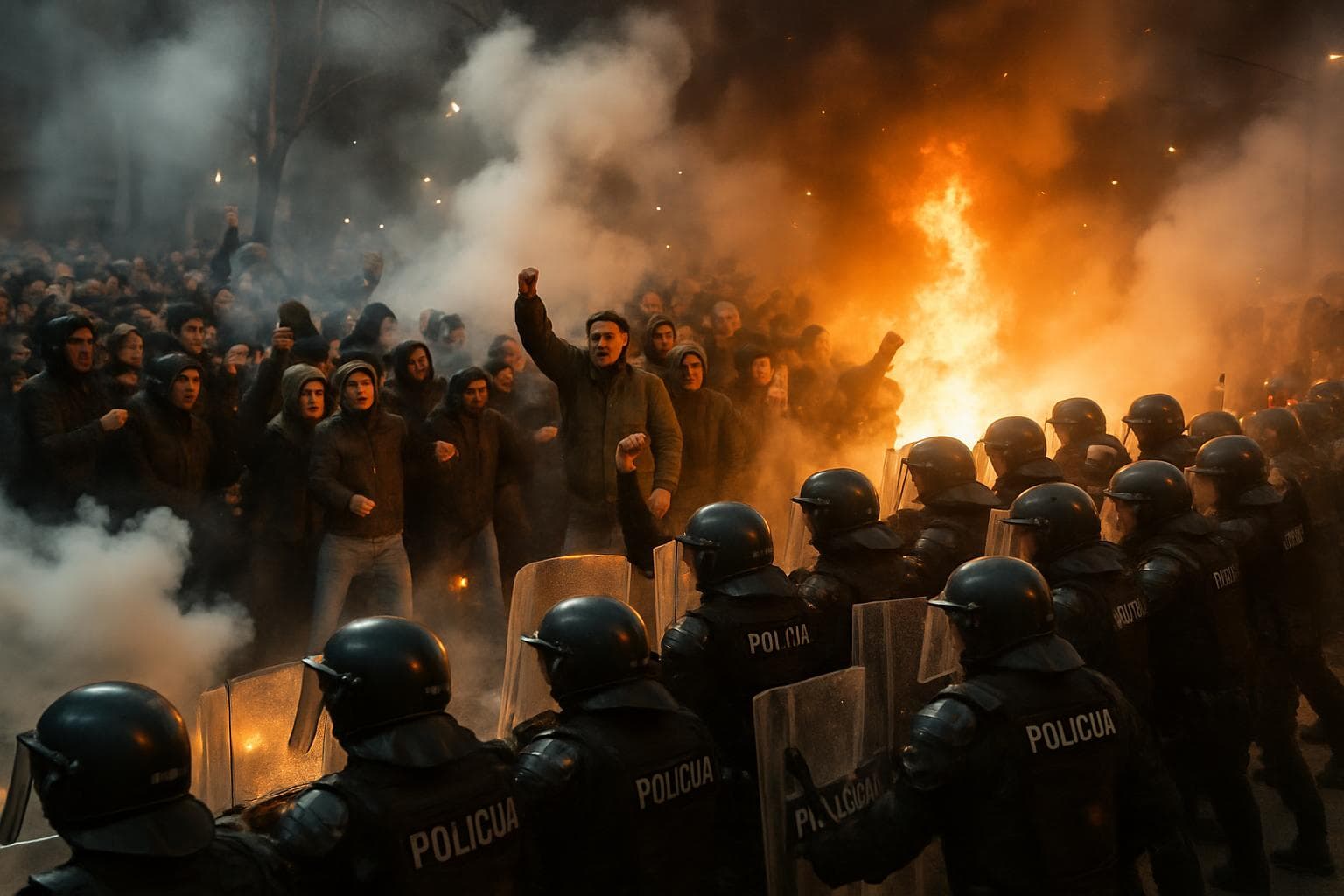
Serbia is witnessing a surge in anti-government protests, marked by violent clashes between demonstrators and police forces across the country. The unrest, now in its fifth consecutive night, has seen the offices of the ruling Serbian Progressive Party (SNS) set ablaze, with riot police deploying tear gas and stun grenades to disperse crowds in cities like Belgrade and Valjevo.
Origins of the Unrest
The protests were initially triggered by the collapse of a railway station roof in Novi Sad last November, which resulted in 16 fatalities. The tragedy has been widely attributed to systemic corruption and negligence within state infrastructure projects, fueling public outrage and demands for accountability. What began as vigils for the victims has evolved into a nationwide movement calling for early elections and the resignation of President Aleksandar Vučić.
Government Response and International Reactions
President Vučić, who has been in power for 12 years, has dismissed the protests as foreign-backed attempts to destabilize his government. He has praised the police for their handling of the demonstrations, despite widespread allegations of excessive force. Russia has expressed its support for Vučić, emphasizing the need to maintain public order and security.
International bodies, including the Council of Europe, have voiced concerns over the reported police brutality. Michael O'Flaherty, the Council's commissioner for human rights, has urged Serbian authorities to end arbitrary arrests and ensure the right to peaceful assembly is upheld.
Protesters' Demands and Government Stance
The demonstrators, rallying under slogans like "Let’s show them we are not a punching bag," have been met with counter-demonstrations by pro-government loyalists. The protests have seen hundreds of thousands of Serbians taking to the streets, demanding transparency, an end to corruption, and early elections. Despite the mounting pressure, Vučić has remained steadfast in his refusal to call for early elections, asserting that the state remains stronger than any protest.
WHAT THIS MIGHT MEAN
As the protests continue to escalate, the Serbian government faces increasing pressure both domestically and internationally. If the unrest persists, it could lead to significant political changes, potentially forcing Vučić to reconsider his stance on early elections. The international community's response, particularly from the European Union, could play a crucial role in shaping the outcome of this crisis. Experts suggest that a failure to address the root causes of the protests, such as corruption and lack of transparency, could further destabilize the region and undermine Serbia's democratic institutions.
Related Articles
Russian LNG Tanker Sinks in Mediterranean Amid Accusations of Ukrainian Drone Attack
Geneva Peace Talks Between Russia and Ukraine End Without Breakthrough
Geneva Talks See 'Meaningful Progress' Amid Tensions Over Ukraine-Russia Conflict
UK PM Keir Starmer Calls for Stronger European Defence Ties at Munich Conference
Spain's Sánchez Stands Firm Against Trump's Trade Threat Over Iran Stance

Russia-Ukraine Conflict: Four Years of Unyielding Struggle and Human Resilience
Escalating Protests in Serbia Highlight Deepening Political Crisis
In This Article
 Alex Carter| Published
 HIGHLIGHTS
- Protests in Serbia have intensified, with violent clashes between anti-government demonstrators and police, leading to numerous injuries and arrests.
- The unrest was sparked by a tragic railway station collapse in Novi Sad last year, blamed on government corruption and negligence.
- Serbian President Aleksandar Vučić, supported by Russia, has rejected calls for early elections, labeling the protests as foreign-instigated plots.
- Allegations of police brutality have surfaced, with international bodies urging Serbian authorities to respect human rights and de-escalate tensions.
- The protests have drawn hundreds of thousands, demanding transparency, accountability, and an end to Vučić's 12-year rule.
Serbia is witnessing a surge in anti-government protests, marked by violent clashes between demonstrators and police forces across the country. The unrest, now in its fifth consecutive night, has seen the offices of the ruling Serbian Progressive Party (SNS) set ablaze, with riot police deploying tear gas and stun grenades to disperse crowds in cities like Belgrade and Valjevo.
Origins of the Unrest
The protests were initially triggered by the collapse of a railway station roof in Novi Sad last November, which resulted in 16 fatalities. The tragedy has been widely attributed to systemic corruption and negligence within state infrastructure projects, fueling public outrage and demands for accountability. What began as vigils for the victims has evolved into a nationwide movement calling for early elections and the resignation of President Aleksandar Vučić.
Government Response and International Reactions
President Vučić, who has been in power for 12 years, has dismissed the protests as foreign-backed attempts to destabilize his government. He has praised the police for their handling of the demonstrations, despite widespread allegations of excessive force. Russia has expressed its support for Vučić, emphasizing the need to maintain public order and security.
International bodies, including the Council of Europe, have voiced concerns over the reported police brutality. Michael O'Flaherty, the Council's commissioner for human rights, has urged Serbian authorities to end arbitrary arrests and ensure the right to peaceful assembly is upheld.
Protesters' Demands and Government Stance
The demonstrators, rallying under slogans like "Let’s show them we are not a punching bag," have been met with counter-demonstrations by pro-government loyalists. The protests have seen hundreds of thousands of Serbians taking to the streets, demanding transparency, an end to corruption, and early elections. Despite the mounting pressure, Vučić has remained steadfast in his refusal to call for early elections, asserting that the state remains stronger than any protest.
WHAT THIS MIGHT MEAN
As the protests continue to escalate, the Serbian government faces increasing pressure both domestically and internationally. If the unrest persists, it could lead to significant political changes, potentially forcing Vučić to reconsider his stance on early elections. The international community's response, particularly from the European Union, could play a crucial role in shaping the outcome of this crisis. Experts suggest that a failure to address the root causes of the protests, such as corruption and lack of transparency, could further destabilize the region and undermine Serbia's democratic institutions.
Related Articles
Russian LNG Tanker Sinks in Mediterranean Amid Accusations of Ukrainian Drone Attack
Geneva Peace Talks Between Russia and Ukraine End Without Breakthrough
Geneva Talks See 'Meaningful Progress' Amid Tensions Over Ukraine-Russia Conflict
UK PM Keir Starmer Calls for Stronger European Defence Ties at Munich Conference
Spain's Sánchez Stands Firm Against Trump's Trade Threat Over Iran Stance
Russia-Ukraine Conflict: Four Years of Unyielding Struggle and Human Resilience