
Remembering Srebrenica: A Nation's Struggle with Memory and Denial
In This Article
HIGHLIGHTS
- The Srebrenica massacre, a pivotal event in the Bosnian War, resulted in the deaths of over 8,000 Bosniak men and boys in July 1995.
- Despite international convictions, genocide denial persists in Republika Srpska, exacerbating ethnic tensions in Bosnia and Herzegovina.
- The Dayton Peace Agreement ended the war but left Bosnia divided into ethnic entities, complicating reconciliation efforts.
- Recent burials of identified victims highlight ongoing efforts to honor the memory of those lost and provide closure for grieving families.
- The play "Flowers of Srebrenica" reflects unresolved grief and divisions, resonating deeply with audiences in Sarajevo.
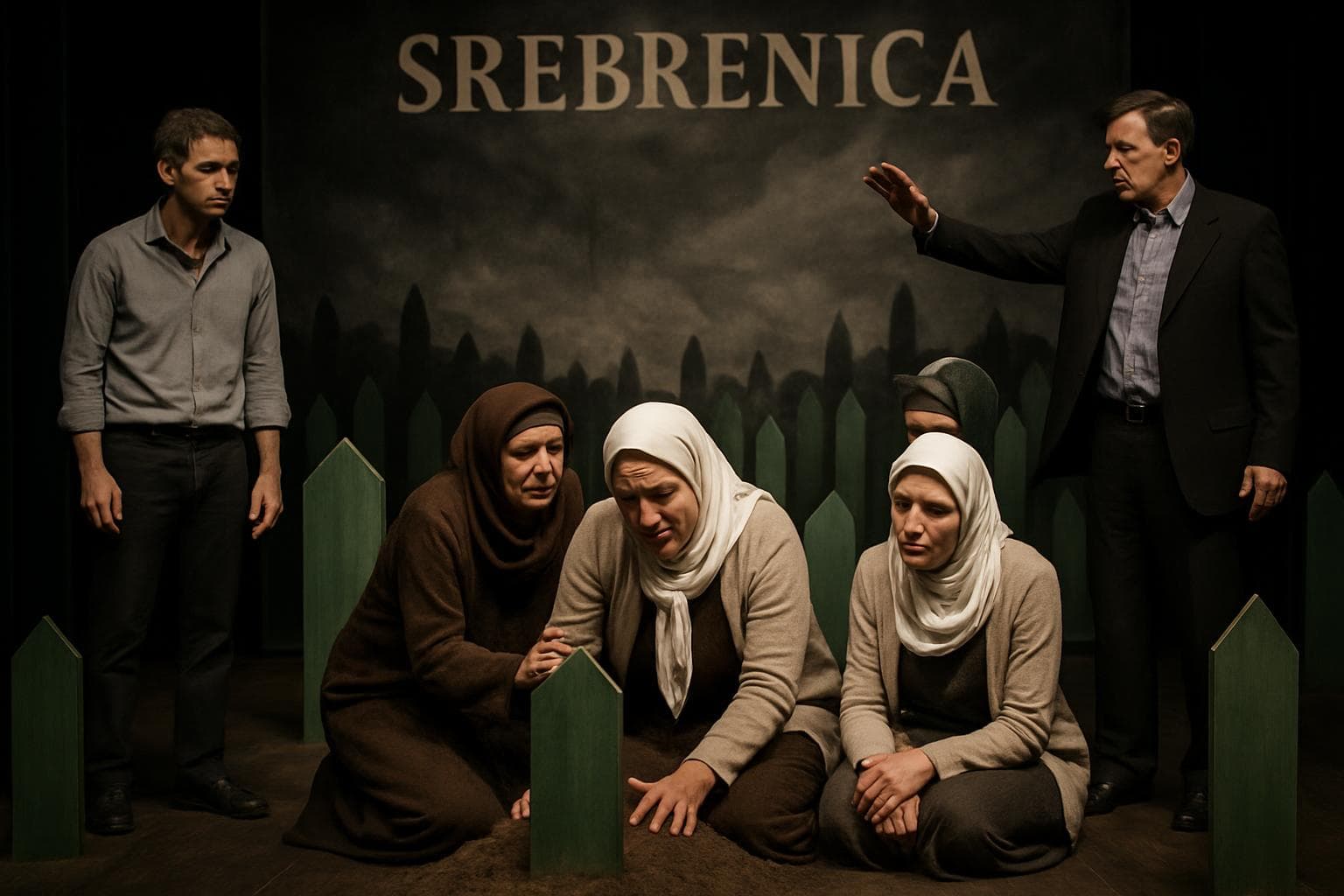
Thirty years after the Srebrenica massacre, the scars of the Bosnian War remain deeply etched in the landscape and psyche of Bosnia and Herzegovina. The massacre, recognized as the worst atrocity in Europe since World War II, saw Bosnian Serb forces systematically murder over 8,000 Bosniak men and boys in July 1995. This grim chapter continues to haunt the nation, as depicted in the poignant play "Flowers of Srebrenica," which premiered at Sarajevo's War Theatre.
A Legacy of Grief and Division
The play captures the harrowing reality of the massacre and its aftermath, where families still search for the remains of their loved ones. The systematic efforts by Ratko Mladić's troops to conceal their crimes by scattering body parts across multiple graves have left many families in perpetual mourning. Despite advances in DNA testing, the process of identification is slow and painful, as illustrated by recent burials in Bratunac, where six victims, including a one-year-old child, were finally laid to rest.
Genocide Denial and Political Tensions
In Republika Srpska, where the massacre occurred, political leaders continue to deny the genocide, despite convictions by international tribunals. This denial not only deepens ethnic divisions but also hinders reconciliation efforts. Selma Alispahić, a former refugee and lead actress in the play, expressed frustration over the persistent denial, stating, "The story of the hatred and spinning of facts serves only the criminals who profited from the war."
The Impact of the Dayton Peace Agreement
The Dayton Peace Agreement, which ended the Bosnian War, created a complex political structure dividing Bosnia into two entities: the Federation of Bosnia and Herzegovina and Republika Srpska. This division, based on ethnic lines, continues to challenge the country's unity and complicate efforts to address past atrocities.
WHAT THIS MIGHT MEAN
The ongoing denial of the Srebrenica genocide in Republika Srpska poses significant challenges to Bosnia and Herzegovina's path toward reconciliation and unity. As the nation grapples with its past, the international community's role in supporting truth and justice remains crucial. Experts suggest that fostering dialogue and education about the events of the Bosnian War could help bridge ethnic divides and promote healing. However, without a concerted effort to confront and acknowledge historical truths, the specter of the past may continue to cast a long shadow over the region's future.
Related Articles
Serbian President Denies Involvement in Sarajevo 'Sniper Tourism' Allegations

Tensions Rise as Trump Revives Greenland Acquisition Proposal
Berlin Blackout Exposes Vulnerabilities in German Infrastructure
Sir Patrick Duffy, UK's Oldest Former MP, Dies at 105
Nicolas Sarkozy Released from Prison Amidst Ongoing Legal Battle
Kim Jong Un Attends Beijing Military Parade in Historic Visit
Remembering Srebrenica: A Nation's Struggle with Memory and Denial
In This Article
 Maya Singh| Published
 HIGHLIGHTS
- The Srebrenica massacre, a pivotal event in the Bosnian War, resulted in the deaths of over 8,000 Bosniak men and boys in July 1995.
- Despite international convictions, genocide denial persists in Republika Srpska, exacerbating ethnic tensions in Bosnia and Herzegovina.
- The Dayton Peace Agreement ended the war but left Bosnia divided into ethnic entities, complicating reconciliation efforts.
- Recent burials of identified victims highlight ongoing efforts to honor the memory of those lost and provide closure for grieving families.
- The play "Flowers of Srebrenica" reflects unresolved grief and divisions, resonating deeply with audiences in Sarajevo.
Thirty years after the Srebrenica massacre, the scars of the Bosnian War remain deeply etched in the landscape and psyche of Bosnia and Herzegovina. The massacre, recognized as the worst atrocity in Europe since World War II, saw Bosnian Serb forces systematically murder over 8,000 Bosniak men and boys in July 1995. This grim chapter continues to haunt the nation, as depicted in the poignant play "Flowers of Srebrenica," which premiered at Sarajevo's War Theatre.
A Legacy of Grief and Division
The play captures the harrowing reality of the massacre and its aftermath, where families still search for the remains of their loved ones. The systematic efforts by Ratko Mladić's troops to conceal their crimes by scattering body parts across multiple graves have left many families in perpetual mourning. Despite advances in DNA testing, the process of identification is slow and painful, as illustrated by recent burials in Bratunac, where six victims, including a one-year-old child, were finally laid to rest.
Genocide Denial and Political Tensions
In Republika Srpska, where the massacre occurred, political leaders continue to deny the genocide, despite convictions by international tribunals. This denial not only deepens ethnic divisions but also hinders reconciliation efforts. Selma Alispahić, a former refugee and lead actress in the play, expressed frustration over the persistent denial, stating, "The story of the hatred and spinning of facts serves only the criminals who profited from the war."
The Impact of the Dayton Peace Agreement
The Dayton Peace Agreement, which ended the Bosnian War, created a complex political structure dividing Bosnia into two entities: the Federation of Bosnia and Herzegovina and Republika Srpska. This division, based on ethnic lines, continues to challenge the country's unity and complicate efforts to address past atrocities.
WHAT THIS MIGHT MEAN
The ongoing denial of the Srebrenica genocide in Republika Srpska poses significant challenges to Bosnia and Herzegovina's path toward reconciliation and unity. As the nation grapples with its past, the international community's role in supporting truth and justice remains crucial. Experts suggest that fostering dialogue and education about the events of the Bosnian War could help bridge ethnic divides and promote healing. However, without a concerted effort to confront and acknowledge historical truths, the specter of the past may continue to cast a long shadow over the region's future.
Related Articles
Serbian President Denies Involvement in Sarajevo 'Sniper Tourism' Allegations
Tensions Rise as Trump Revives Greenland Acquisition Proposal
Berlin Blackout Exposes Vulnerabilities in German Infrastructure
Sir Patrick Duffy, UK's Oldest Former MP, Dies at 105
Nicolas Sarkozy Released from Prison Amidst Ongoing Legal Battle
Kim Jong Un Attends Beijing Military Parade in Historic Visit