
Slowing Flu Rates in Wales Amidst Europe's Surge Due to New Strain
In This Article
HIGHLIGHTS
- Flu cases in Wales are rising but at a slowing rate, with hospital admissions expected to be lower than last year.
- A new flu strain, A(H3N2), is causing high flu activity across Europe, with the WHO urging vaccinations and preventive measures.
- In Wales, over 860,000 people have been vaccinated, but concerns remain about low uptake among vulnerable groups.
- The WHO reports that the flu season began earlier than usual, with significant pressure on healthcare systems in several European countries.
- Public health officials emphasize the importance of credible information and vaccination to mitigate severe flu cases.
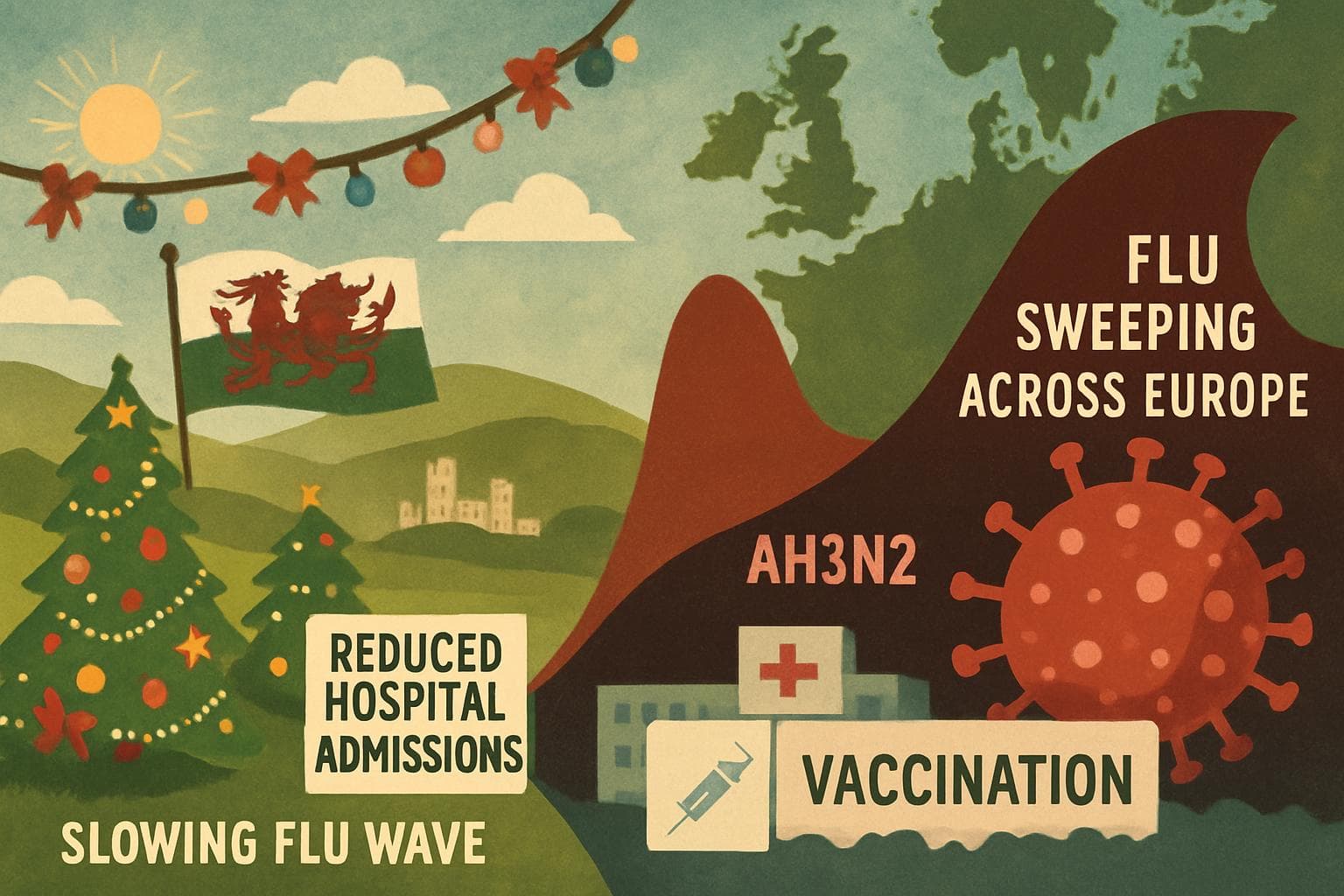
As flu cases continue to rise in Wales, the rate of increase is beginning to slow, offering a glimmer of hope for reduced hospital admissions over the Christmas period. Public Health Wales (PHW) reports that flu is circulating at a "medium intensity," with hospital admissions forecasted to be lower than the same time last year. Despite this, consultations for flu remain high, and the peak of the season is yet to be determined.
Meanwhile, a new flu strain, A(H3N2), is sweeping across Europe, placing severe pressure on healthcare systems. The World Health Organization (WHO) has highlighted that 27 out of 38 countries in its European region are experiencing "high or very high influenza activity." This strain accounts for up to 90% of confirmed flu cases, though it is not causing more severe disease than usual.
In Wales, over 860,000 individuals have received the flu vaccine, yet there is concern over low vaccination rates among vulnerable groups. Prof Isabel Oliver, Wales' top doctor, urges eligible individuals to get vaccinated, especially as flu transmission could increase over the festive season. "Nobody wants to end up in hospital with flu over Christmas," she emphasized.
Across Europe, the flu season began earlier than usual, with the WHO advising populations to curb transmission through vaccination, staying home when unwell, and wearing masks if symptomatic. Hans Henri Kluge, the WHO’s regional director for Europe, stressed the importance of credible information in combating misinformation during this challenging flu season.
WHAT THIS MIGHT MEAN
Looking ahead, the trajectory of the flu season remains uncertain. In Wales, while the current slowdown in flu cases is promising, public health officials caution that rates could rise again, particularly with increased social gatherings during the holidays. The emergence of the A(H3N2) strain underscores the need for vigilance and vaccination, especially among high-risk groups.
Across Europe, healthcare systems are bracing for continued pressure. The WHO's emphasis on vaccination and preventive measures is crucial in managing the flu's impact. As the season progresses, monitoring the strain's behavior and vaccination efficacy will be key in mitigating severe cases and hospitalizations.
Related Articles

Sisters Tragically Drown at Eryri National Park's Watkin Path

Labour MP's Husband Arrested in UK-China Espionage Probe

UK Defence Faces Scrutiny Amid Ajax Armoured Vehicle Delays and Soldier Safety Concerns
Prince William Calls for Action on UK Male Suicide Rates
Rising Measles Cases in the UK Spark Urgent Vaccination Campaign

Tragic Loss of Teenager in Cwmbran Car Collision
Slowing Flu Rates in Wales Amidst Europe's Surge Due to New Strain
In This Article
 Ethan Brooks| Published
 HIGHLIGHTS
- Flu cases in Wales are rising but at a slowing rate, with hospital admissions expected to be lower than last year.
- A new flu strain, A(H3N2), is causing high flu activity across Europe, with the WHO urging vaccinations and preventive measures.
- In Wales, over 860,000 people have been vaccinated, but concerns remain about low uptake among vulnerable groups.
- The WHO reports that the flu season began earlier than usual, with significant pressure on healthcare systems in several European countries.
- Public health officials emphasize the importance of credible information and vaccination to mitigate severe flu cases.
As flu cases continue to rise in Wales, the rate of increase is beginning to slow, offering a glimmer of hope for reduced hospital admissions over the Christmas period. Public Health Wales (PHW) reports that flu is circulating at a "medium intensity," with hospital admissions forecasted to be lower than the same time last year. Despite this, consultations for flu remain high, and the peak of the season is yet to be determined.
Meanwhile, a new flu strain, A(H3N2), is sweeping across Europe, placing severe pressure on healthcare systems. The World Health Organization (WHO) has highlighted that 27 out of 38 countries in its European region are experiencing "high or very high influenza activity." This strain accounts for up to 90% of confirmed flu cases, though it is not causing more severe disease than usual.
In Wales, over 860,000 individuals have received the flu vaccine, yet there is concern over low vaccination rates among vulnerable groups. Prof Isabel Oliver, Wales' top doctor, urges eligible individuals to get vaccinated, especially as flu transmission could increase over the festive season. "Nobody wants to end up in hospital with flu over Christmas," she emphasized.
Across Europe, the flu season began earlier than usual, with the WHO advising populations to curb transmission through vaccination, staying home when unwell, and wearing masks if symptomatic. Hans Henri Kluge, the WHO’s regional director for Europe, stressed the importance of credible information in combating misinformation during this challenging flu season.
WHAT THIS MIGHT MEAN
Looking ahead, the trajectory of the flu season remains uncertain. In Wales, while the current slowdown in flu cases is promising, public health officials caution that rates could rise again, particularly with increased social gatherings during the holidays. The emergence of the A(H3N2) strain underscores the need for vigilance and vaccination, especially among high-risk groups.
Across Europe, healthcare systems are bracing for continued pressure. The WHO's emphasis on vaccination and preventive measures is crucial in managing the flu's impact. As the season progresses, monitoring the strain's behavior and vaccination efficacy will be key in mitigating severe cases and hospitalizations.
Related Articles
Sisters Tragically Drown at Eryri National Park's Watkin Path
Labour MP's Husband Arrested in UK-China Espionage Probe
UK Defence Faces Scrutiny Amid Ajax Armoured Vehicle Delays and Soldier Safety Concerns
Prince William Calls for Action on UK Male Suicide Rates
Rising Measles Cases in the UK Spark Urgent Vaccination Campaign
Tragic Loss of Teenager in Cwmbran Car Collision