
Water Companies Face Bonus Ban Amid Pollution Concerns
In This Article
HIGHLIGHTS
- Six water companies, including Thames Water and Yorkshire Water, were blocked from paying over £4 million in bonuses due to pollution incidents and performance issues.
- Ofwat introduced new rules in June to prevent bonuses for companies failing to meet environmental standards, reflecting public anger over pollution.
- Yorkshire Water's undisclosed £1.3 million payment to its CEO via an offshore company has prompted Ofwat to consider stricter transparency rules.
- Despite the bonus ban, water company CEO pay rose by 5% last year, with Southern Water's CEO receiving an 80% pay increase.
- Ofwat emphasizes the need for greater transparency and accountability in executive remuneration across the water industry.
In a decisive move to address environmental concerns, six major water companies in England and Wales have been barred from awarding over £4 million in executive bonuses. The industry regulator, Ofwat, enforced these restrictions following serious pollution incidents and other performance failures, underscoring the need for greater accountability within the sector.
New Regulations Target Environmental Failures
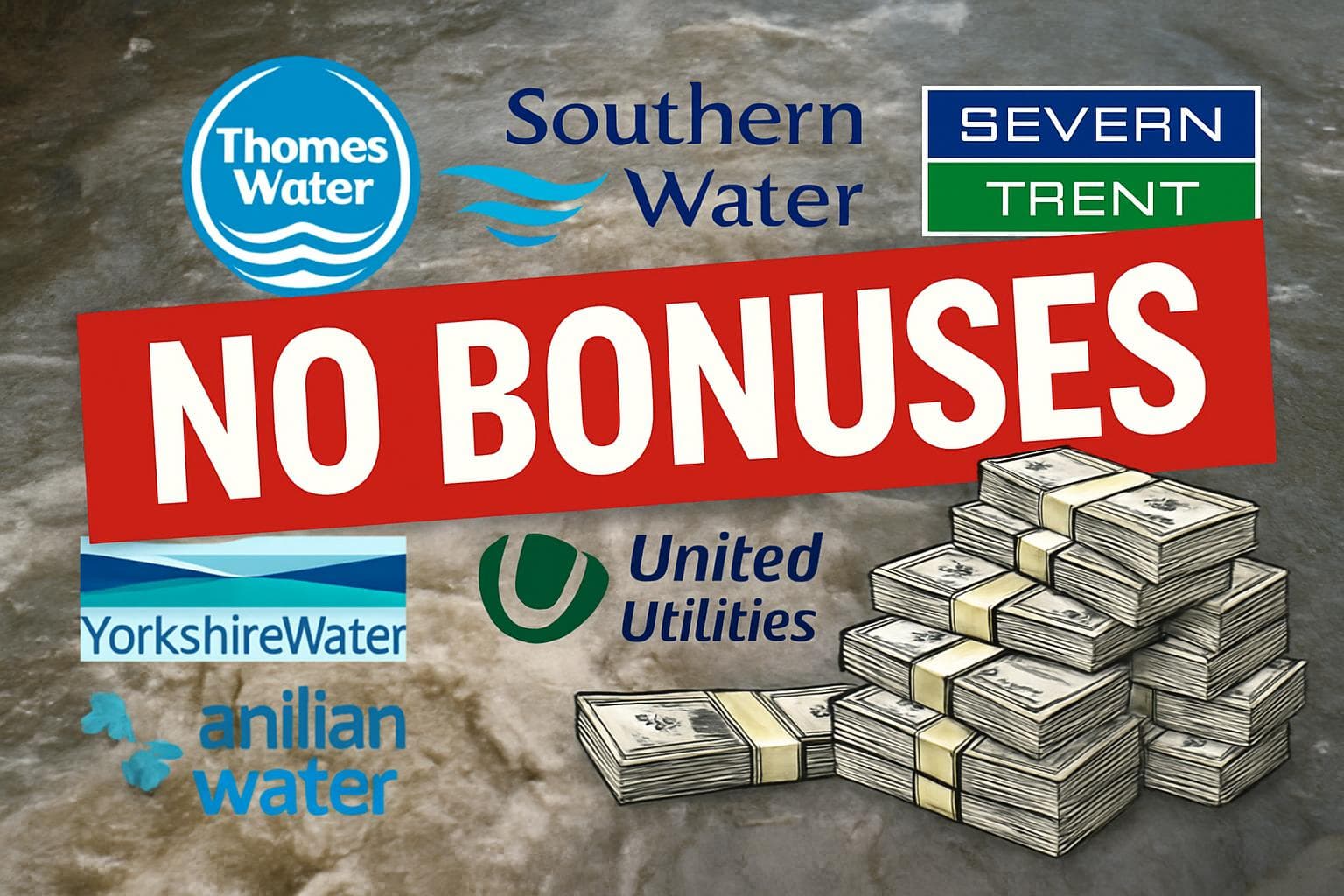
The ban, introduced in June, is part of Ofwat's broader effort to align executive pay with environmental performance. The companies affected include Thames Water, Anglian Water, Southern Water, United Utilities, Wessex Water, and Yorkshire Water. These firms were found to have breached environmental standards, with Thames Water alone responsible for seven severe pollution incidents in 2024. As a result, no bonuses were awarded to its chief executive or former finance chief.
Transparency Issues and Offshore Payments
The issue of transparency has come to the forefront following revelations about Yorkshire Water's undisclosed £1.3 million payment to its CEO, Nicola Shaw, through an offshore parent company. This has prompted Ofwat to consider implementing stricter rules on pay reporting. "Yorkshire Water has since acknowledged it should have disclosed more about the payments and has committed to several actions to improve transparency," Ofwat stated.
Rising Executive Pay Amidst Scrutiny
Despite the bonus ban, the average pay for water company CEOs rose by 5% last year, reaching £1.1 million. Southern Water's CEO, Lawrence Gosden, received an 80% pay increase, attributed to a long-term incentive plan predating the bonus ban. However, Ofwat's regulations only apply to chief executives and chief financial officers, allowing other executives to receive bonuses, as seen with Thames Water's management retention plan.
Calls for Greater Accountability
Ofwat's report highlights the need for water companies to better reflect public expectations in their executive remuneration decisions. "While there has been some progress in certain areas on accountability, water companies must better demonstrate that they understand the feeling of public anger on bonuses," the regulator emphasized.
WHAT THIS MIGHT MEAN
The developments signal a potential shift towards increased regulatory oversight in the water industry. If Ofwat's proposed transparency rules are implemented, water companies may face heightened scrutiny over their executive pay practices. This could lead to more stringent accountability measures, aligning financial incentives with environmental performance. Furthermore, the public's growing concern over pollution could drive further regulatory reforms, potentially impacting the industry's operational and financial strategies. As the situation evolves, water companies will need to navigate these changes carefully to maintain public trust and regulatory compliance.
Related Articles
Prince William Calls for Action on UK Male Suicide Rates

Sisters Tragically Drown at Eryri National Park's Watkin Path

Labour MP's Husband Arrested in UK-China Espionage Probe

UK Defence Faces Scrutiny Amid Ajax Armoured Vehicle Delays and Soldier Safety Concerns

Police Federation Chief Arrested Amid Fraud Investigation

Saharan Dust to Illuminate UK Skies with Vivid Sunrises and Sunsets
Water Companies Face Bonus Ban Amid Pollution Concerns
In This Article
 Ethan Brooks| Published
 HIGHLIGHTS
- Six water companies, including Thames Water and Yorkshire Water, were blocked from paying over £4 million in bonuses due to pollution incidents and performance issues.
- Ofwat introduced new rules in June to prevent bonuses for companies failing to meet environmental standards, reflecting public anger over pollution.
- Yorkshire Water's undisclosed £1.3 million payment to its CEO via an offshore company has prompted Ofwat to consider stricter transparency rules.
- Despite the bonus ban, water company CEO pay rose by 5% last year, with Southern Water's CEO receiving an 80% pay increase.
- Ofwat emphasizes the need for greater transparency and accountability in executive remuneration across the water industry.
In a decisive move to address environmental concerns, six major water companies in England and Wales have been barred from awarding over £4 million in executive bonuses. The industry regulator, Ofwat, enforced these restrictions following serious pollution incidents and other performance failures, underscoring the need for greater accountability within the sector.
New Regulations Target Environmental Failures
The ban, introduced in June, is part of Ofwat's broader effort to align executive pay with environmental performance. The companies affected include Thames Water, Anglian Water, Southern Water, United Utilities, Wessex Water, and Yorkshire Water. These firms were found to have breached environmental standards, with Thames Water alone responsible for seven severe pollution incidents in 2024. As a result, no bonuses were awarded to its chief executive or former finance chief.
Transparency Issues and Offshore Payments
The issue of transparency has come to the forefront following revelations about Yorkshire Water's undisclosed £1.3 million payment to its CEO, Nicola Shaw, through an offshore parent company. This has prompted Ofwat to consider implementing stricter rules on pay reporting. "Yorkshire Water has since acknowledged it should have disclosed more about the payments and has committed to several actions to improve transparency," Ofwat stated.
Rising Executive Pay Amidst Scrutiny
Despite the bonus ban, the average pay for water company CEOs rose by 5% last year, reaching £1.1 million. Southern Water's CEO, Lawrence Gosden, received an 80% pay increase, attributed to a long-term incentive plan predating the bonus ban. However, Ofwat's regulations only apply to chief executives and chief financial officers, allowing other executives to receive bonuses, as seen with Thames Water's management retention plan.
Calls for Greater Accountability
Ofwat's report highlights the need for water companies to better reflect public expectations in their executive remuneration decisions. "While there has been some progress in certain areas on accountability, water companies must better demonstrate that they understand the feeling of public anger on bonuses," the regulator emphasized.
WHAT THIS MIGHT MEAN
The developments signal a potential shift towards increased regulatory oversight in the water industry. If Ofwat's proposed transparency rules are implemented, water companies may face heightened scrutiny over their executive pay practices. This could lead to more stringent accountability measures, aligning financial incentives with environmental performance. Furthermore, the public's growing concern over pollution could drive further regulatory reforms, potentially impacting the industry's operational and financial strategies. As the situation evolves, water companies will need to navigate these changes carefully to maintain public trust and regulatory compliance.
Related Articles
Prince William Calls for Action on UK Male Suicide Rates
Sisters Tragically Drown at Eryri National Park's Watkin Path
Labour MP's Husband Arrested in UK-China Espionage Probe
UK Defence Faces Scrutiny Amid Ajax Armoured Vehicle Delays and Soldier Safety Concerns
Police Federation Chief Arrested Amid Fraud Investigation
Saharan Dust to Illuminate UK Skies with Vivid Sunrises and Sunsets