
Wes Streeting Launches Review into Mental Health and ADHD Diagnoses Amid Rising Welfare Claims
In This Article
HIGHLIGHTS
- Health Secretary Wes Streeting has initiated an independent review into the rising demand for mental health, ADHD, and autism services in England.
- The review, led by Prof Peter Fonagy, aims to address concerns about overdiagnosis and its impact on the welfare system.
- The number of working-age adults claiming disability or incapacity benefits has increased by 1.2 million since 2019.
- The government has allocated £688 million in additional funding to support mental health services amid growing NHS pressure.
- Mental health charities and professionals welcome the review, emphasizing the need to identify gaps in care and understand rising mental illness levels.
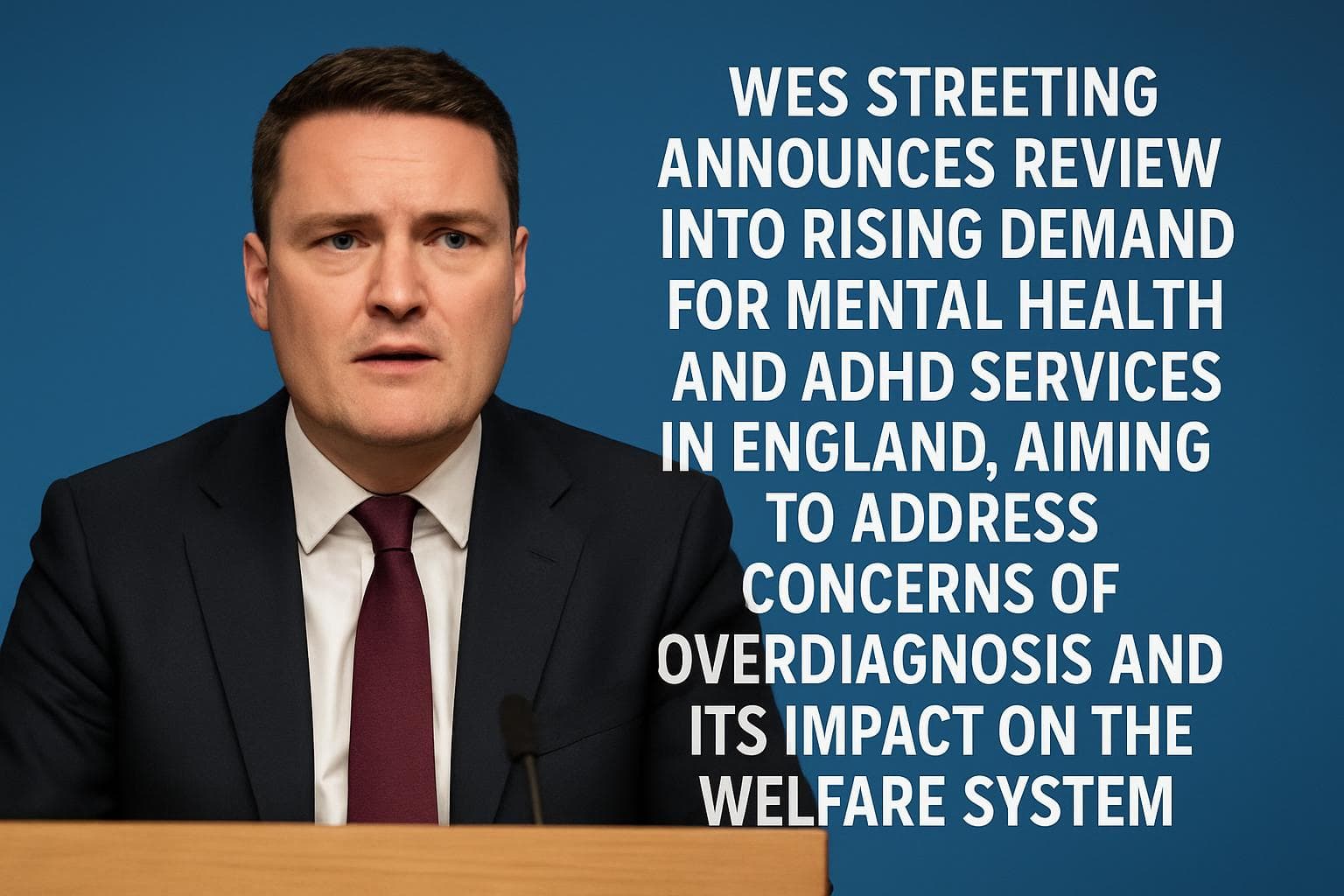
Health Secretary Wes Streeting has announced an independent review to investigate the increasing demand for mental health, ADHD, and autism services in England. This initiative comes amid concerns about potential overdiagnosis and its implications for the welfare system, which has seen a significant rise in benefit claims.
Addressing Overdiagnosis Concerns
The review, spearheaded by clinical psychologist Prof Peter Fonagy, aims to provide an evidence-based understanding of the current mental health landscape. Streeting has expressed worries that normal emotional experiences may be increasingly pathologized, leading to a surge in diagnoses. "We must look at this through a strictly clinical lens," Streeting stated, emphasizing the need for accurate diagnosis and effective support.
Rising Welfare Claims and NHS Pressure
According to the Institute for Fiscal Studies, around 4.4 million working-age adults in England and Wales are now claiming disability or incapacity benefits, a rise of 1.2 million since 2019. The government has responded by allocating an additional £688 million to mental health services to alleviate the pressure on the NHS. This funding is part of a broader effort to reform the welfare system, which Prime Minister Keir Starmer has criticized for trapping people in poverty and unemployment.
Expert and Public Reactions
Mental health organizations and professionals have welcomed the review. Dr. Sarah Hughes, CEO of the mental health charity Mind, described it as a crucial opportunity to understand the factors driving increased mental illness, particularly among young people. Dr. Lade Smith, President of the Royal College of Psychiatrists, called for the review to identify care gaps and consider the complex reasons behind the rising demand for mental health services.
The National Autistic Society highlighted the urgent need for action, noting that while the number of people seeking assessments has stabilized, waiting times have soared.
WHAT THIS MIGHT MEAN
The outcome of this review could significantly influence future mental health policies and welfare reforms in the UK. If the findings confirm overdiagnosis, it may lead to stricter diagnostic criteria and a reevaluation of current support systems. Conversely, if the review highlights systemic gaps in care, it could prompt increased investment in mental health services and a reevaluation of welfare policies to better support those in need.
Experts suggest that the review's findings, expected in Summer 2026, will be pivotal in shaping the government's approach to mental health and welfare. As the review progresses, stakeholders will be closely watching to see how it addresses the balance between providing necessary support and managing the welfare budget effectively.
Related Articles

Persistent Safety Concerns in Nottingham Maternity Services Amidst Calls for Systemic Reform

UK Government to Reform Asylum Seeker Support and Employment Policies

UK Faces Dilemmas Amid Iran Conflict and China Spying Allegations

UK-Iran Tensions: Starmer Defends Cautious Approach Amid Trump Criticism

Saharan Dust to Illuminate UK Skies with Vivid Sunrises and Sunsets

Diplomatic Tensions Rise as Trump Criticizes Starmer's Iran Policy
Wes Streeting Launches Review into Mental Health and ADHD Diagnoses Amid Rising Welfare Claims
In This Article
 Maya Singh| Published
 HIGHLIGHTS
- Health Secretary Wes Streeting has initiated an independent review into the rising demand for mental health, ADHD, and autism services in England.
- The review, led by Prof Peter Fonagy, aims to address concerns about overdiagnosis and its impact on the welfare system.
- The number of working-age adults claiming disability or incapacity benefits has increased by 1.2 million since 2019.
- The government has allocated £688 million in additional funding to support mental health services amid growing NHS pressure.
- Mental health charities and professionals welcome the review, emphasizing the need to identify gaps in care and understand rising mental illness levels.
Health Secretary Wes Streeting has announced an independent review to investigate the increasing demand for mental health, ADHD, and autism services in England. This initiative comes amid concerns about potential overdiagnosis and its implications for the welfare system, which has seen a significant rise in benefit claims.
Addressing Overdiagnosis Concerns
The review, spearheaded by clinical psychologist Prof Peter Fonagy, aims to provide an evidence-based understanding of the current mental health landscape. Streeting has expressed worries that normal emotional experiences may be increasingly pathologized, leading to a surge in diagnoses. "We must look at this through a strictly clinical lens," Streeting stated, emphasizing the need for accurate diagnosis and effective support.
Rising Welfare Claims and NHS Pressure
According to the Institute for Fiscal Studies, around 4.4 million working-age adults in England and Wales are now claiming disability or incapacity benefits, a rise of 1.2 million since 2019. The government has responded by allocating an additional £688 million to mental health services to alleviate the pressure on the NHS. This funding is part of a broader effort to reform the welfare system, which Prime Minister Keir Starmer has criticized for trapping people in poverty and unemployment.
Expert and Public Reactions
Mental health organizations and professionals have welcomed the review. Dr. Sarah Hughes, CEO of the mental health charity Mind, described it as a crucial opportunity to understand the factors driving increased mental illness, particularly among young people. Dr. Lade Smith, President of the Royal College of Psychiatrists, called for the review to identify care gaps and consider the complex reasons behind the rising demand for mental health services.
The National Autistic Society highlighted the urgent need for action, noting that while the number of people seeking assessments has stabilized, waiting times have soared.
WHAT THIS MIGHT MEAN
The outcome of this review could significantly influence future mental health policies and welfare reforms in the UK. If the findings confirm overdiagnosis, it may lead to stricter diagnostic criteria and a reevaluation of current support systems. Conversely, if the review highlights systemic gaps in care, it could prompt increased investment in mental health services and a reevaluation of welfare policies to better support those in need.
Experts suggest that the review's findings, expected in Summer 2026, will be pivotal in shaping the government's approach to mental health and welfare. As the review progresses, stakeholders will be closely watching to see how it addresses the balance between providing necessary support and managing the welfare budget effectively.
Related Articles
Persistent Safety Concerns in Nottingham Maternity Services Amidst Calls for Systemic Reform
UK Government to Reform Asylum Seeker Support and Employment Policies
UK Faces Dilemmas Amid Iran Conflict and China Spying Allegations
UK-Iran Tensions: Starmer Defends Cautious Approach Amid Trump Criticism
Saharan Dust to Illuminate UK Skies with Vivid Sunrises and Sunsets
Diplomatic Tensions Rise as Trump Criticizes Starmer's Iran Policy