
Thousands Gather at Stonehenge and Newgrange to Celebrate Winter Solstice
In This Article
HIGHLIGHTS
- Thousands gathered at Stonehenge and Newgrange to celebrate the winter solstice, marking the shortest day of the year.
- Stonehenge, a Neolithic monument in Wiltshire, aligns with the sun's movements during solstices, drawing diverse crowds annually.
- Newgrange, a 5,200-year-old tomb in Ireland, is renowned for its solstice sunrise illumination, attracting around 2,000 visitors.
- Celebrations included traditional pagan rituals, with participants donning Celtic attire and engaging in spiritual ceremonies.
- The winter solstice symbolizes rebirth and change, a theme echoed by attendees and experts alike.
As the winter solstice dawned on December 21, thousands of enthusiasts and spiritual seekers converged at two of the world's most iconic ancient sites—Stonehenge in England and Newgrange in Ireland—to witness the celestial event that marks the shortest day and longest night of the year.
Stonehenge: A Gathering of Cultures
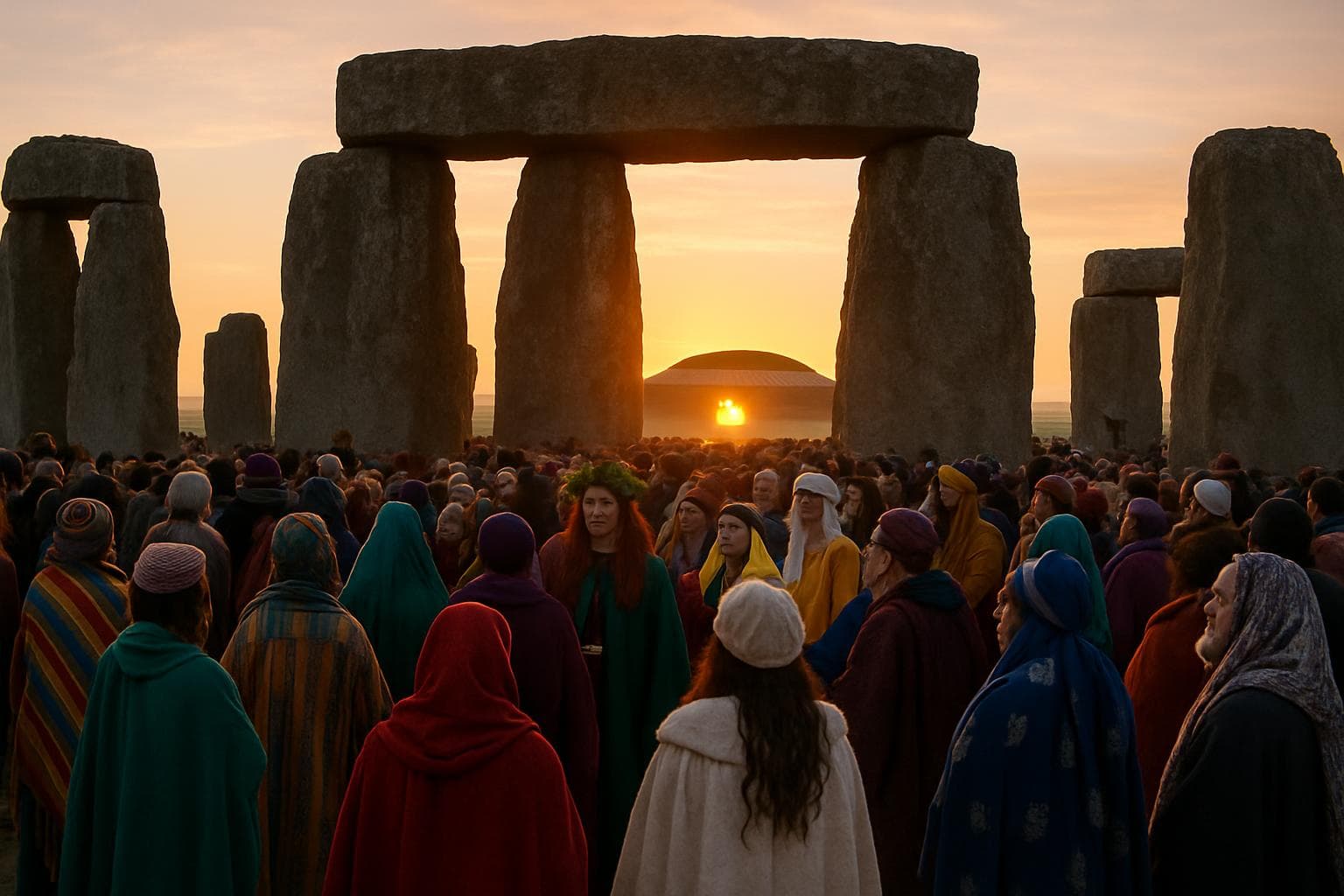
In the early hours of Sunday morning, Stonehenge in Wiltshire became a focal point for thousands who braved the cold to witness the sun's first rays piercing through the ancient stone arches. The site, believed to have been constructed around 2,500 BC, is famously aligned with the sun's movements during solstices. English Heritage, the organization responsible for the site, notes that the winter solstice may have been the primary focus for its builders.
Among the crowd were druids, pagans, and visitors from around the globe, many dressed in traditional Celtic clothing. Kim Tester and Paul Ransom, regular attendees, described the event as a time of "rebirth," emphasizing the intimate atmosphere created by the smaller winter crowds. For Bradley O’Neill, who traveled from Australia, experiencing the solstice at Stonehenge was a dream fulfilled. "I feel special, in my heart," he shared, reflecting the sentiment of many present.
Newgrange: A Timeless Illumination
Across the Irish Sea, approximately 2,000 people gathered at Newgrange, a 5,200-year-old burial tomb in County Meath, to witness a similar spectacle. As the sun rose, its light illuminated the tomb's inner chamber, a phenomenon that has captivated observers for millennia. Professor Michael Burton of Armagh Observatory highlighted the solstice's enduring appeal, noting its precise astronomical significance and its role as a symbol of change.
A Celebration of Tradition and Unity
The winter solstice celebrations at both sites were marked by a blend of ancient rituals and modern gatherings. Golnar Pooya, a Persian Zoroastrian, celebrated the solstice at Stonehenge for the first time, sharing her cultural traditions with the diverse assembly. "It's spectacular to see so many people from so many different cultures coming together," she remarked.
As daylight hours begin to lengthen, the solstice serves as a powerful reminder of nature's cycles and humanity's enduring connection to the cosmos.
WHAT THIS MIGHT MEAN
Looking ahead, the winter solstice celebrations at Stonehenge and Newgrange are likely to continue drawing large crowds, underscoring the enduring fascination with these ancient sites. The events highlight a growing interest in cultural and spiritual traditions, which may lead to increased efforts to preserve and promote these historical landmarks. As discussions around the potential Unesco World Heritage status for sites like the Armagh Observatory progress, the recognition of Ireland's and the UK's roles in astronomical history could further enhance global appreciation for these timeless celebrations.
Related Articles
Saharan Dust to Illuminate UK Skies with Vivid Sunrises and Sunsets

Trump Raises Import Tariffs to 15% After Supreme Court Setback

Canada and Australia Forge Strategic Partnership Amid Global Uncertainty

Breakthrough Drug Offers Hope for Children with Severe Epilepsy

Canada Calls for De-escalation Amid US-Israel Strikes on Iran

Government Announces £4 Billion Overhaul of SEND Support in England
Thousands Gather at Stonehenge and Newgrange to Celebrate Winter Solstice
In This Article
 Leila Hassan| Published
 HIGHLIGHTS
- Thousands gathered at Stonehenge and Newgrange to celebrate the winter solstice, marking the shortest day of the year.
- Stonehenge, a Neolithic monument in Wiltshire, aligns with the sun's movements during solstices, drawing diverse crowds annually.
- Newgrange, a 5,200-year-old tomb in Ireland, is renowned for its solstice sunrise illumination, attracting around 2,000 visitors.
- Celebrations included traditional pagan rituals, with participants donning Celtic attire and engaging in spiritual ceremonies.
- The winter solstice symbolizes rebirth and change, a theme echoed by attendees and experts alike.
As the winter solstice dawned on December 21, thousands of enthusiasts and spiritual seekers converged at two of the world's most iconic ancient sites—Stonehenge in England and Newgrange in Ireland—to witness the celestial event that marks the shortest day and longest night of the year.
Stonehenge: A Gathering of Cultures
In the early hours of Sunday morning, Stonehenge in Wiltshire became a focal point for thousands who braved the cold to witness the sun's first rays piercing through the ancient stone arches. The site, believed to have been constructed around 2,500 BC, is famously aligned with the sun's movements during solstices. English Heritage, the organization responsible for the site, notes that the winter solstice may have been the primary focus for its builders.
Among the crowd were druids, pagans, and visitors from around the globe, many dressed in traditional Celtic clothing. Kim Tester and Paul Ransom, regular attendees, described the event as a time of "rebirth," emphasizing the intimate atmosphere created by the smaller winter crowds. For Bradley O’Neill, who traveled from Australia, experiencing the solstice at Stonehenge was a dream fulfilled. "I feel special, in my heart," he shared, reflecting the sentiment of many present.
Newgrange: A Timeless Illumination
Across the Irish Sea, approximately 2,000 people gathered at Newgrange, a 5,200-year-old burial tomb in County Meath, to witness a similar spectacle. As the sun rose, its light illuminated the tomb's inner chamber, a phenomenon that has captivated observers for millennia. Professor Michael Burton of Armagh Observatory highlighted the solstice's enduring appeal, noting its precise astronomical significance and its role as a symbol of change.
A Celebration of Tradition and Unity
The winter solstice celebrations at both sites were marked by a blend of ancient rituals and modern gatherings. Golnar Pooya, a Persian Zoroastrian, celebrated the solstice at Stonehenge for the first time, sharing her cultural traditions with the diverse assembly. "It's spectacular to see so many people from so many different cultures coming together," she remarked.
As daylight hours begin to lengthen, the solstice serves as a powerful reminder of nature's cycles and humanity's enduring connection to the cosmos.
WHAT THIS MIGHT MEAN
Looking ahead, the winter solstice celebrations at Stonehenge and Newgrange are likely to continue drawing large crowds, underscoring the enduring fascination with these ancient sites. The events highlight a growing interest in cultural and spiritual traditions, which may lead to increased efforts to preserve and promote these historical landmarks. As discussions around the potential Unesco World Heritage status for sites like the Armagh Observatory progress, the recognition of Ireland's and the UK's roles in astronomical history could further enhance global appreciation for these timeless celebrations.
Related Articles
Saharan Dust to Illuminate UK Skies with Vivid Sunrises and Sunsets
Trump Raises Import Tariffs to 15% After Supreme Court Setback
Canada and Australia Forge Strategic Partnership Amid Global Uncertainty
Breakthrough Drug Offers Hope for Children with Severe Epilepsy
Canada Calls for De-escalation Amid US-Israel Strikes on Iran
Government Announces £4 Billion Overhaul of SEND Support in England