
Over 100 Charged for Supporting Banned Group Palestine Action Amid Legal Challenge
In This Article
HIGHLIGHTS
- A total of 114 people have been charged for supporting the banned group Palestine Action, with 47 new charges announced.
- The charges stem from a protest on 19 July, with participants accused of violating terrorism laws by supporting a proscribed group.
- Among those charged is an 81-year-old woman, highlighting the diverse age range of the accused.
- The group is challenging the ban in the High Court, arguing it infringes on free speech and legitimate protest rights.
- The Home Secretary banned Palestine Action under terrorism laws after an incident at RAF Brize Norton caused £7m in damage.
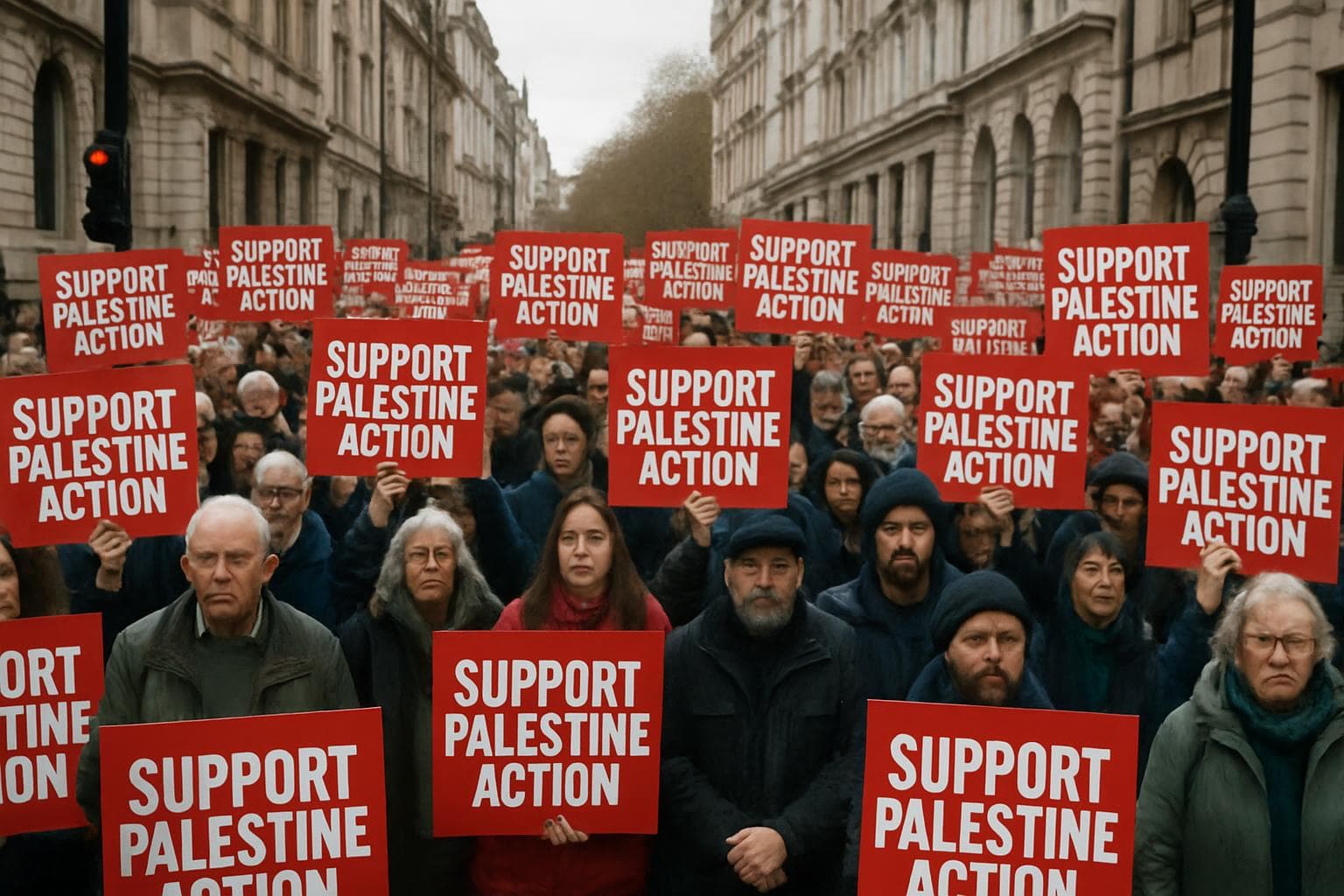
In a significant legal development, the Metropolitan Police have charged 47 more individuals for allegedly supporting the proscribed group Palestine Action, bringing the total number of charges to 114. These charges follow a protest held on 19 July in London, where demonstrators were accused of violating terrorism laws by showing support for the banned organization.
Protest and Charges
The recent charges include a diverse group of individuals, with more than half over the age of 60, including an 81-year-old retired teacher, Yvonne Hayward. The protest, organized by Defend Our Juries, encouraged participants to display signs reading "I oppose genocide, I support Palestine Action." The Metropolitan Police's decision to charge these individuals has been criticized by protest organizers as an attempt to deter future demonstrations.
Legal Context and Government Stance
The charges are based on section 13 of the Terrorism Act, a lower-level offence that will be tried in a magistrates' court. The Home Secretary, Yvette Cooper, justified the ban on Palestine Action, citing the group's involvement in serious criminal activities, including an incident at RAF Brize Norton that resulted in £7 million worth of damage. The government maintains that the ban is a necessary measure to prevent further criminality.
Challenge to the Ban
Palestine Action has been granted permission to challenge the ban in the High Court, with a hearing scheduled for November. The group, along with other campaigners, argues that the ban infringes on the right to free speech and stifles legitimate protest. Despite an appeal to temporarily lift the ban being denied, the group remains hopeful for a favorable outcome in the upcoming court proceedings.
WHAT THIS MIGHT MEAN
As the High Court prepares to hear the challenge against the ban on Palestine Action, the case could set a significant precedent regarding the balance between national security and free speech. If the court rules in favor of the group, it may lead to a reassessment of how terrorism laws are applied to protest groups. Conversely, if the ban is upheld, it could embolden the government to take similar actions against other organizations deemed to be engaging in criminal activities. Legal experts will be closely watching the proceedings, as the outcome could have far-reaching implications for protest rights in the UK.
Related Articles
Police Federation Chief Arrested Amid Fraud Investigation
Labour MP's Husband Arrested in UK-China Espionage Probe
Nottingham Attacks Inquiry: Families Demand Accountability and Truth

Canada and Australia Forge Strategic Partnership Amid Global Uncertainty
UK Government to Reform Asylum Seeker Support and Employment Policies
Middle East Conflict Drives UK Energy Prices to New Highs
Over 100 Charged for Supporting Banned Group Palestine Action Amid Legal Challenge
In This Article
 Sofia Romano| Published
 HIGHLIGHTS
- A total of 114 people have been charged for supporting the banned group Palestine Action, with 47 new charges announced.
- The charges stem from a protest on 19 July, with participants accused of violating terrorism laws by supporting a proscribed group.
- Among those charged is an 81-year-old woman, highlighting the diverse age range of the accused.
- The group is challenging the ban in the High Court, arguing it infringes on free speech and legitimate protest rights.
- The Home Secretary banned Palestine Action under terrorism laws after an incident at RAF Brize Norton caused £7m in damage.
In a significant legal development, the Metropolitan Police have charged 47 more individuals for allegedly supporting the proscribed group Palestine Action, bringing the total number of charges to 114. These charges follow a protest held on 19 July in London, where demonstrators were accused of violating terrorism laws by showing support for the banned organization.
Protest and Charges
The recent charges include a diverse group of individuals, with more than half over the age of 60, including an 81-year-old retired teacher, Yvonne Hayward. The protest, organized by Defend Our Juries, encouraged participants to display signs reading "I oppose genocide, I support Palestine Action." The Metropolitan Police's decision to charge these individuals has been criticized by protest organizers as an attempt to deter future demonstrations.
Legal Context and Government Stance
The charges are based on section 13 of the Terrorism Act, a lower-level offence that will be tried in a magistrates' court. The Home Secretary, Yvette Cooper, justified the ban on Palestine Action, citing the group's involvement in serious criminal activities, including an incident at RAF Brize Norton that resulted in £7 million worth of damage. The government maintains that the ban is a necessary measure to prevent further criminality.
Challenge to the Ban
Palestine Action has been granted permission to challenge the ban in the High Court, with a hearing scheduled for November. The group, along with other campaigners, argues that the ban infringes on the right to free speech and stifles legitimate protest. Despite an appeal to temporarily lift the ban being denied, the group remains hopeful for a favorable outcome in the upcoming court proceedings.
WHAT THIS MIGHT MEAN
As the High Court prepares to hear the challenge against the ban on Palestine Action, the case could set a significant precedent regarding the balance between national security and free speech. If the court rules in favor of the group, it may lead to a reassessment of how terrorism laws are applied to protest groups. Conversely, if the ban is upheld, it could embolden the government to take similar actions against other organizations deemed to be engaging in criminal activities. Legal experts will be closely watching the proceedings, as the outcome could have far-reaching implications for protest rights in the UK.
Related Articles
Police Federation Chief Arrested Amid Fraud Investigation
Labour MP's Husband Arrested in UK-China Espionage Probe
Nottingham Attacks Inquiry: Families Demand Accountability and Truth
Canada and Australia Forge Strategic Partnership Amid Global Uncertainty
UK Government to Reform Asylum Seeker Support and Employment Policies
Middle East Conflict Drives UK Energy Prices to New Highs