
47 Charged in Crackdown on Palestine Action Supporters Amid Free Speech Concerns
In This Article
HIGHLIGHTS
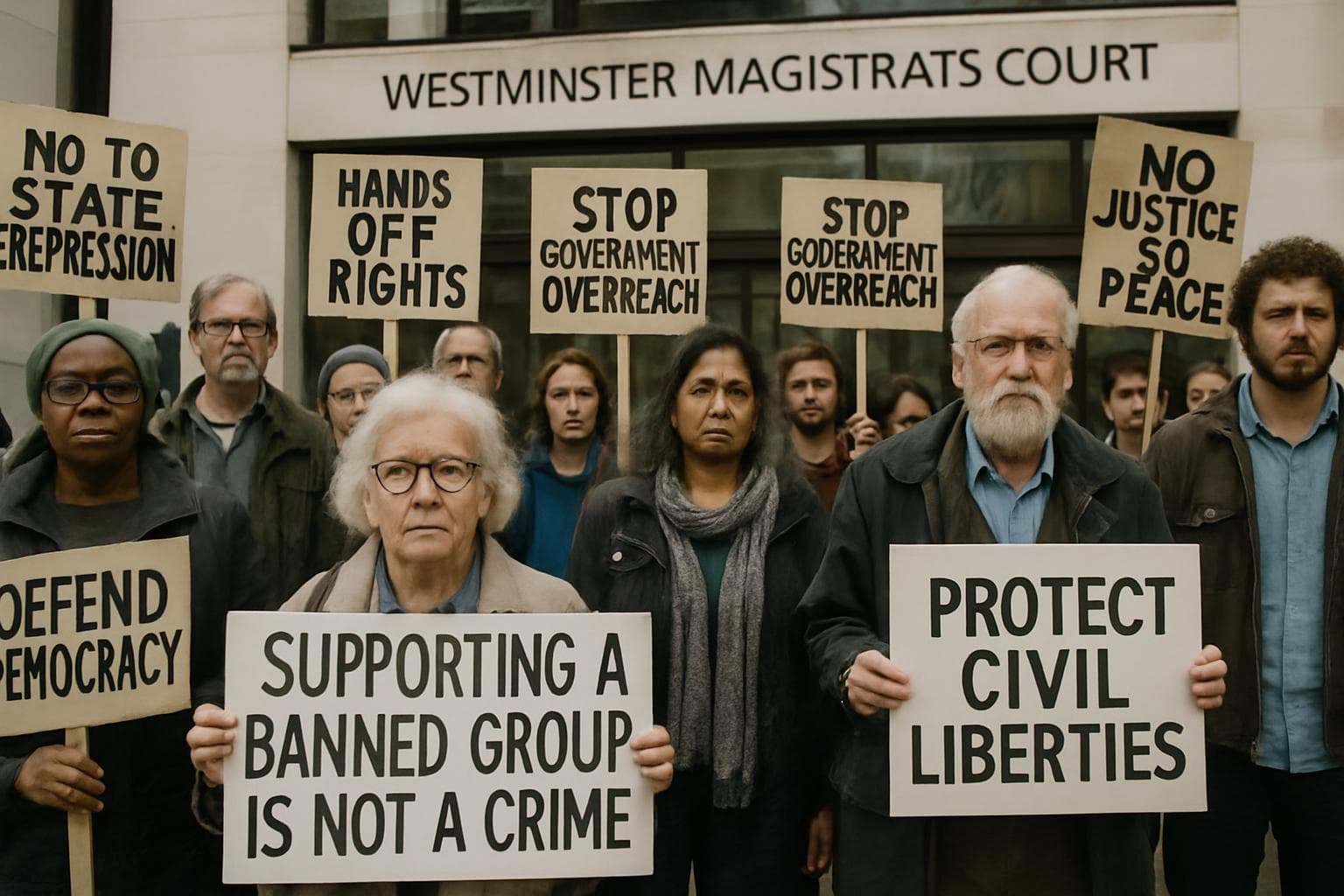
- 47 individuals, including an 81-year-old woman, have been charged for supporting the banned group Palestine Action during a July protest.
- The Metropolitan Police have now charged a total of 114 people under terrorism laws for supporting the proscribed group.
- The charges are part of a broader crackdown following the group's proscription on 5 July, with over 700 arrests made.
- Critics argue the ban infringes on freedom of speech, with a High Court challenge scheduled for November.
- The accused are set to appear at Westminster Magistrates' Court in late October.
In a significant development, the Metropolitan Police have charged 47 more individuals for allegedly supporting the proscribed group Palestine Action during a protest in London on 19 July. This brings the total number of people charged to 114, as authorities continue to enforce the ban imposed on the group under terrorism laws.
The recent charges include Yvonne Hayward, an 81-year-old retired teacher from Lewisham, highlighting the diverse demographic of those involved. More than half of the newly charged individuals are over 60, according to police reports. The accused are expected to appear at Westminster Magistrates' Court on 27 or 28 October.
Background on the Ban
Palestine Action was banned on 5 July after members allegedly caused £7 million in damages by defacing military aircraft at RAF Brize Norton. Home Secretary Yvette Cooper justified the proscription, citing the group's involvement in organizing serious criminal activities. Under the ban, membership or support for the group can result in up to 14 years in prison.
Criticism and Legal Challenge
The ban has sparked significant controversy, with critics arguing it infringes on freedom of speech and stifles legitimate protest. Lawyers for Huda Ammori, a co-founder of Palestine Action, have challenged the ban, and the case is set to be heard at the High Court in November. Despite an appeal to temporarily lift the ban being denied, the legal battle continues.
Tim Crosland, a spokesperson for Defend Our Juries, criticized the police's actions, describing them as "desperate" attempts to deter further protests. He noted that previous efforts to suppress demonstrations had failed, with around 1,000 people defying the ban in a recent protest at Parliament Square.
Impact on Individuals
Among those charged is Alice Clack, a senior NHS obstetrician and volunteer with Doctors Without Borders. The charges fall under section 13 of the Terrorism Act, a lower-level offence that will be tried in a magistrates' court rather than a crown court.
WHAT THIS MIGHT MEAN
As the legal proceedings unfold, the upcoming High Court challenge in November could set a significant precedent regarding the balance between national security and freedom of speech. If the court rules in favor of Palestine Action, it may lead to a reassessment of how terrorism laws are applied to protest groups. Conversely, a ruling upholding the ban could embolden further crackdowns on similar organizations.
Politically, the case highlights the ongoing tension between government authorities and civil liberties advocates. The outcome may influence future legislation and enforcement strategies concerning protest groups and their activities. As the situation develops, the international community will likely watch closely, given the broader implications for democratic rights and counter-terrorism measures.
Related Articles
UK Police Intensify Investigation into Andrew Mountbatten-Windsor Amid Misconduct Allegations
Prince Andrew's Arrest Raises Questions About Royal Succession and Monarchy's Future
Nottingham Attacks Inquiry: Families Demand Accountability and Truth
Labour MP's Husband Arrested in UK-China Espionage Probe
British Couple's 10-Year Sentence in Iran Sparks Outcry
UK Government to Reform Asylum Seeker Support and Employment Policies
47 Charged in Crackdown on Palestine Action Supporters Amid Free Speech Concerns
In This Article
 Sofia Romano| Published
 HIGHLIGHTS
- 47 individuals, including an 81-year-old woman, have been charged for supporting the banned group Palestine Action during a July protest.
- The Metropolitan Police have now charged a total of 114 people under terrorism laws for supporting the proscribed group.
- The charges are part of a broader crackdown following the group's proscription on 5 July, with over 700 arrests made.
- Critics argue the ban infringes on freedom of speech, with a High Court challenge scheduled for November.
- The accused are set to appear at Westminster Magistrates' Court in late October.
In a significant development, the Metropolitan Police have charged 47 more individuals for allegedly supporting the proscribed group Palestine Action during a protest in London on 19 July. This brings the total number of people charged to 114, as authorities continue to enforce the ban imposed on the group under terrorism laws.
The recent charges include Yvonne Hayward, an 81-year-old retired teacher from Lewisham, highlighting the diverse demographic of those involved. More than half of the newly charged individuals are over 60, according to police reports. The accused are expected to appear at Westminster Magistrates' Court on 27 or 28 October.
Background on the Ban
Palestine Action was banned on 5 July after members allegedly caused £7 million in damages by defacing military aircraft at RAF Brize Norton. Home Secretary Yvette Cooper justified the proscription, citing the group's involvement in organizing serious criminal activities. Under the ban, membership or support for the group can result in up to 14 years in prison.
Criticism and Legal Challenge
The ban has sparked significant controversy, with critics arguing it infringes on freedom of speech and stifles legitimate protest. Lawyers for Huda Ammori, a co-founder of Palestine Action, have challenged the ban, and the case is set to be heard at the High Court in November. Despite an appeal to temporarily lift the ban being denied, the legal battle continues.
Tim Crosland, a spokesperson for Defend Our Juries, criticized the police's actions, describing them as "desperate" attempts to deter further protests. He noted that previous efforts to suppress demonstrations had failed, with around 1,000 people defying the ban in a recent protest at Parliament Square.
Impact on Individuals
Among those charged is Alice Clack, a senior NHS obstetrician and volunteer with Doctors Without Borders. The charges fall under section 13 of the Terrorism Act, a lower-level offence that will be tried in a magistrates' court rather than a crown court.
WHAT THIS MIGHT MEAN
As the legal proceedings unfold, the upcoming High Court challenge in November could set a significant precedent regarding the balance between national security and freedom of speech. If the court rules in favor of Palestine Action, it may lead to a reassessment of how terrorism laws are applied to protest groups. Conversely, a ruling upholding the ban could embolden further crackdowns on similar organizations.
Politically, the case highlights the ongoing tension between government authorities and civil liberties advocates. The outcome may influence future legislation and enforcement strategies concerning protest groups and their activities. As the situation develops, the international community will likely watch closely, given the broader implications for democratic rights and counter-terrorism measures.
Related Articles
UK Police Intensify Investigation into Andrew Mountbatten-Windsor Amid Misconduct Allegations
Prince Andrew's Arrest Raises Questions About Royal Succession and Monarchy's Future
Nottingham Attacks Inquiry: Families Demand Accountability and Truth
Labour MP's Husband Arrested in UK-China Espionage Probe
British Couple's 10-Year Sentence in Iran Sparks Outcry
UK Government to Reform Asylum Seeker Support and Employment Policies