
Ancient 'Drop Crocs' Unearthed: 55-Million-Year-Old Crocodile Eggshells Found in Queensland
In This Article
HIGHLIGHTS
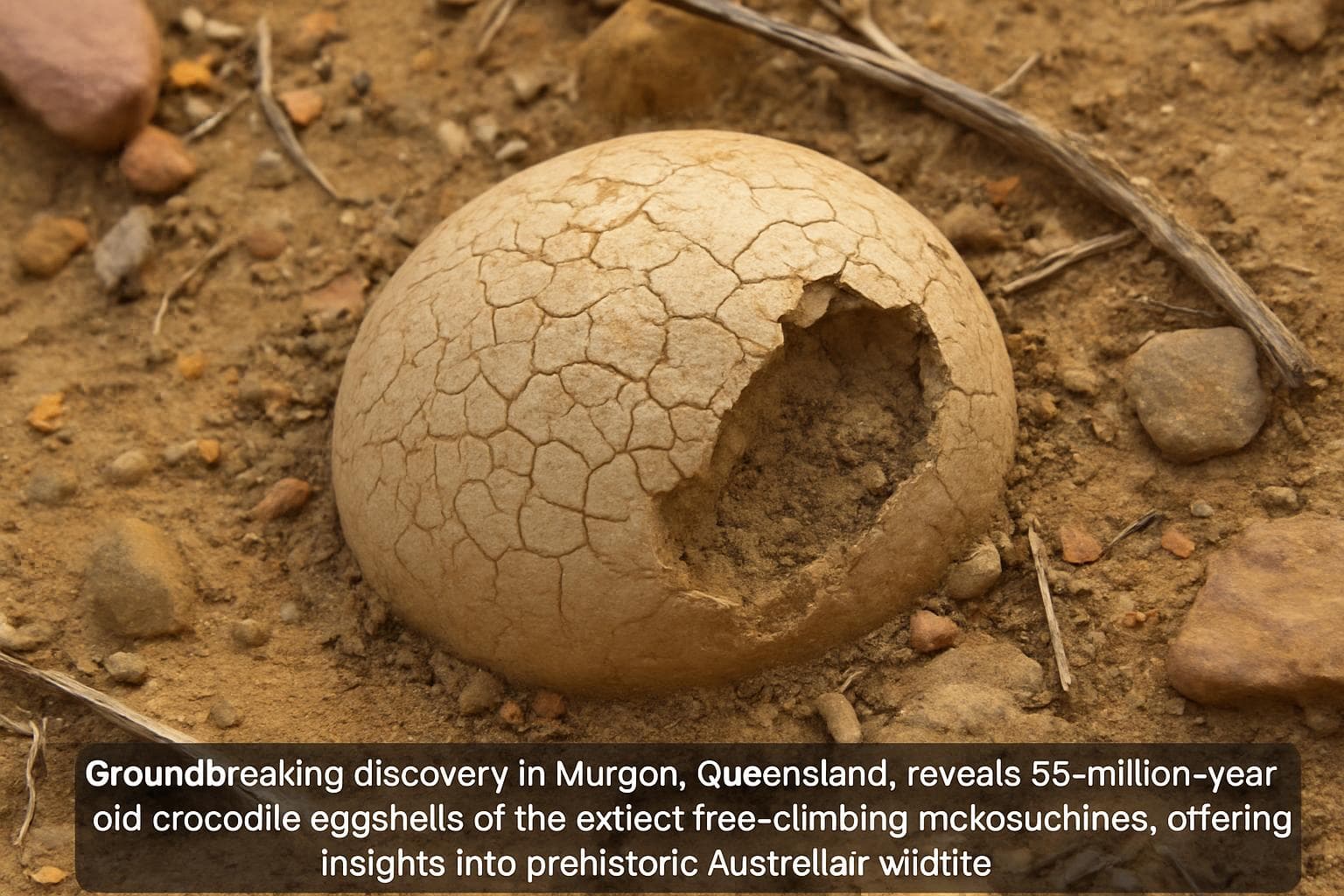
- Scientists discovered 55-million-year-old crocodile eggshells in Queensland, Australia, believed to belong to the extinct mekosuchine group.
- The mekosuchines, including the so-called "drop crocs," were unique to Australia and predated modern crocodiles by millions of years.
- The eggshells were found in Murgon, a site known for its rich fossil deposits, and were analyzed by an international team of researchers.
- The discovery sheds light on the diverse prehistoric wildlife of Australia, including tree-climbing crocodiles.
- The study emphasizes the importance of eggshells in understanding ancient ecosystems and breeding behaviors.
In a groundbreaking discovery, scientists have unearthed 55-million-year-old crocodile eggshells in Queensland, Australia, believed to belong to the extinct mekosuchine group, known for their unique tree-climbing abilities. This remarkable find, made in the backyard of a sheep farmer in Murgon, offers new insights into the prehistoric wildlife of Australia.
Discovery in Murgon
The eggshells, discovered in one of Australia's oldest fossil sites, were analyzed by an international team led by Dr. Xavier Panadès i Blas from the Miquel Crusafont Catalan Institute of Palaeontology. The research, published in the Journal of Vertebrate Paleontology, highlights the significance of these eggshells in understanding ancient ecosystems. "Eggshells preserve microstructural and geochemical signals that tell us not only what kinds of animals laid them, but also where they nested and how they bred," Dr. Panadès i Blas explained.
The Mekosuchine Legacy
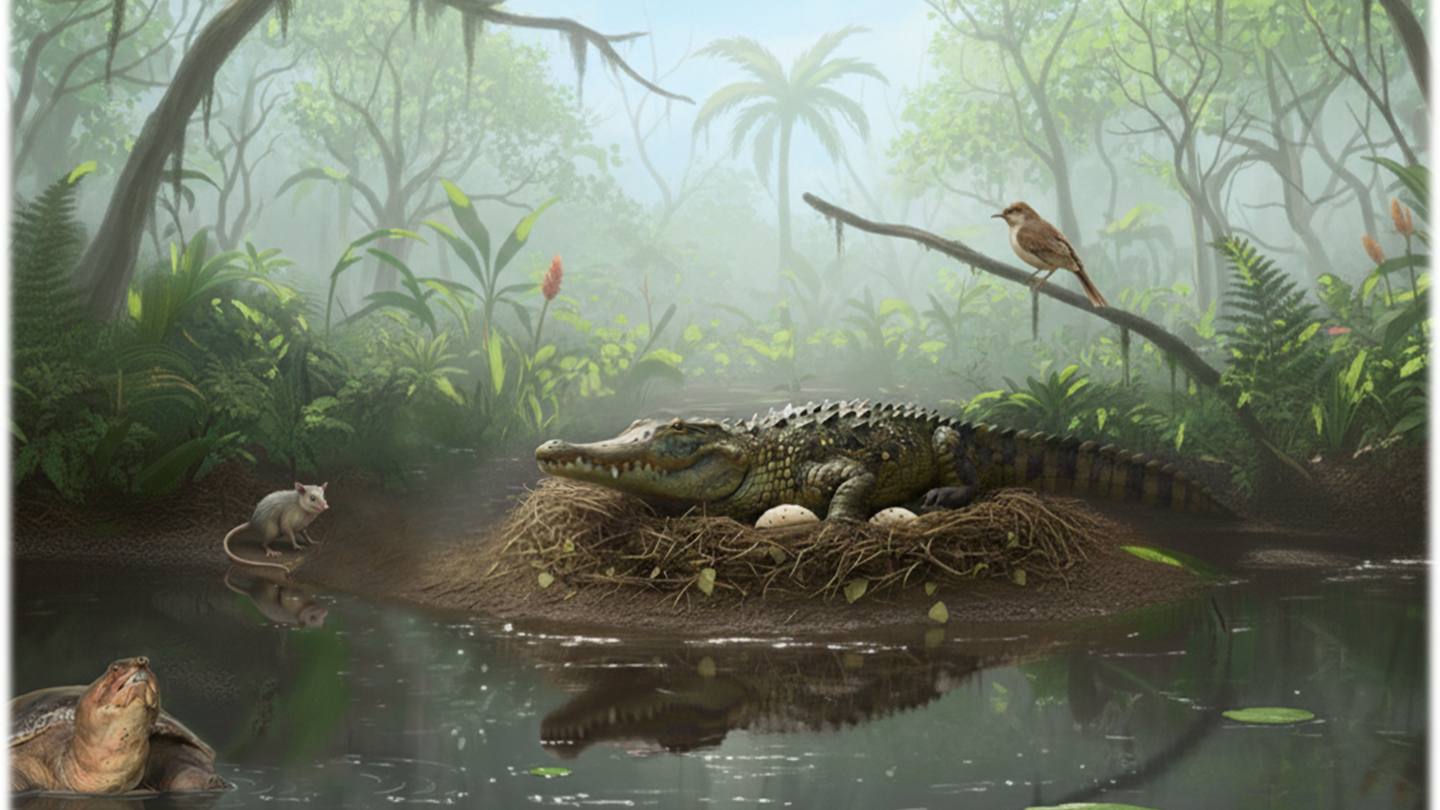
The mekosuchines, including the so-called "drop crocs," were a unique group of crocodiles that roamed Australia long before the arrival of modern saltwater and freshwater crocodiles. These ancient reptiles, some of which were semi-arboreal, are thought to have hunted by dropping from trees onto unsuspecting prey. Professor Michael Archer, a co-author of the study, noted, "The idea of 'drop crocs' isn't as crazy as it sounds. We probably did have crocodiles that were spending time in the trees and jumping out on prey."
A Window into Prehistoric Australia
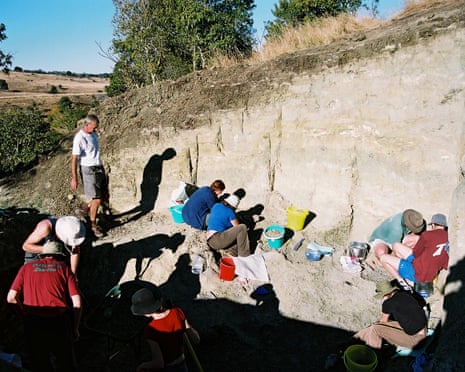
The Murgon site, approximately 270km northwest of Brisbane, has been a treasure trove of fossils since the early 1980s. It has revealed a diverse array of prehistoric life, including the world's oldest-known songbirds, early frogs, snakes, and small mammals with South American links. Dr. Michael Stein, another co-author, emphasized the site's importance, stating, "This forest was also home to a wide range of small mammals with South American links, as well as one of the world's oldest known bats."
WHAT THIS MIGHT MEAN
The discovery of these ancient crocodile eggshells opens new avenues for understanding the evolution and diversity of prehistoric wildlife in Australia. As researchers continue to analyze these findings, they may uncover more about the ecological roles and behaviors of the mekosuchines. This could lead to a reevaluation of how ancient ecosystems functioned and how species adapted to their environments.
The study also underscores the importance of preserving fossil sites like Murgon, which hold untapped potential for future discoveries. As paleontologists continue to explore these areas, they may find additional evidence that further illuminates the complex history of life on Earth.
Images from the Web
Related Articles

Angus Taylor Challenges Sussan Ley for Leadership of Australia's Liberal Party

Queensland Man Faces 596 Child Abuse Charges in Global Online Grooming Case

Canada and Australia Forge Strategic Partnership Amid Global Uncertainty

Canada Calls for De-escalation Amid US-Israel Strikes on Iran

Trump's New Tariff Strategy Sparks Global Trade Uncertainty

Trump Raises Import Tariffs to 15% After Supreme Court Setback
Ancient 'Drop Crocs' Unearthed: 55-Million-Year-Old Crocodile Eggshells Found in Queensland
In This Article
 James Okoro| Published
 HIGHLIGHTS
- Scientists discovered 55-million-year-old crocodile eggshells in Queensland, Australia, believed to belong to the extinct mekosuchine group.
- The mekosuchines, including the so-called "drop crocs," were unique to Australia and predated modern crocodiles by millions of years.
- The eggshells were found in Murgon, a site known for its rich fossil deposits, and were analyzed by an international team of researchers.
- The discovery sheds light on the diverse prehistoric wildlife of Australia, including tree-climbing crocodiles.
- The study emphasizes the importance of eggshells in understanding ancient ecosystems and breeding behaviors.
In a groundbreaking discovery, scientists have unearthed 55-million-year-old crocodile eggshells in Queensland, Australia, believed to belong to the extinct mekosuchine group, known for their unique tree-climbing abilities. This remarkable find, made in the backyard of a sheep farmer in Murgon, offers new insights into the prehistoric wildlife of Australia.
Discovery in Murgon
The eggshells, discovered in one of Australia's oldest fossil sites, were analyzed by an international team led by Dr. Xavier Panadès i Blas from the Miquel Crusafont Catalan Institute of Palaeontology. The research, published in the Journal of Vertebrate Paleontology, highlights the significance of these eggshells in understanding ancient ecosystems. "Eggshells preserve microstructural and geochemical signals that tell us not only what kinds of animals laid them, but also where they nested and how they bred," Dr. Panadès i Blas explained.
The Mekosuchine Legacy
The mekosuchines, including the so-called "drop crocs," were a unique group of crocodiles that roamed Australia long before the arrival of modern saltwater and freshwater crocodiles. These ancient reptiles, some of which were semi-arboreal, are thought to have hunted by dropping from trees onto unsuspecting prey. Professor Michael Archer, a co-author of the study, noted, "The idea of 'drop crocs' isn't as crazy as it sounds. We probably did have crocodiles that were spending time in the trees and jumping out on prey."
A Window into Prehistoric Australia
The Murgon site, approximately 270km northwest of Brisbane, has been a treasure trove of fossils since the early 1980s. It has revealed a diverse array of prehistoric life, including the world's oldest-known songbirds, early frogs, snakes, and small mammals with South American links. Dr. Michael Stein, another co-author, emphasized the site's importance, stating, "This forest was also home to a wide range of small mammals with South American links, as well as one of the world's oldest known bats."
WHAT THIS MIGHT MEAN
The discovery of these ancient crocodile eggshells opens new avenues for understanding the evolution and diversity of prehistoric wildlife in Australia. As researchers continue to analyze these findings, they may uncover more about the ecological roles and behaviors of the mekosuchines. This could lead to a reevaluation of how ancient ecosystems functioned and how species adapted to their environments.
The study also underscores the importance of preserving fossil sites like Murgon, which hold untapped potential for future discoveries. As paleontologists continue to explore these areas, they may find additional evidence that further illuminates the complex history of life on Earth.
Images from the Web
Related Articles
Angus Taylor Challenges Sussan Ley for Leadership of Australia's Liberal Party
Queensland Man Faces 596 Child Abuse Charges in Global Online Grooming Case
Canada and Australia Forge Strategic Partnership Amid Global Uncertainty
Canada Calls for De-escalation Amid US-Israel Strikes on Iran
Trump's New Tariff Strategy Sparks Global Trade Uncertainty
Trump Raises Import Tariffs to 15% After Supreme Court Setback