
Accidental Blast at Kashmir Police Station Kills Nine Amid Heightened Security Concerns
In This Article
HIGHLIGHTS
- A tragic explosion at a police station in Srinagar, Kashmir, killed nine people and injured 32, primarily police and forensic personnel.
- The blast was caused by confiscated explosives from Faridabad, Haryana, and was deemed accidental by authorities.
- The incident follows a deadly car explosion in Delhi, which the Indian government labeled a "terror incident" linked to anti-national forces.
- Investigations into the Delhi blast have led to several arrests in Kashmir, uncovering a suspected terror module with ties to Pakistan.
- Indian security agencies are conducting extensive raids and questioning in Kashmir as part of ongoing investigations into both incidents.
In a tragic incident that has further intensified security concerns in India, an accidental explosion at a police station in Srinagar, Kashmir, resulted in the deaths of nine individuals and left 32 others injured. The blast, which occurred late Friday night, was caused by a cache of confiscated explosives that detonated while being examined by police and forensic teams. The explosives had been seized earlier in the week from Faridabad, Haryana, and were intended for forensic analysis.
Accidental Detonation in Srinagar
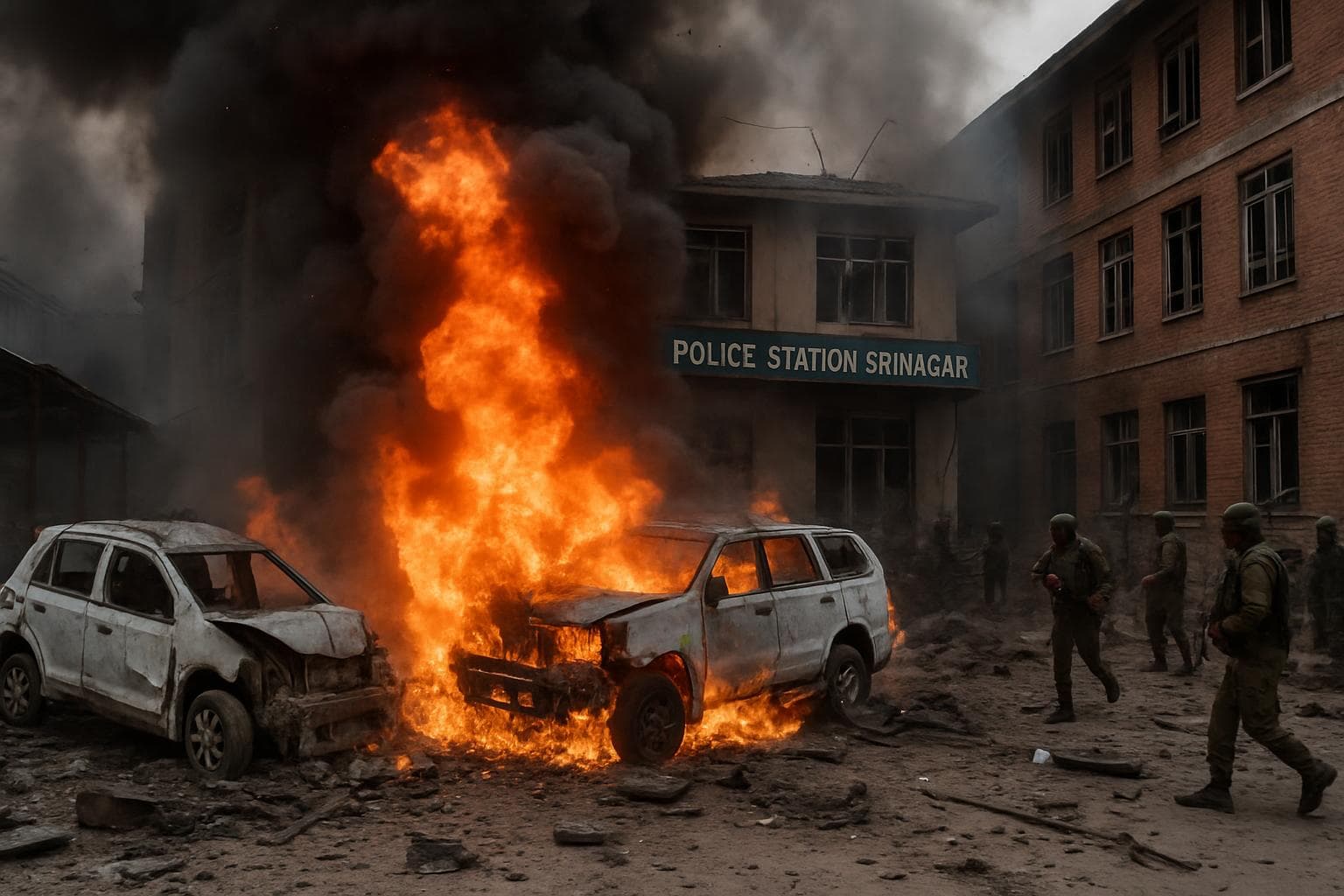
The explosion took place at the Nowgam police station, causing significant damage to the building and nearby structures. Vehicles parked in the vicinity were engulfed in flames, and debris was scattered across the area. According to Nalin Prabhat, the region's director general of police, the detonation was purely accidental, and any speculation of foul play is unwarranted. Most of the victims were police officers and forensic personnel, with some of the injured reported to be in critical condition.
Delhi Car Blast and Broader Security Concerns
This incident comes on the heels of a deadly car explosion in Delhi earlier in the week, which claimed 13 lives and has been classified as a "terror incident" by the Indian government. The blast occurred near the historic Red Fort during rush hour, and authorities suspect it was orchestrated by anti-national forces. In response, Indian security agencies have launched a series of raids and arrests across Kashmir, targeting a suspected terror module with alleged links to Pakistan.
Ongoing Investigations and Arrests
Investigations into the Delhi car blast have led to the arrest of several individuals, including two doctors from Kashmir, who are believed to be part of a larger network. During raids in Faridabad, police uncovered a substantial amount of explosive materials, chemicals, and weapons, suggesting plans for a multi-target attack. The National Investigation Agency has taken over the case, and efforts to dismantle the terror network continue.
WHAT THIS MIGHT MEAN
The accidental explosion in Srinagar underscores the volatile security situation in the region, particularly in light of the recent Delhi car blast. As investigations proceed, there is potential for further arrests and discoveries that could shed light on the extent of the terror network's operations. The Indian government's response, including increased raids and security measures, reflects the urgency of addressing these threats. Moving forward, the focus will likely remain on dismantling any remaining elements of the suspected terror module and preventing future incidents. The situation also highlights the ongoing tensions between India and Pakistan, particularly concerning the disputed region of Kashmir, which remains a focal point for both domestic and international security concerns.
Related Articles
Indian National Pleads Guilty in US Murder-for-Hire Plot Targeting Sikh Activist

Bill Gates Withdraws from India AI Summit Amid Epstein Controversy

India's AI Impact Summit Faces Logistical Hurdles Amid Global AI Discussions

Sisters Tragically Drown at Eryri National Park's Watkin Path
Iran Postpones Khamenei Funeral Amid Escalating US-Israeli Strikes
Canada Calls for De-escalation Amid US-Israel Strikes on Iran
Accidental Blast at Kashmir Police Station Kills Nine Amid Heightened Security Concerns
In This Article
 Sofia Romano| Published
 HIGHLIGHTS
- A tragic explosion at a police station in Srinagar, Kashmir, killed nine people and injured 32, primarily police and forensic personnel.
- The blast was caused by confiscated explosives from Faridabad, Haryana, and was deemed accidental by authorities.
- The incident follows a deadly car explosion in Delhi, which the Indian government labeled a "terror incident" linked to anti-national forces.
- Investigations into the Delhi blast have led to several arrests in Kashmir, uncovering a suspected terror module with ties to Pakistan.
- Indian security agencies are conducting extensive raids and questioning in Kashmir as part of ongoing investigations into both incidents.
In a tragic incident that has further intensified security concerns in India, an accidental explosion at a police station in Srinagar, Kashmir, resulted in the deaths of nine individuals and left 32 others injured. The blast, which occurred late Friday night, was caused by a cache of confiscated explosives that detonated while being examined by police and forensic teams. The explosives had been seized earlier in the week from Faridabad, Haryana, and were intended for forensic analysis.
Accidental Detonation in Srinagar
The explosion took place at the Nowgam police station, causing significant damage to the building and nearby structures. Vehicles parked in the vicinity were engulfed in flames, and debris was scattered across the area. According to Nalin Prabhat, the region's director general of police, the detonation was purely accidental, and any speculation of foul play is unwarranted. Most of the victims were police officers and forensic personnel, with some of the injured reported to be in critical condition.
Delhi Car Blast and Broader Security Concerns
This incident comes on the heels of a deadly car explosion in Delhi earlier in the week, which claimed 13 lives and has been classified as a "terror incident" by the Indian government. The blast occurred near the historic Red Fort during rush hour, and authorities suspect it was orchestrated by anti-national forces. In response, Indian security agencies have launched a series of raids and arrests across Kashmir, targeting a suspected terror module with alleged links to Pakistan.
Ongoing Investigations and Arrests
Investigations into the Delhi car blast have led to the arrest of several individuals, including two doctors from Kashmir, who are believed to be part of a larger network. During raids in Faridabad, police uncovered a substantial amount of explosive materials, chemicals, and weapons, suggesting plans for a multi-target attack. The National Investigation Agency has taken over the case, and efforts to dismantle the terror network continue.
WHAT THIS MIGHT MEAN
The accidental explosion in Srinagar underscores the volatile security situation in the region, particularly in light of the recent Delhi car blast. As investigations proceed, there is potential for further arrests and discoveries that could shed light on the extent of the terror network's operations. The Indian government's response, including increased raids and security measures, reflects the urgency of addressing these threats. Moving forward, the focus will likely remain on dismantling any remaining elements of the suspected terror module and preventing future incidents. The situation also highlights the ongoing tensions between India and Pakistan, particularly concerning the disputed region of Kashmir, which remains a focal point for both domestic and international security concerns.
Related Articles
Indian National Pleads Guilty in US Murder-for-Hire Plot Targeting Sikh Activist
Bill Gates Withdraws from India AI Summit Amid Epstein Controversy
India's AI Impact Summit Faces Logistical Hurdles Amid Global AI Discussions
Sisters Tragically Drown at Eryri National Park's Watkin Path
Iran Postpones Khamenei Funeral Amid Escalating US-Israeli Strikes
Canada Calls for De-escalation Amid US-Israel Strikes on Iran