
India's AI Impact Summit Faces Logistical Hurdles Amid Global AI Discussions

In This Article
HIGHLIGHTS
- India's AI Impact Summit, inaugurated by PM Narendra Modi, faced logistical issues on its first day, with long queues and overcrowding reported.
- The summit, attended by global tech leaders like Sundar Pichai and Sam Altman, aims to explore AI's impact on society and promote India's role in AI innovation.
- Concerns about AI's potential misuse for state surveillance and discrimination were raised by civil liberties groups.
- The event highlights a broader debate between Western AI dominance and India's vision of AI for social justice and inclusion.
- The summit marks a significant moment for AI discussions in the Global South, with participation from over 100 countries.
The AI Impact Summit in Delhi, a landmark event for artificial intelligence discussions in the Global South, opened on a challenging note with logistical issues overshadowing its first day. Inaugurated by Prime Minister Narendra Modi, the summit aims to position India as a key player in the global AI landscape. However, attendees reported long queues, overcrowding, and confusion at the venue, Bharat Mandapam, with some even experiencing theft of their products from exhibition stalls.
Despite these setbacks, the summit has drawn significant attention, with participation from over 100 countries and prominent figures such as Sundar Pichai of Alphabet Inc and Sam Altman of OpenAI. Modi emphasized the summit's role in showcasing India's AI potential and innovation, stating that the country aims to develop solutions not just for itself but for the world. India's Information Technology Minister, Ashwini Vaishnaw, highlighted the summit's focus on evaluating AI's societal impact.
The event also underscores a broader geopolitical narrative, as India seeks to challenge Western dominance in AI. The summit's agenda includes discussions on AI's transformative potential in sectors like agriculture, water management, and public health. However, civil liberties groups have expressed concerns about AI's potential misuse for state surveillance and discrimination against minorities in India.
The summit also serves as a platform for contrasting visions of AI's future. While Western tech giants race for supremacy, India's approach, described by some as "techno-Gandhism," advocates for AI's use in promoting social justice and benefiting marginalized communities. This debate is further highlighted by the participation of António Guterres, the UN Secretary-General, who emphasized the need for AI to be accessible beyond the most developed nations.
WHAT THIS MIGHT MEAN
The AI Impact Summit in Delhi represents a pivotal moment for AI discussions in the Global South. As India positions itself as a leader in AI innovation, the event could catalyze increased investment and collaboration in the region. However, the logistical challenges faced on the first day highlight the need for better infrastructure and planning to support such large-scale international gatherings.
The summit's discussions could influence global AI policies, particularly in balancing technological advancement with ethical considerations. India's emphasis on AI for social justice may inspire similar initiatives in other developing countries, potentially reshaping the global AI landscape. However, concerns about AI's misuse for surveillance and discrimination remain critical issues that need to be addressed to ensure AI's equitable and ethical deployment worldwide.
Related Articles
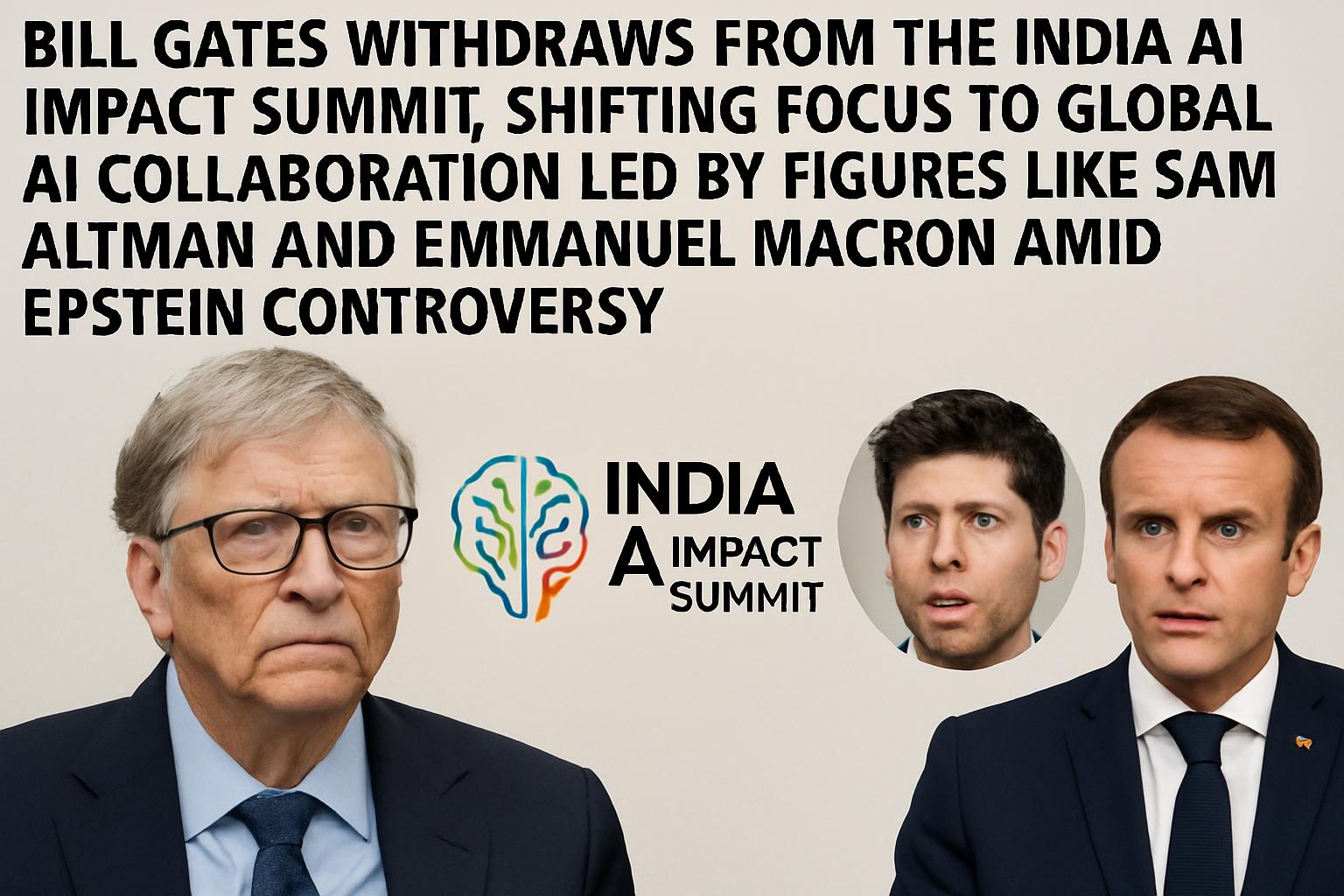
Bill Gates Withdraws from India AI Summit Amid Epstein Controversy

Canada Calls for De-escalation Amid US-Israel Strikes on Iran

Indian National Pleads Guilty in US Murder-for-Hire Plot Targeting Sikh Activist

Intensified US-Israel Strikes on Iran Spark Global Outcry

Iran Postpones Khamenei Funeral Amid Escalating US-Israeli Strikes

US Supreme Court Ruling Sparks Trade Uncertainty in Asia and Beyond
India's AI Impact Summit Faces Logistical Hurdles Amid Global AI Discussions
In This Article
 Himanshu Kaushik| Published
 HIGHLIGHTS
- India's AI Impact Summit, inaugurated by PM Narendra Modi, faced logistical issues on its first day, with long queues and overcrowding reported.
- The summit, attended by global tech leaders like Sundar Pichai and Sam Altman, aims to explore AI's impact on society and promote India's role in AI innovation.
- Concerns about AI's potential misuse for state surveillance and discrimination were raised by civil liberties groups.
- The event highlights a broader debate between Western AI dominance and India's vision of AI for social justice and inclusion.
- The summit marks a significant moment for AI discussions in the Global South, with participation from over 100 countries.
The AI Impact Summit in Delhi, a landmark event for artificial intelligence discussions in the Global South, opened on a challenging note with logistical issues overshadowing its first day. Inaugurated by Prime Minister Narendra Modi, the summit aims to position India as a key player in the global AI landscape. However, attendees reported long queues, overcrowding, and confusion at the venue, Bharat Mandapam, with some even experiencing theft of their products from exhibition stalls.
Despite these setbacks, the summit has drawn significant attention, with participation from over 100 countries and prominent figures such as Sundar Pichai of Alphabet Inc and Sam Altman of OpenAI. Modi emphasized the summit's role in showcasing India's AI potential and innovation, stating that the country aims to develop solutions not just for itself but for the world. India's Information Technology Minister, Ashwini Vaishnaw, highlighted the summit's focus on evaluating AI's societal impact.
The event also underscores a broader geopolitical narrative, as India seeks to challenge Western dominance in AI. The summit's agenda includes discussions on AI's transformative potential in sectors like agriculture, water management, and public health. However, civil liberties groups have expressed concerns about AI's potential misuse for state surveillance and discrimination against minorities in India.
The summit also serves as a platform for contrasting visions of AI's future. While Western tech giants race for supremacy, India's approach, described by some as "techno-Gandhism," advocates for AI's use in promoting social justice and benefiting marginalized communities. This debate is further highlighted by the participation of António Guterres, the UN Secretary-General, who emphasized the need for AI to be accessible beyond the most developed nations.
WHAT THIS MIGHT MEAN
The AI Impact Summit in Delhi represents a pivotal moment for AI discussions in the Global South. As India positions itself as a leader in AI innovation, the event could catalyze increased investment and collaboration in the region. However, the logistical challenges faced on the first day highlight the need for better infrastructure and planning to support such large-scale international gatherings.
The summit's discussions could influence global AI policies, particularly in balancing technological advancement with ethical considerations. India's emphasis on AI for social justice may inspire similar initiatives in other developing countries, potentially reshaping the global AI landscape. However, concerns about AI's misuse for surveillance and discrimination remain critical issues that need to be addressed to ensure AI's equitable and ethical deployment worldwide.
Related Articles
Bill Gates Withdraws from India AI Summit Amid Epstein Controversy
Canada Calls for De-escalation Amid US-Israel Strikes on Iran
Indian National Pleads Guilty in US Murder-for-Hire Plot Targeting Sikh Activist
Intensified US-Israel Strikes on Iran Spark Global Outcry
Iran Postpones Khamenei Funeral Amid Escalating US-Israeli Strikes
US Supreme Court Ruling Sparks Trade Uncertainty in Asia and Beyond