
Adelaide Festival Faces Crisis After Writers' Week Cancellation
In This Article
HIGHLIGHTS
- The Adelaide Festival's Writers' Week was canceled after disinviting Palestinian Australian author Randa Abdel-Fattah, sparking a mass withdrawal of over 180 authors.
- The festival board cited "cultural sensitivities" following a Bondi Beach attack as the reason for Abdel-Fattah's exclusion, which she condemned as racist and censorious.
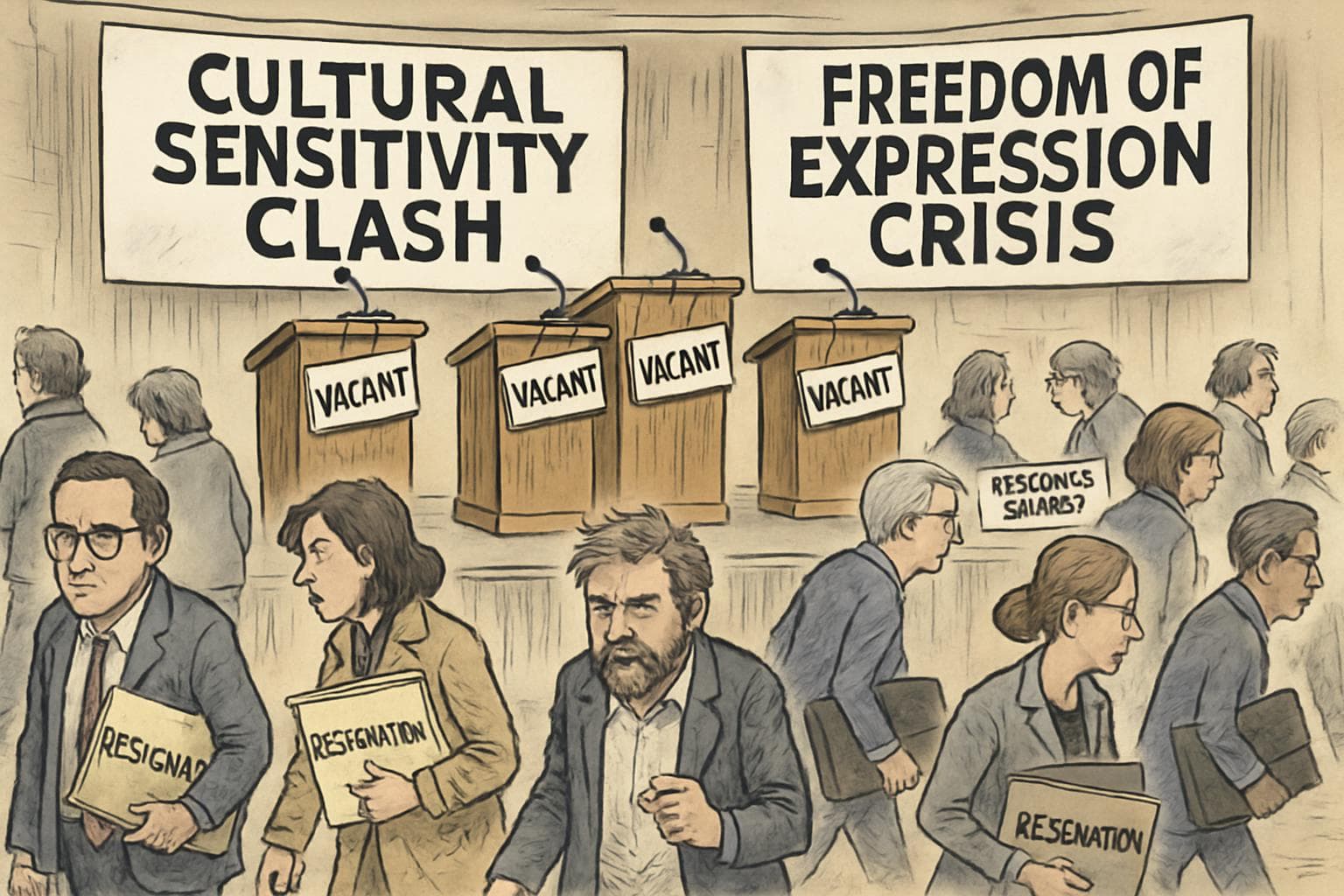
- The decision led to the resignation of multiple board members, including the Writers' Week director, Louise Adler, who opposed silencing writers.
- The board issued an apology to Abdel-Fattah for the representation of their decision, but she rejected it as disingenuous.
- The controversy has reignited debates in Australia about freedom of expression and the impact of cultural sensitivities on artistic events.
The Adelaide Festival has plunged into turmoil following the cancellation of its Writers' Week, a decision prompted by the controversial disinvitation of Palestinian Australian author Randa Abdel-Fattah. This move, intended to address "cultural sensitivities" after a tragic attack at Bondi Beach, has instead ignited a fierce backlash, leading to the withdrawal of over 180 authors and the resignation of key festival board members.
Cultural Sensitivities and Backlash
The festival's board initially removed Abdel-Fattah from the lineup, citing concerns over her past statements and the recent Bondi Beach attack, which involved gunmen allegedly inspired by the Islamic State. Although the board clarified that Abdel-Fattah had no connection to the attack, they deemed her inclusion "culturally insensitive." Abdel-Fattah, however, criticized the decision as an act of "anti-Palestinian racism and censorship," rejecting any association with the attack.
Mass Exodus and Resignations
The decision triggered a mass exodus of authors, including notable figures like former New Zealand Prime Minister Jacinda Ardern and British author Zadie Smith. The festival's director, Louise Adler, also resigned, expressing her unwillingness to participate in silencing writers. Adler, a Jewish daughter of Holocaust survivors, emphasized the importance of art in challenging societal norms, especially amid the ongoing Israel-Gaza conflict.
Apologies and Repercussions
In a subsequent statement, the board apologized to Abdel-Fattah for how their decision was represented, acknowledging the distress caused. However, Abdel-Fattah dismissed the apology as insincere, arguing that it failed to address the core issue of her exclusion. The board's actions have reignited discussions on freedom of expression in Australia, highlighting the tension between cultural sensitivities and artistic freedom.
WHAT THIS MIGHT MEAN
The cancellation of the Adelaide Writers' Week could have lasting implications for the festival's reputation and future events. With the board now largely resigned, the festival faces the challenge of rebuilding trust with authors and audiences. This incident may also prompt broader discussions on how cultural sensitivities should be balanced with freedom of expression in artistic and cultural events. Legal actions could arise if stakeholders seek accountability for the festival's abrupt cancellation, potentially setting precedents for similar controversies in the future.
Images from the Web


Related Articles
Anna Murdoch-Mann: Influential Figure in Media and Philanthropy Dies at 81
High Court Ruling Delays Trial of Pro-Palestine Activists
Sydney Police Under Scrutiny Following Violent Anti-Herzog Protest
Angus Taylor Challenges Sussan Ley for Leadership of Australia's Liberal Party
Prince Andrew's Arrest Raises Questions About Royal Succession and Monarchy's Future
Australia Bars IS-Linked Citizen from Returning Amidst Repatriation Debate
Adelaide Festival Faces Crisis After Writers' Week Cancellation
In This Article
 Ethan Brooks| Published
 HIGHLIGHTS
- The Adelaide Festival's Writers' Week was canceled after disinviting Palestinian Australian author Randa Abdel-Fattah, sparking a mass withdrawal of over 180 authors.
- The festival board cited "cultural sensitivities" following a Bondi Beach attack as the reason for Abdel-Fattah's exclusion, which she condemned as racist and censorious.
- The decision led to the resignation of multiple board members, including the Writers' Week director, Louise Adler, who opposed silencing writers.
- The board issued an apology to Abdel-Fattah for the representation of their decision, but she rejected it as disingenuous.
- The controversy has reignited debates in Australia about freedom of expression and the impact of cultural sensitivities on artistic events.
The Adelaide Festival has plunged into turmoil following the cancellation of its Writers' Week, a decision prompted by the controversial disinvitation of Palestinian Australian author Randa Abdel-Fattah. This move, intended to address "cultural sensitivities" after a tragic attack at Bondi Beach, has instead ignited a fierce backlash, leading to the withdrawal of over 180 authors and the resignation of key festival board members.
Cultural Sensitivities and Backlash
The festival's board initially removed Abdel-Fattah from the lineup, citing concerns over her past statements and the recent Bondi Beach attack, which involved gunmen allegedly inspired by the Islamic State. Although the board clarified that Abdel-Fattah had no connection to the attack, they deemed her inclusion "culturally insensitive." Abdel-Fattah, however, criticized the decision as an act of "anti-Palestinian racism and censorship," rejecting any association with the attack.
Mass Exodus and Resignations
The decision triggered a mass exodus of authors, including notable figures like former New Zealand Prime Minister Jacinda Ardern and British author Zadie Smith. The festival's director, Louise Adler, also resigned, expressing her unwillingness to participate in silencing writers. Adler, a Jewish daughter of Holocaust survivors, emphasized the importance of art in challenging societal norms, especially amid the ongoing Israel-Gaza conflict.
Apologies and Repercussions
In a subsequent statement, the board apologized to Abdel-Fattah for how their decision was represented, acknowledging the distress caused. However, Abdel-Fattah dismissed the apology as insincere, arguing that it failed to address the core issue of her exclusion. The board's actions have reignited discussions on freedom of expression in Australia, highlighting the tension between cultural sensitivities and artistic freedom.
WHAT THIS MIGHT MEAN
The cancellation of the Adelaide Writers' Week could have lasting implications for the festival's reputation and future events. With the board now largely resigned, the festival faces the challenge of rebuilding trust with authors and audiences. This incident may also prompt broader discussions on how cultural sensitivities should be balanced with freedom of expression in artistic and cultural events. Legal actions could arise if stakeholders seek accountability for the festival's abrupt cancellation, potentially setting precedents for similar controversies in the future.
Images from the Web
Related Articles
Anna Murdoch-Mann: Influential Figure in Media and Philanthropy Dies at 81
High Court Ruling Delays Trial of Pro-Palestine Activists
Sydney Police Under Scrutiny Following Violent Anti-Herzog Protest
Angus Taylor Challenges Sussan Ley for Leadership of Australia's Liberal Party
Prince Andrew's Arrest Raises Questions About Royal Succession and Monarchy's Future
Australia Bars IS-Linked Citizen from Returning Amidst Repatriation Debate