
Deadly Suicide Bombing at Islamabad Mosque Claims Over 30 Lives
In This Article
HIGHLIGHTS
- A suicide bomber attack at a Shia mosque in Islamabad killed at least 31 people and injured 169 during Friday prayers.
- Islamic State claimed responsibility for the attack, which has heightened tensions in the region.
- Pakistan's Prime Minister Shehbaz Sharif and President Asif Ali Zardari condemned the attack, calling for a thorough investigation.
- The attack has sparked accusations of foreign involvement, with Pakistan's Defence Minister suggesting links to India and Afghanistan.
- Eyewitnesses described chaotic scenes with bodies and injured people scattered across the mosque.
A devastating explosion at a Shia mosque in Islamabad has left at least 31 people dead and 169 injured, marking one of the deadliest attacks in Pakistan's capital in recent years. The blast occurred during Friday prayers at the Khadija al-Kubra mosque, situated on the outskirts of the city. According to police reports, a suicide bomber detonated the explosive device after approaching the mosque's gates, with eyewitnesses recounting the sound of gunfire preceding the blast.
Immediate Aftermath and Response
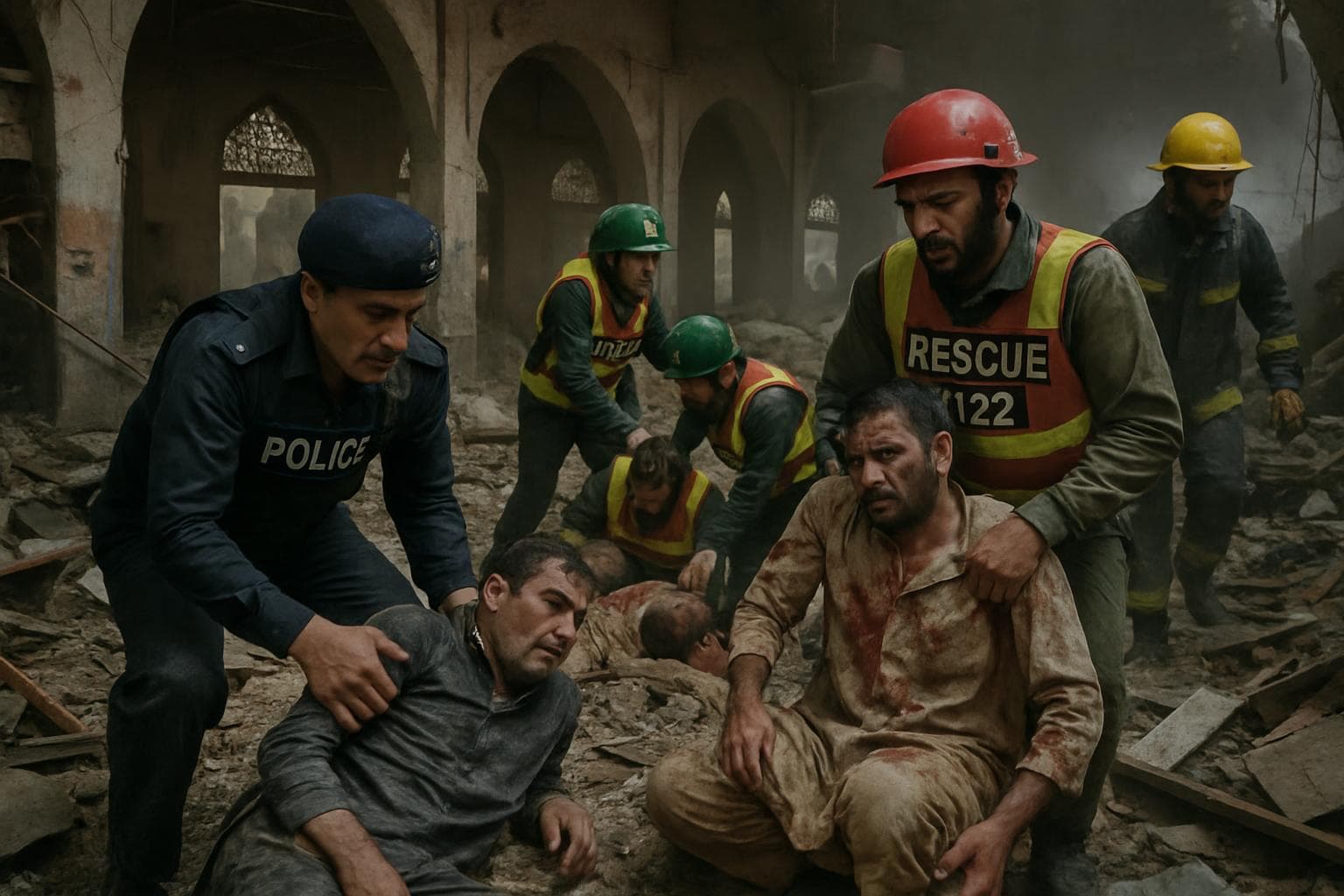
The scene inside the mosque was described as harrowing, with bodies and injured individuals lying amidst the wreckage. Emergency services were quickly overwhelmed, prompting an urgent appeal for blood donations. Television footage and social media images depicted the chaotic efforts of police and residents to transport the injured to nearby hospitals. Eyewitness Zaheer Abbas, who was praying inside the mosque, recounted the terrifying moments following the explosion, stating, "After that, we bowed and then prostrated, and then there was an explosion."
Claims and Condemnations
The Islamic State group has claimed responsibility for the attack via its Telegram channel, although this claim has not been independently verified. The group has a history of targeting Shia worshippers, who are a minority in Pakistan. In response, Pakistan's Prime Minister Shehbaz Sharif expressed "deep grief" and called for a comprehensive investigation to identify those responsible. President Asif Ali Zardari echoed these sentiments, condemning the attack as a "crime against humanity."
Regional Tensions and Accusations
The attack has further strained regional relations, with Defence Minister Khawaja Asif suggesting possible involvement from India and Afghanistan. He claimed that the attacker had traveled between Afghanistan and Pakistan, hinting at collusion between the two neighboring countries. However, Afghanistan's Taliban government dismissed these accusations as "regrettable," demanding credible evidence. Meanwhile, the Indian foreign ministry labeled the allegations as "baseless."
Security Concerns and Public Reaction
The bombing has raised significant concerns about security in Islamabad, a city that has seen a surge in militant violence in recent months. Raja Nasir Abbas Jafri, a prominent Shia leader, criticized the authorities for failing to protect citizens, urging for improved security measures. The attack coincided with a visit by Uzbekistan's President Shavkat Mirziyoyev, who was attending an event with Prime Minister Sharif miles away from the mosque.
WHAT THIS MIGHT MEAN
The recent attack in Islamabad underscores the persistent threat of militant violence in Pakistan, particularly against minority groups like the Shia community. As the investigation unfolds, the Pakistani government faces pressure to enhance security measures and address potential lapses in intelligence. The accusations against India and Afghanistan could exacerbate regional tensions, complicating diplomatic relations. Experts suggest that a transparent investigation and international cooperation are crucial to preventing future attacks and fostering regional stability. Additionally, the involvement of groups like the Islamic State highlights the need for a coordinated global effort to combat terrorism.
Related Articles

Sisters Tragically Drown at Eryri National Park's Watkin Path
Pakistan's Airstrikes on Afghanistan Escalate Cross-Border Tensions
High Court Ruling Delays Trial of Pro-Palestine Activists
Iran Postpones Khamenei Funeral Amid Escalating US-Israeli Strikes
Canada Calls for De-escalation Amid US-Israel Strikes on Iran
US Supreme Court Ruling Sparks Trade Uncertainty in Asia and Beyond
Deadly Suicide Bombing at Islamabad Mosque Claims Over 30 Lives
In This Article
 Ethan Brooks| Published
 HIGHLIGHTS
- A suicide bomber attack at a Shia mosque in Islamabad killed at least 31 people and injured 169 during Friday prayers.
- Islamic State claimed responsibility for the attack, which has heightened tensions in the region.
- Pakistan's Prime Minister Shehbaz Sharif and President Asif Ali Zardari condemned the attack, calling for a thorough investigation.
- The attack has sparked accusations of foreign involvement, with Pakistan's Defence Minister suggesting links to India and Afghanistan.
- Eyewitnesses described chaotic scenes with bodies and injured people scattered across the mosque.
A devastating explosion at a Shia mosque in Islamabad has left at least 31 people dead and 169 injured, marking one of the deadliest attacks in Pakistan's capital in recent years. The blast occurred during Friday prayers at the Khadija al-Kubra mosque, situated on the outskirts of the city. According to police reports, a suicide bomber detonated the explosive device after approaching the mosque's gates, with eyewitnesses recounting the sound of gunfire preceding the blast.
Immediate Aftermath and Response
The scene inside the mosque was described as harrowing, with bodies and injured individuals lying amidst the wreckage. Emergency services were quickly overwhelmed, prompting an urgent appeal for blood donations. Television footage and social media images depicted the chaotic efforts of police and residents to transport the injured to nearby hospitals. Eyewitness Zaheer Abbas, who was praying inside the mosque, recounted the terrifying moments following the explosion, stating, "After that, we bowed and then prostrated, and then there was an explosion."
Claims and Condemnations
The Islamic State group has claimed responsibility for the attack via its Telegram channel, although this claim has not been independently verified. The group has a history of targeting Shia worshippers, who are a minority in Pakistan. In response, Pakistan's Prime Minister Shehbaz Sharif expressed "deep grief" and called for a comprehensive investigation to identify those responsible. President Asif Ali Zardari echoed these sentiments, condemning the attack as a "crime against humanity."
Regional Tensions and Accusations
The attack has further strained regional relations, with Defence Minister Khawaja Asif suggesting possible involvement from India and Afghanistan. He claimed that the attacker had traveled between Afghanistan and Pakistan, hinting at collusion between the two neighboring countries. However, Afghanistan's Taliban government dismissed these accusations as "regrettable," demanding credible evidence. Meanwhile, the Indian foreign ministry labeled the allegations as "baseless."
Security Concerns and Public Reaction
The bombing has raised significant concerns about security in Islamabad, a city that has seen a surge in militant violence in recent months. Raja Nasir Abbas Jafri, a prominent Shia leader, criticized the authorities for failing to protect citizens, urging for improved security measures. The attack coincided with a visit by Uzbekistan's President Shavkat Mirziyoyev, who was attending an event with Prime Minister Sharif miles away from the mosque.
WHAT THIS MIGHT MEAN
The recent attack in Islamabad underscores the persistent threat of militant violence in Pakistan, particularly against minority groups like the Shia community. As the investigation unfolds, the Pakistani government faces pressure to enhance security measures and address potential lapses in intelligence. The accusations against India and Afghanistan could exacerbate regional tensions, complicating diplomatic relations. Experts suggest that a transparent investigation and international cooperation are crucial to preventing future attacks and fostering regional stability. Additionally, the involvement of groups like the Islamic State highlights the need for a coordinated global effort to combat terrorism.
Related Articles
Sisters Tragically Drown at Eryri National Park's Watkin Path
Pakistan's Airstrikes on Afghanistan Escalate Cross-Border Tensions
High Court Ruling Delays Trial of Pro-Palestine Activists
Iran Postpones Khamenei Funeral Amid Escalating US-Israeli Strikes
Canada Calls for De-escalation Amid US-Israel Strikes on Iran
US Supreme Court Ruling Sparks Trade Uncertainty in Asia and Beyond