
Air Canada Strike Continues as Union Defies Back-to-Work Order
In This Article
HIGHLIGHTS
- The Canadian Union of Public Employees (CUPE) continues its strike despite a back-to-work order from the Canada Industrial Relations Board.
- Over 10,000 Air Canada flight attendants are striking, affecting approximately 500,000 passengers since Saturday.
- CUPE leaders, including President Mark Hancock, are prepared to face legal consequences, including jail time, for defying the order.
- The federal government has imposed binding arbitration, which the union plans to challenge in court, citing a violation of workers' rights.
- Prime Minister Mark Carney has expressed disappointment over the unresolved dispute, urging both parties to negotiate swiftly.
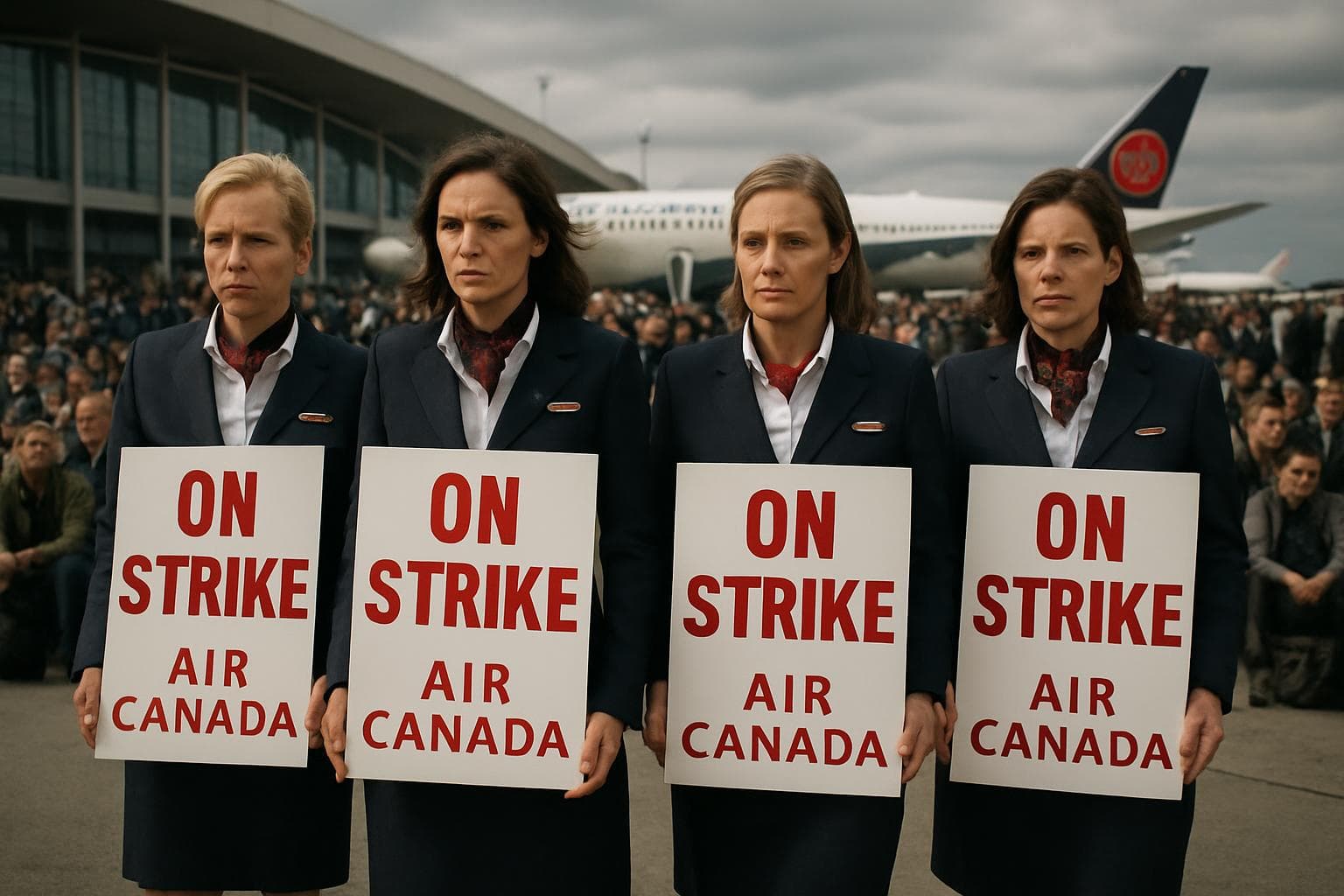
The ongoing strike by Air Canada flight attendants has entered its third day, with the Canadian Union of Public Employees (CUPE) refusing to comply with a back-to-work order issued by the Canada Industrial Relations Board. This defiance has left hundreds of thousands of passengers stranded and disrupted flights across the nation.
Union Stands Firm Against Legal Orders
Despite the Canada Industrial Relations Board ruling the strike unlawful, CUPE, representing over 10,000 flight attendants, remains steadfast in its decision to continue the strike. The union's president, Mark Hancock, has publicly declared that union leaders are willing to face legal repercussions, including potential jail time, to uphold their stance. "If it means folks like me going to jail, then so be it," Hancock stated, emphasizing the union's demand for a negotiated settlement at the bargaining table.
Impact on Passengers and Operations
The strike has significantly impacted Air Canada's operations, with the airline estimating that around 500,000 passengers have been affected since flights were grounded on Saturday. Air Canada had initially planned to resume flights by Monday evening, but operations remain suspended, with all flights canceled until Tuesday afternoon. Stranded passengers, like Jenny Phelps, have expressed frustration over the difficulty in rebooking flights amidst the chaos.
Government Intervention and Legal Challenges
In response to the escalating situation, Canada's federal government, led by Jobs Minister Patty Hajdu, has imposed binding arbitration on both parties, a move criticized by the union as unconstitutional. The union intends to challenge this decision in federal court, arguing that it infringes on workers' rights. Wesley Lesosky, a senior CUPE member, accused the governing Liberal party of setting a "terrible" precedent by siding with Air Canada.
Calls for Resolution Amidst Economic Concerns
The strike has drawn criticism from various sectors, including the trade organization Federally Regulated Employers - Transportation and Communications (Fetco), which condemned the union's actions as reckless. Prime Minister Mark Carney has urged both Air Canada and the union to resolve the dispute promptly, highlighting the broader economic implications during a time of geopolitical uncertainty.
WHAT THIS MIGHT MEAN
As the strike continues, the legal and economic ramifications could intensify. If CUPE proceeds with its court challenge against the binding arbitration, the case could set a significant precedent for labour relations in Canada. The potential for prolonged disruption may pressure both parties to return to negotiations, especially with mounting public dissatisfaction. Experts suggest that a swift resolution is crucial to restoring trust in the labour relations system and minimizing further economic impact.
Related Articles

Violence Erupts Across Mexico Following Death of Drug Lord El Mencho
Canada Calls for De-escalation Amid US-Israel Strikes on Iran

Trump's Board of Peace Pledges $7 Billion for Gaza Amidst International Skepticism

Tragedy Strikes Tumbler Ridge: Community Mourns After Devastating School Shooting
Canada and Australia Forge Strategic Partnership Amid Global Uncertainty
US Supreme Court Ruling on Trump's Tariffs Sparks Trade Policy Uncertainty
Air Canada Strike Continues as Union Defies Back-to-Work Order
In This Article
 Ethan Brooks| Published
 HIGHLIGHTS
- The Canadian Union of Public Employees (CUPE) continues its strike despite a back-to-work order from the Canada Industrial Relations Board.
- Over 10,000 Air Canada flight attendants are striking, affecting approximately 500,000 passengers since Saturday.
- CUPE leaders, including President Mark Hancock, are prepared to face legal consequences, including jail time, for defying the order.
- The federal government has imposed binding arbitration, which the union plans to challenge in court, citing a violation of workers' rights.
- Prime Minister Mark Carney has expressed disappointment over the unresolved dispute, urging both parties to negotiate swiftly.
The ongoing strike by Air Canada flight attendants has entered its third day, with the Canadian Union of Public Employees (CUPE) refusing to comply with a back-to-work order issued by the Canada Industrial Relations Board. This defiance has left hundreds of thousands of passengers stranded and disrupted flights across the nation.
Union Stands Firm Against Legal Orders
Despite the Canada Industrial Relations Board ruling the strike unlawful, CUPE, representing over 10,000 flight attendants, remains steadfast in its decision to continue the strike. The union's president, Mark Hancock, has publicly declared that union leaders are willing to face legal repercussions, including potential jail time, to uphold their stance. "If it means folks like me going to jail, then so be it," Hancock stated, emphasizing the union's demand for a negotiated settlement at the bargaining table.
Impact on Passengers and Operations
The strike has significantly impacted Air Canada's operations, with the airline estimating that around 500,000 passengers have been affected since flights were grounded on Saturday. Air Canada had initially planned to resume flights by Monday evening, but operations remain suspended, with all flights canceled until Tuesday afternoon. Stranded passengers, like Jenny Phelps, have expressed frustration over the difficulty in rebooking flights amidst the chaos.
Government Intervention and Legal Challenges
In response to the escalating situation, Canada's federal government, led by Jobs Minister Patty Hajdu, has imposed binding arbitration on both parties, a move criticized by the union as unconstitutional. The union intends to challenge this decision in federal court, arguing that it infringes on workers' rights. Wesley Lesosky, a senior CUPE member, accused the governing Liberal party of setting a "terrible" precedent by siding with Air Canada.
Calls for Resolution Amidst Economic Concerns
The strike has drawn criticism from various sectors, including the trade organization Federally Regulated Employers - Transportation and Communications (Fetco), which condemned the union's actions as reckless. Prime Minister Mark Carney has urged both Air Canada and the union to resolve the dispute promptly, highlighting the broader economic implications during a time of geopolitical uncertainty.
WHAT THIS MIGHT MEAN
As the strike continues, the legal and economic ramifications could intensify. If CUPE proceeds with its court challenge against the binding arbitration, the case could set a significant precedent for labour relations in Canada. The potential for prolonged disruption may pressure both parties to return to negotiations, especially with mounting public dissatisfaction. Experts suggest that a swift resolution is crucial to restoring trust in the labour relations system and minimizing further economic impact.
Related Articles
Violence Erupts Across Mexico Following Death of Drug Lord El Mencho
Canada Calls for De-escalation Amid US-Israel Strikes on Iran
Trump's Board of Peace Pledges $7 Billion for Gaza Amidst International Skepticism
Tragedy Strikes Tumbler Ridge: Community Mourns After Devastating School Shooting
Canada and Australia Forge Strategic Partnership Amid Global Uncertainty
US Supreme Court Ruling on Trump's Tariffs Sparks Trade Policy Uncertainty