
Airbus A320 Recall Disrupts Global Travel Amid Safety Concerns
In This Article
HIGHLIGHTS
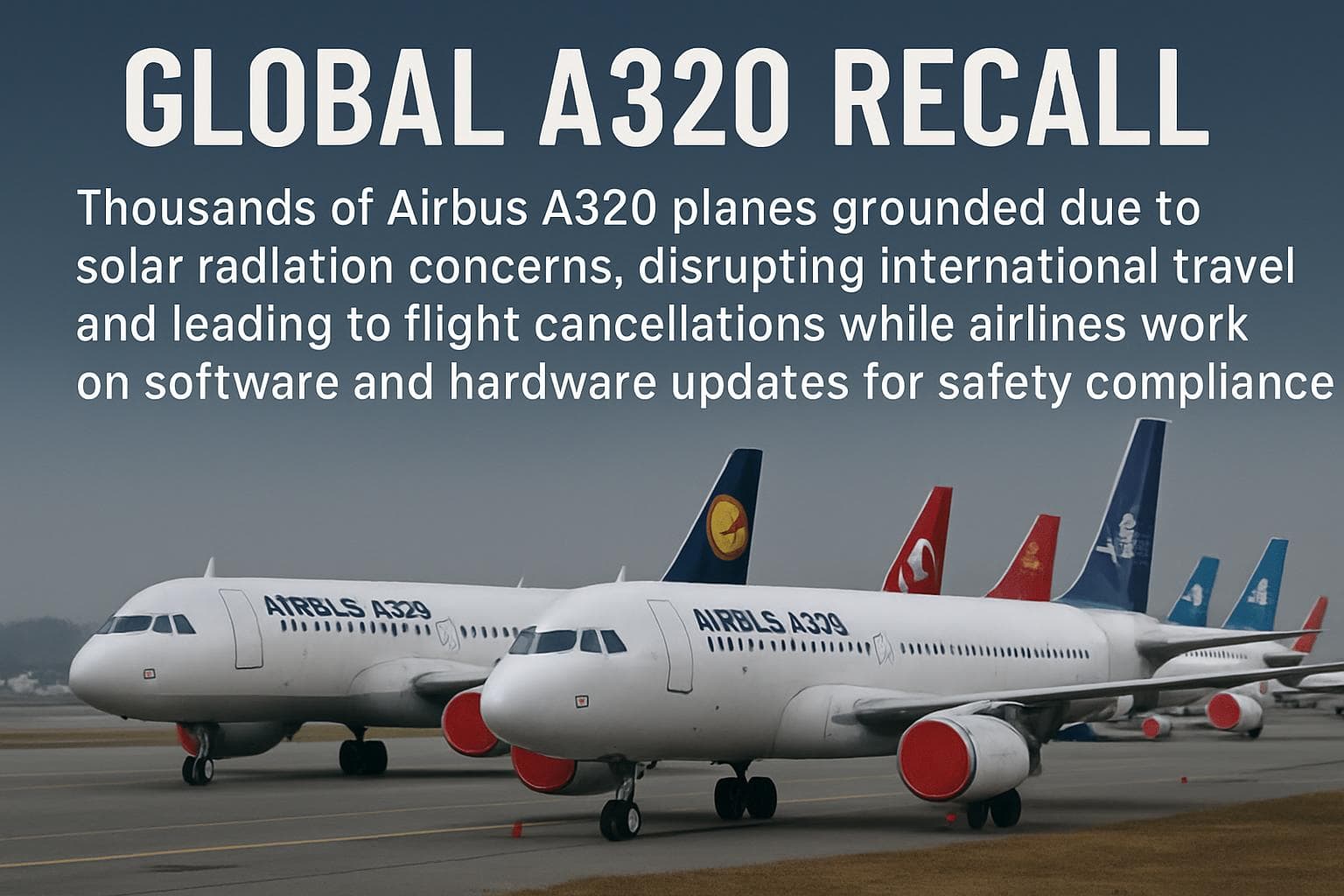
- Airbus has recalled 6,000 A320 family aircraft due to potential solar radiation interference with flight control systems.
- The recall follows an incident involving a JetBlue flight that experienced a sudden altitude drop, injuring 15 passengers.
- A software update is required for most affected planes, while older models need hardware replacements, causing varying levels of disruption.
- Airlines like Jetstar, American Airlines, and Air France have faced significant cancellations and delays, while others report minimal impact.
- The European Union Aviation Safety Agency has mandated the recall as a precautionary measure to ensure aviation safety.
Thousands of Airbus A320 family aircraft have been grounded worldwide following a recall prompted by concerns that solar radiation could interfere with onboard flight control systems. The recall, affecting around 6,000 planes, was announced after a JetBlue flight from Cancún to Newark experienced a sudden altitude drop in October, resulting in injuries to 15 passengers.
Global Impact and Airline Responses
The recall, one of the largest in Airbus's history, has led to widespread travel disruptions. Airlines such as Jetstar in Australia and American Airlines in the United States have reported significant cancellations and delays. Jetstar grounded 34 of its 85 Airbus planes, leading to 90 flight cancellations over a weekend. Meanwhile, American Airlines stated that 340 of its A320 aircraft required updates, with most expected to be completed swiftly.
In Europe, Air France faced substantial disruptions, canceling 50 flights from its Paris hub. EasyJet and British Airways reported minimal impact, having already completed necessary software updates on many aircraft. The European Union Aviation Safety Agency (EASA) issued the recall as a precautionary action, emphasizing the importance of aviation safety.
Technical Fixes and Operational Challenges
The primary solution involves a software update, which can be completed in approximately three hours for most planes. However, around 900 older models require hardware replacements, potentially prolonging disruptions depending on the availability of replacement parts. Airbus has acknowledged the operational challenges this recall poses to airlines and passengers, apologizing for the inconvenience.
Aviation analyst Sally Gethin described the situation as "out of the ordinary," noting that the extent of disruption varies based on how quickly airlines can implement the updates. In the UK, airports like Gatwick and Heathrow reported limited impact, while Manchester Airport anticipated no significant issues.
WHAT THIS MIGHT MEAN
The Airbus A320 recall underscores the critical importance of aviation safety and the challenges of managing large-scale fleet updates. As airlines work to implement the necessary fixes, the immediate focus remains on minimizing passenger inconvenience and restoring normal operations. The incident may prompt further scrutiny of aircraft systems' vulnerability to environmental factors, potentially leading to more stringent safety protocols.
Looking ahead, the aviation industry may face increased regulatory oversight to prevent similar incidents. Airlines will likely prioritize enhancing their maintenance and update procedures to ensure compliance with safety standards. As the situation evolves, the collaboration between manufacturers, regulatory bodies, and airlines will be crucial in maintaining public confidence in air travel safety.
Related Articles

Violence Erupts Across Mexico Following Death of Drug Lord El Mencho
JetBlue Flight Avoids Collision with US Military Plane Near Venezuela

Alina Habba Resigns as New Jersey's Top Federal Prosecutor Amid Legal Controversy

US Government Shutdown Causes Major Air Travel Disruptions
UK Faces Record-Breaking Christmas Eve Travel Surge
US Flight Disruptions Escalate Amid Prolonged Government Shutdown
Airbus A320 Recall Disrupts Global Travel Amid Safety Concerns
In This Article
 Ethan Brooks| Published
 HIGHLIGHTS
- Airbus has recalled 6,000 A320 family aircraft due to potential solar radiation interference with flight control systems.
- The recall follows an incident involving a JetBlue flight that experienced a sudden altitude drop, injuring 15 passengers.
- A software update is required for most affected planes, while older models need hardware replacements, causing varying levels of disruption.
- Airlines like Jetstar, American Airlines, and Air France have faced significant cancellations and delays, while others report minimal impact.
- The European Union Aviation Safety Agency has mandated the recall as a precautionary measure to ensure aviation safety.
Thousands of Airbus A320 family aircraft have been grounded worldwide following a recall prompted by concerns that solar radiation could interfere with onboard flight control systems. The recall, affecting around 6,000 planes, was announced after a JetBlue flight from Cancún to Newark experienced a sudden altitude drop in October, resulting in injuries to 15 passengers.
Global Impact and Airline Responses
The recall, one of the largest in Airbus's history, has led to widespread travel disruptions. Airlines such as Jetstar in Australia and American Airlines in the United States have reported significant cancellations and delays. Jetstar grounded 34 of its 85 Airbus planes, leading to 90 flight cancellations over a weekend. Meanwhile, American Airlines stated that 340 of its A320 aircraft required updates, with most expected to be completed swiftly.
In Europe, Air France faced substantial disruptions, canceling 50 flights from its Paris hub. EasyJet and British Airways reported minimal impact, having already completed necessary software updates on many aircraft. The European Union Aviation Safety Agency (EASA) issued the recall as a precautionary action, emphasizing the importance of aviation safety.
Technical Fixes and Operational Challenges
The primary solution involves a software update, which can be completed in approximately three hours for most planes. However, around 900 older models require hardware replacements, potentially prolonging disruptions depending on the availability of replacement parts. Airbus has acknowledged the operational challenges this recall poses to airlines and passengers, apologizing for the inconvenience.
Aviation analyst Sally Gethin described the situation as "out of the ordinary," noting that the extent of disruption varies based on how quickly airlines can implement the updates. In the UK, airports like Gatwick and Heathrow reported limited impact, while Manchester Airport anticipated no significant issues.
WHAT THIS MIGHT MEAN
The Airbus A320 recall underscores the critical importance of aviation safety and the challenges of managing large-scale fleet updates. As airlines work to implement the necessary fixes, the immediate focus remains on minimizing passenger inconvenience and restoring normal operations. The incident may prompt further scrutiny of aircraft systems' vulnerability to environmental factors, potentially leading to more stringent safety protocols.
Looking ahead, the aviation industry may face increased regulatory oversight to prevent similar incidents. Airlines will likely prioritize enhancing their maintenance and update procedures to ensure compliance with safety standards. As the situation evolves, the collaboration between manufacturers, regulatory bodies, and airlines will be crucial in maintaining public confidence in air travel safety.
Related Articles
Violence Erupts Across Mexico Following Death of Drug Lord El Mencho
JetBlue Flight Avoids Collision with US Military Plane Near Venezuela
Alina Habba Resigns as New Jersey's Top Federal Prosecutor Amid Legal Controversy
US Government Shutdown Causes Major Air Travel Disruptions
UK Faces Record-Breaking Christmas Eve Travel Surge
US Flight Disruptions Escalate Amid Prolonged Government Shutdown