
US Government Shutdown Forces Major Flight Reductions Amid Safety Concerns
In This Article
HIGHLIGHTS
- The US government shutdown has led to a planned 10% reduction in air travel capacity at 40 major airports, starting Friday.
- Transportation Secretary Sean Duffy and FAA chief Bryan Bedford cite air traffic controller fatigue as a key safety concern.
- The reduction will begin with a 4% cut on Friday, escalating to 10% next week, potentially affecting up to 4,000 flights daily.
- Airlines like American and Southwest are awaiting further FAA guidance on how the cuts will impact their operations.
- The shutdown, now the longest in US history, has left 1.4 million federal workers unpaid, causing significant stress and financial strain.
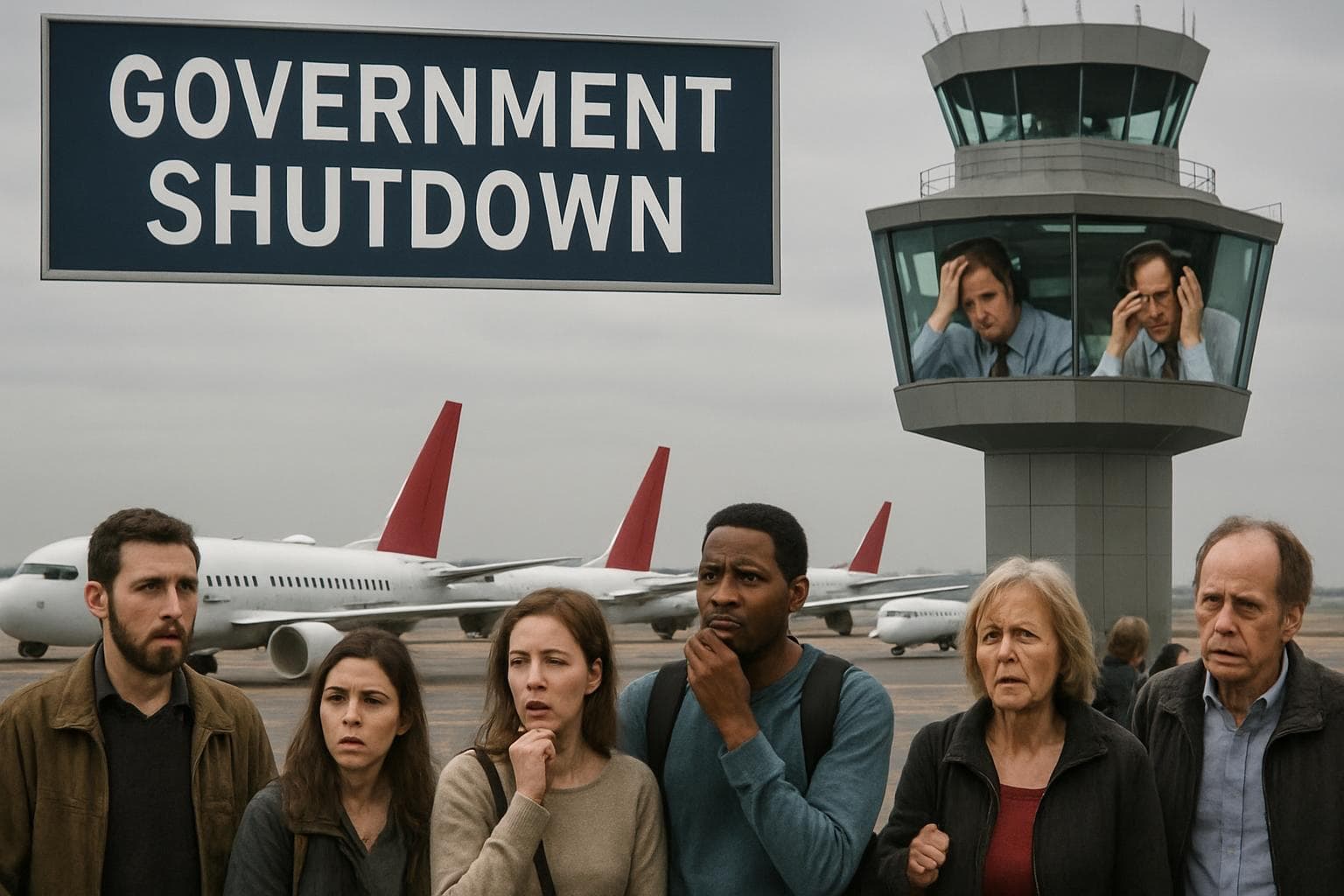
The ongoing US government shutdown is set to significantly impact air travel, with a 10% reduction in flight capacity at 40 major airports starting Friday, according to Transportation Secretary Sean Duffy. This decision arises from increasing concerns about air traffic controller fatigue, as highlighted by Federal Aviation Administration (FAA) chief Bryan Bedford. The shutdown, which began on October 1, has left 1.4 million federal workers, including air traffic controllers, working without pay or on forced leave.
Gradual Flight Reductions
The planned reductions will commence with a 4% cut in domestic flights on Friday, escalating to 5% on Saturday and 6% on Sunday, before reaching the full 10% next week. This could affect between 3,500 and 4,000 flights daily, impacting both passenger and cargo traffic. The specific airports affected, all high-traffic locations, will be announced on Thursday. Bedford emphasized the necessity of these measures to maintain the safety and efficiency of the US airline system, stating, "We are seeing pressures build in a way that we don't feel - if we allow it to go unchecked - will allow us to continue to tell the public that we operate the safest airline system in the world."
Airline Responses and Safety Measures
Major airlines are preparing for the impact of these reductions. American Airlines, the second-largest carrier in North America, is awaiting further information from the FAA to determine which flights will be affected. Southwest Airlines is also evaluating the situation and plans to inform customers promptly. Delta Airlines has declined to comment. The FAA is actively engaging with airline representatives to discuss the implementation of these cuts, with the possibility of further action if the shutdown persists.
Impact on Federal Workers and Airspace
The shutdown has resulted in severe financial strain for federal workers, with many forced to seek second jobs or face illness due to stress. Duffy warned of potential airspace closures if the situation continues, stating, "You will see mass flight delays. You'll see mass cancellations, and you may see us close certain parts of the airspace because we just cannot manage it." The FAA has reported a shortage of up to 3,000 air traffic controllers, exacerbating the challenges faced by the aviation industry.
WHAT THIS MIGHT MEAN
If the government shutdown continues, the aviation industry could face unprecedented disruptions, with potential airspace closures and increased flight cancellations. The ongoing financial strain on federal workers may lead to further staffing shortages, impacting the safety and efficiency of air travel. Politically, the shutdown has intensified the blame game between Republicans and Democrats, with no immediate resolution in sight. Experts warn that prolonged disruptions could have lasting effects on the airline industry and the broader economy, emphasizing the urgent need for a bipartisan solution to restore normalcy.
Related Articles

US Government Shutdown Causes Major Air Travel Disruptions

Violence Erupts Across Mexico Following Death of Drug Lord El Mencho
US Homeland Security Shutdown Sparks Concerns Over Travel Delays and Immigration Reforms
El Paso Airspace Closure Sparks Confusion Amid Drone Concerns

Protests in Minneapolis Intensify Over ICE Shooting of ICU Nurse

Tragic Helicopter Collision in New Jersey Leaves One Dead, One Critically Injured
US Government Shutdown Forces Major Flight Reductions Amid Safety Concerns
In This Article
 Ethan Brooks| Published
 HIGHLIGHTS
- The US government shutdown has led to a planned 10% reduction in air travel capacity at 40 major airports, starting Friday.
- Transportation Secretary Sean Duffy and FAA chief Bryan Bedford cite air traffic controller fatigue as a key safety concern.
- The reduction will begin with a 4% cut on Friday, escalating to 10% next week, potentially affecting up to 4,000 flights daily.
- Airlines like American and Southwest are awaiting further FAA guidance on how the cuts will impact their operations.
- The shutdown, now the longest in US history, has left 1.4 million federal workers unpaid, causing significant stress and financial strain.
The ongoing US government shutdown is set to significantly impact air travel, with a 10% reduction in flight capacity at 40 major airports starting Friday, according to Transportation Secretary Sean Duffy. This decision arises from increasing concerns about air traffic controller fatigue, as highlighted by Federal Aviation Administration (FAA) chief Bryan Bedford. The shutdown, which began on October 1, has left 1.4 million federal workers, including air traffic controllers, working without pay or on forced leave.
Gradual Flight Reductions
The planned reductions will commence with a 4% cut in domestic flights on Friday, escalating to 5% on Saturday and 6% on Sunday, before reaching the full 10% next week. This could affect between 3,500 and 4,000 flights daily, impacting both passenger and cargo traffic. The specific airports affected, all high-traffic locations, will be announced on Thursday. Bedford emphasized the necessity of these measures to maintain the safety and efficiency of the US airline system, stating, "We are seeing pressures build in a way that we don't feel - if we allow it to go unchecked - will allow us to continue to tell the public that we operate the safest airline system in the world."
Airline Responses and Safety Measures
Major airlines are preparing for the impact of these reductions. American Airlines, the second-largest carrier in North America, is awaiting further information from the FAA to determine which flights will be affected. Southwest Airlines is also evaluating the situation and plans to inform customers promptly. Delta Airlines has declined to comment. The FAA is actively engaging with airline representatives to discuss the implementation of these cuts, with the possibility of further action if the shutdown persists.
Impact on Federal Workers and Airspace
The shutdown has resulted in severe financial strain for federal workers, with many forced to seek second jobs or face illness due to stress. Duffy warned of potential airspace closures if the situation continues, stating, "You will see mass flight delays. You'll see mass cancellations, and you may see us close certain parts of the airspace because we just cannot manage it." The FAA has reported a shortage of up to 3,000 air traffic controllers, exacerbating the challenges faced by the aviation industry.
WHAT THIS MIGHT MEAN
If the government shutdown continues, the aviation industry could face unprecedented disruptions, with potential airspace closures and increased flight cancellations. The ongoing financial strain on federal workers may lead to further staffing shortages, impacting the safety and efficiency of air travel. Politically, the shutdown has intensified the blame game between Republicans and Democrats, with no immediate resolution in sight. Experts warn that prolonged disruptions could have lasting effects on the airline industry and the broader economy, emphasizing the urgent need for a bipartisan solution to restore normalcy.
Related Articles
US Government Shutdown Causes Major Air Travel Disruptions
Violence Erupts Across Mexico Following Death of Drug Lord El Mencho
US Homeland Security Shutdown Sparks Concerns Over Travel Delays and Immigration Reforms
El Paso Airspace Closure Sparks Confusion Amid Drone Concerns
Protests in Minneapolis Intensify Over ICE Shooting of ICU Nurse
Tragic Helicopter Collision in New Jersey Leaves One Dead, One Critically Injured