
US Flight Disruptions Escalate Amid Prolonged Government Shutdown
In This Article
HIGHLIGHTS
- Over 5,000 US flights were cancelled or delayed on Friday due to a new FAA emergency order amid the government shutdown.
- The FAA mandated a 4% reduction in flights at 40 major airports, potentially increasing to 10% next week, to manage staffing shortages.
- Air traffic controllers, working without pay, report stress and fatigue, with some taking second jobs to cope financially.
- Transportation Secretary Sean Duffy warned that flight cuts could rise to 20% if the shutdown persists.
- Airlines like Delta and United are offering re-booking options and fee waivers to affected passengers.
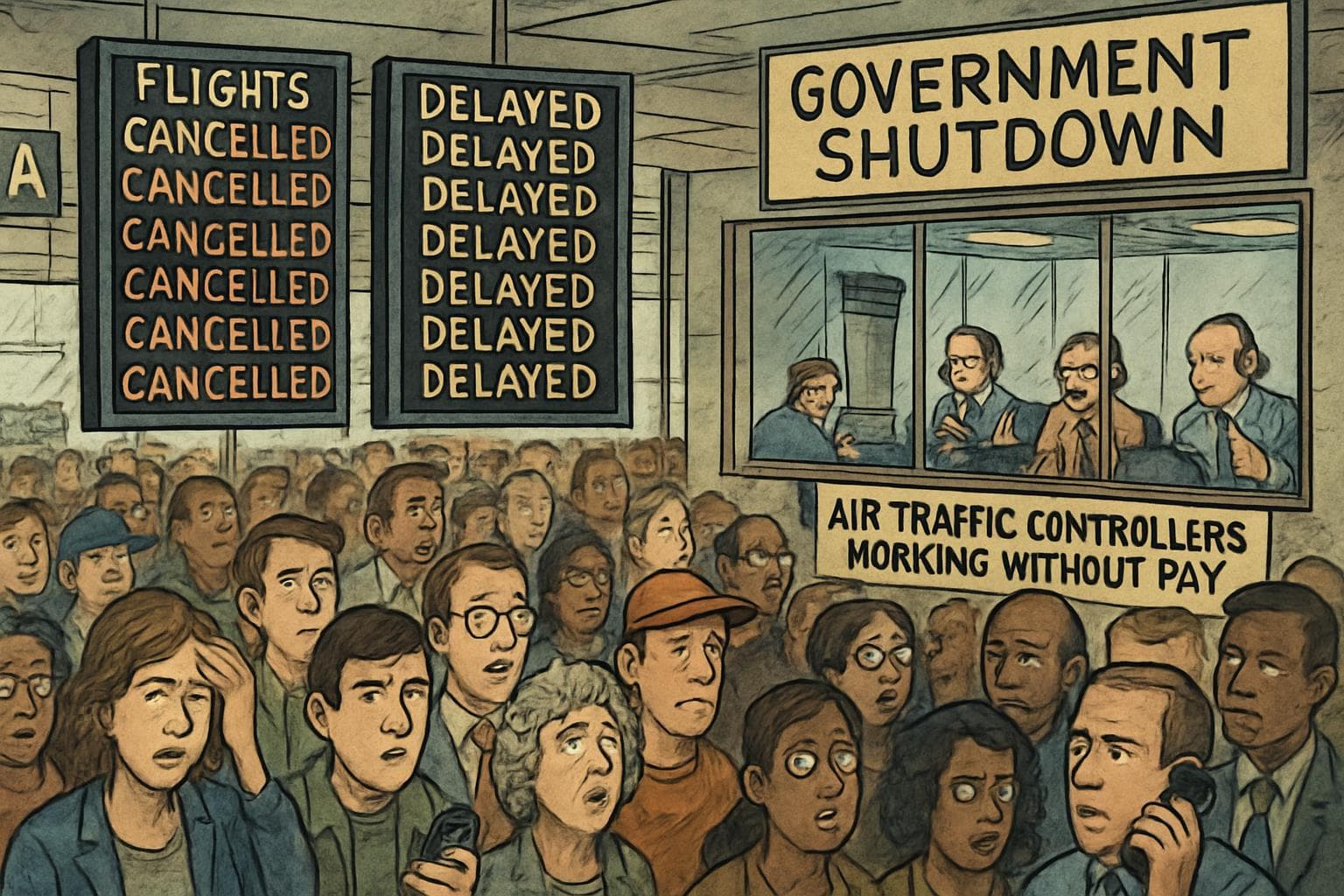
As the US government shutdown drags into its second month, the Federal Aviation Administration (FAA) has implemented an emergency order that has led to widespread flight cancellations and delays across the country. On Friday, more than 5,000 flights were affected as the FAA mandated a 4% reduction in flights at 40 of the nation's busiest airports, a figure that could rise to 10% by next week if the shutdown continues.
The directive aims to alleviate pressure on air traffic controllers and other essential federal employees who have been working without pay since the shutdown began. Many of these workers have reported stress and fatigue, with some taking on additional jobs to make ends meet. The National Air Traffic Controllers Association has voiced concerns about the safety and well-being of its members, emphasizing the need for Congress to resolve the funding impasse.
Major travel hubs, including those in New York, Los Angeles, Chicago, and Washington DC, are experiencing significant disruptions. Transportation Secretary Sean Duffy has warned that flight cuts could escalate to 20% if the shutdown persists, potentially impacting international travel due to existing global agreements.
Airlines such as Delta, United, and American Airlines are responding by offering re-booking options and waiving change fees for affected passengers. Despite these efforts, the situation remains fluid, with flight status boards across the country lighting up with cancellations and delays.
The shutdown, now the longest in US history, stems from a political standoff between Republicans and Democrats over federal spending. Recent attempts to reach a compromise have faltered, leaving air traffic controllers and other federal workers caught in the crossfire. "We are being used as political pawns," said Nick Daniels, president of the National Air Traffic Controllers Association. "We need Congress to open the government."
WHAT THIS MIGHT MEAN
If the government shutdown continues, the impact on US air travel could worsen significantly. With flight reductions potentially reaching 20%, the ripple effects on international travel and the broader economy could be substantial. Business travel, a critical component of the airline industry, may suffer, affecting related sectors such as hospitality and tourism.
Politically, the shutdown underscores the deep divisions in Congress, with both parties blaming each other for the impasse. A resolution will require bipartisan cooperation, but recent failed negotiations suggest a solution may not be imminent. As the situation develops, the pressure on lawmakers to find common ground will intensify, especially as public frustration grows over the tangible impacts of the shutdown.
Related Articles
China Sets Lowest GDP Growth Target in Decades Amid Economic Challenges

Cuba Faces Widespread Blackout Amid Deepening Fuel Crisis

UK Faces Dilemmas Amid Iran Conflict and China Spying Allegations

Google Faces Legal Battle Over AI Chatbot's Alleged Role in Tragic Death
Iran Postpones Khamenei Funeral Amid Escalating US-Israeli Strikes
Canada Calls for De-escalation Amid US-Israel Strikes on Iran
US Flight Disruptions Escalate Amid Prolonged Government Shutdown
In This Article
 Leila Hassan| Published
 HIGHLIGHTS
- Over 5,000 US flights were cancelled or delayed on Friday due to a new FAA emergency order amid the government shutdown.
- The FAA mandated a 4% reduction in flights at 40 major airports, potentially increasing to 10% next week, to manage staffing shortages.
- Air traffic controllers, working without pay, report stress and fatigue, with some taking second jobs to cope financially.
- Transportation Secretary Sean Duffy warned that flight cuts could rise to 20% if the shutdown persists.
- Airlines like Delta and United are offering re-booking options and fee waivers to affected passengers.
As the US government shutdown drags into its second month, the Federal Aviation Administration (FAA) has implemented an emergency order that has led to widespread flight cancellations and delays across the country. On Friday, more than 5,000 flights were affected as the FAA mandated a 4% reduction in flights at 40 of the nation's busiest airports, a figure that could rise to 10% by next week if the shutdown continues.
The directive aims to alleviate pressure on air traffic controllers and other essential federal employees who have been working without pay since the shutdown began. Many of these workers have reported stress and fatigue, with some taking on additional jobs to make ends meet. The National Air Traffic Controllers Association has voiced concerns about the safety and well-being of its members, emphasizing the need for Congress to resolve the funding impasse.
Major travel hubs, including those in New York, Los Angeles, Chicago, and Washington DC, are experiencing significant disruptions. Transportation Secretary Sean Duffy has warned that flight cuts could escalate to 20% if the shutdown persists, potentially impacting international travel due to existing global agreements.
Airlines such as Delta, United, and American Airlines are responding by offering re-booking options and waiving change fees for affected passengers. Despite these efforts, the situation remains fluid, with flight status boards across the country lighting up with cancellations and delays.
The shutdown, now the longest in US history, stems from a political standoff between Republicans and Democrats over federal spending. Recent attempts to reach a compromise have faltered, leaving air traffic controllers and other federal workers caught in the crossfire. "We are being used as political pawns," said Nick Daniels, president of the National Air Traffic Controllers Association. "We need Congress to open the government."
WHAT THIS MIGHT MEAN
If the government shutdown continues, the impact on US air travel could worsen significantly. With flight reductions potentially reaching 20%, the ripple effects on international travel and the broader economy could be substantial. Business travel, a critical component of the airline industry, may suffer, affecting related sectors such as hospitality and tourism.
Politically, the shutdown underscores the deep divisions in Congress, with both parties blaming each other for the impasse. A resolution will require bipartisan cooperation, but recent failed negotiations suggest a solution may not be imminent. As the situation develops, the pressure on lawmakers to find common ground will intensify, especially as public frustration grows over the tangible impacts of the shutdown.
Related Articles
China Sets Lowest GDP Growth Target in Decades Amid Economic Challenges
Cuba Faces Widespread Blackout Amid Deepening Fuel Crisis
UK Faces Dilemmas Amid Iran Conflict and China Spying Allegations
Google Faces Legal Battle Over AI Chatbot's Alleged Role in Tragic Death
Iran Postpones Khamenei Funeral Amid Escalating US-Israeli Strikes
Canada Calls for De-escalation Amid US-Israel Strikes on Iran