
Algeria Declares French Colonisation a Crime, Demands Reparations
In This Article
HIGHLIGHTS
- Algeria's parliament unanimously passed a law declaring France's colonisation a crime, demanding an apology and reparations.
- The legislation highlights France's "legal responsibility" for colonial-era tragedies and asserts compensation as an "inalienable right."
- Diplomatic relations between Algeria and France are strained, with tensions at their highest since Algeria's independence.
- France's President Macron has acknowledged colonisation as a "crime against humanity" but has not issued an apology.
- The move is symbolic but politically significant, reflecting broader calls for colonial reparations and justice.
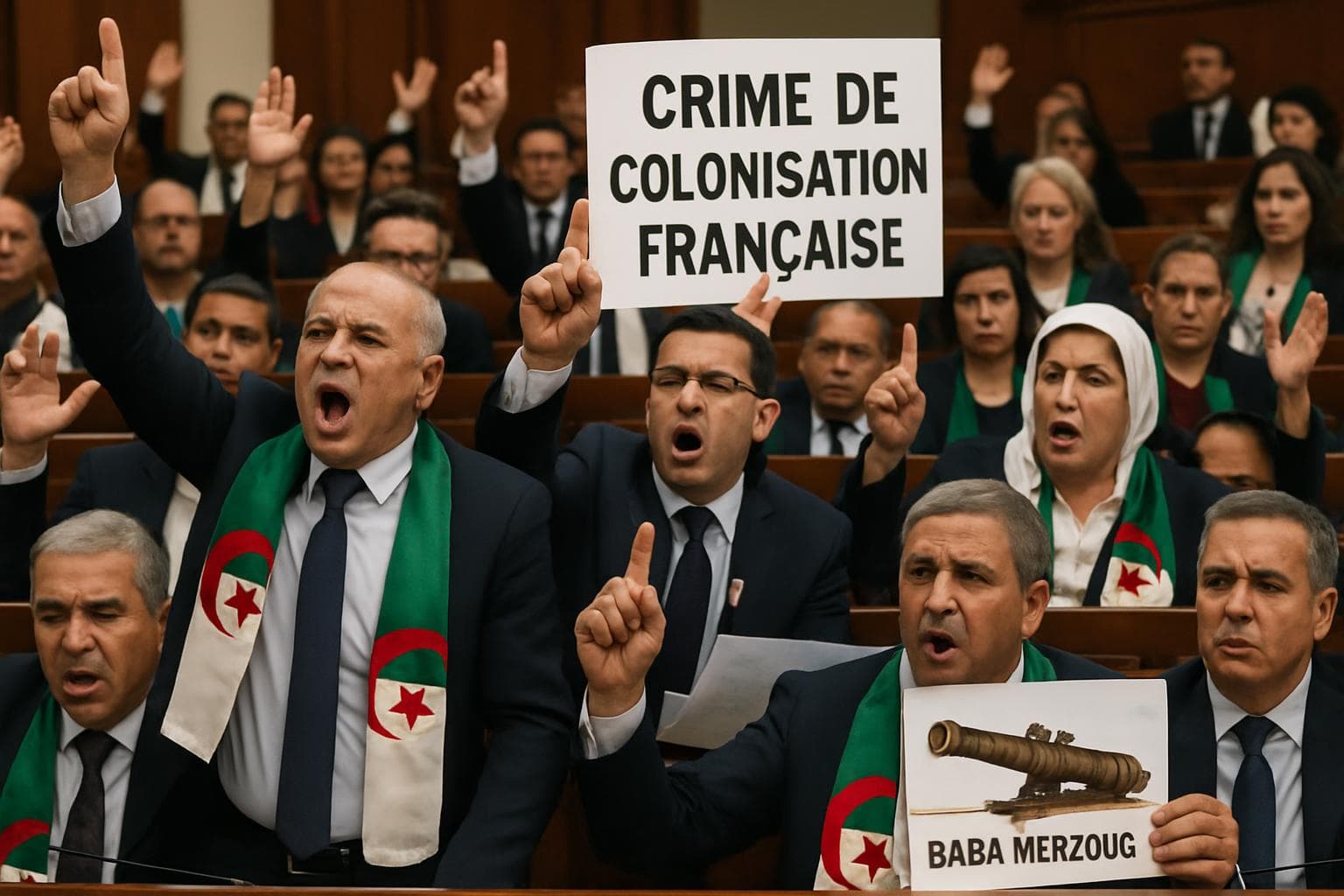
Algeria's parliament has taken a bold step by unanimously passing a law that declares France's colonisation of the North African nation a crime. This legislation, which demands an apology and reparations from France, marks a significant moment in the strained diplomatic relations between the two countries. The law, passed with lawmakers donning national flag-colored scarves and chanting "long live Algeria," underscores the enduring impact of colonial history on present-day politics.
Historical Context and Legal Demands
France's colonisation of Algeria, spanning from 1830 to 1962, was characterized by mass killings, deportations, and a brutal war of independence. Algeria claims the war resulted in 1.5 million deaths, a figure contested by French historians. The new law holds France "legally responsible" for the "tragedies it caused," asserting that "full and fair" compensation is an "inalienable right" of the Algerian state and its people. This legislative move is part of a broader push for recognition of colonial crimes and reparations, echoing similar demands from other former colonies.
Diplomatic Tensions and Symbolic Significance
Relations between Algeria and France have been increasingly tense, reaching a low point since Algeria's independence 63 years ago. The diplomatic rift widened last year when French President Emmanuel Macron recognized Moroccan sovereignty over Western Sahara, a move opposed by Algeria. While Macron has acknowledged the colonisation of Algeria as a "crime against humanity," he has stopped short of offering an apology. The French government has yet to comment on the recent parliamentary vote.
Broader Implications and Calls for Justice
The passage of this law is largely symbolic, yet it carries significant political weight. It reflects a growing international movement demanding justice and reparations for colonial-era injustices. Algeria's Foreign Minister Ahmed Attaf emphasized that restitution should not be seen as a "gift nor a favour." The legislation also calls for the return of cultural artifacts, such as the 16th-century bronze cannon Baba Merzoug, currently held in France.
WHAT THIS MIGHT MEAN
The passage of this law could further strain Algeria-France relations, potentially impacting economic and political collaborations. While the law itself lacks international legal binding, its symbolic nature may influence other former colonies to pursue similar legislative actions. Experts suggest that France may face increasing pressure to address its colonial past more comprehensively, potentially leading to diplomatic negotiations or cultural exchanges. As global calls for reparations grow, France's response could set a precedent for how former colonial powers engage with their historical legacies.
Related Articles
Rubio Reaffirms US Commitment to Europe Amid Criticisms at Munich Conference

Europe Urged to Assert Global Power Amid Rising Threats

Trump Raises Import Tariffs to 15% After Supreme Court Setback

Bill Gates Withdraws from India AI Summit Amid Epstein Controversy

Trump's Board of Peace Pledges $7 Billion for Gaza Amidst International Skepticism

Arrests Over French Activist's Death Heighten Political Tensions
Algeria Declares French Colonisation a Crime, Demands Reparations
In This Article
 James Okoro| Published
 HIGHLIGHTS
- Algeria's parliament unanimously passed a law declaring France's colonisation a crime, demanding an apology and reparations.
- The legislation highlights France's "legal responsibility" for colonial-era tragedies and asserts compensation as an "inalienable right."
- Diplomatic relations between Algeria and France are strained, with tensions at their highest since Algeria's independence.
- France's President Macron has acknowledged colonisation as a "crime against humanity" but has not issued an apology.
- The move is symbolic but politically significant, reflecting broader calls for colonial reparations and justice.
Algeria's parliament has taken a bold step by unanimously passing a law that declares France's colonisation of the North African nation a crime. This legislation, which demands an apology and reparations from France, marks a significant moment in the strained diplomatic relations between the two countries. The law, passed with lawmakers donning national flag-colored scarves and chanting "long live Algeria," underscores the enduring impact of colonial history on present-day politics.
Historical Context and Legal Demands
France's colonisation of Algeria, spanning from 1830 to 1962, was characterized by mass killings, deportations, and a brutal war of independence. Algeria claims the war resulted in 1.5 million deaths, a figure contested by French historians. The new law holds France "legally responsible" for the "tragedies it caused," asserting that "full and fair" compensation is an "inalienable right" of the Algerian state and its people. This legislative move is part of a broader push for recognition of colonial crimes and reparations, echoing similar demands from other former colonies.
Diplomatic Tensions and Symbolic Significance
Relations between Algeria and France have been increasingly tense, reaching a low point since Algeria's independence 63 years ago. The diplomatic rift widened last year when French President Emmanuel Macron recognized Moroccan sovereignty over Western Sahara, a move opposed by Algeria. While Macron has acknowledged the colonisation of Algeria as a "crime against humanity," he has stopped short of offering an apology. The French government has yet to comment on the recent parliamentary vote.
Broader Implications and Calls for Justice
The passage of this law is largely symbolic, yet it carries significant political weight. It reflects a growing international movement demanding justice and reparations for colonial-era injustices. Algeria's Foreign Minister Ahmed Attaf emphasized that restitution should not be seen as a "gift nor a favour." The legislation also calls for the return of cultural artifacts, such as the 16th-century bronze cannon Baba Merzoug, currently held in France.
WHAT THIS MIGHT MEAN
The passage of this law could further strain Algeria-France relations, potentially impacting economic and political collaborations. While the law itself lacks international legal binding, its symbolic nature may influence other former colonies to pursue similar legislative actions. Experts suggest that France may face increasing pressure to address its colonial past more comprehensively, potentially leading to diplomatic negotiations or cultural exchanges. As global calls for reparations grow, France's response could set a precedent for how former colonial powers engage with their historical legacies.
Related Articles
Rubio Reaffirms US Commitment to Europe Amid Criticisms at Munich Conference
Europe Urged to Assert Global Power Amid Rising Threats
Trump Raises Import Tariffs to 15% After Supreme Court Setback
Bill Gates Withdraws from India AI Summit Amid Epstein Controversy
Trump's Board of Peace Pledges $7 Billion for Gaza Amidst International Skepticism
Arrests Over French Activist's Death Heighten Political Tensions