
Ancient Meteorite Strikes Georgia Home, Sparks Global Fireball Sightings
In This Article
HIGHLIGHTS
- A meteorite older than Earth crashed into a home in McDonough, Georgia, on June 26, 2023, creating a loud boom and leaving fragments.
- The meteorite, identified as a chondrite, is approximately 4.56 billion years old, making it 20 million years older than Earth.
- In central Victoria, Australia, residents witnessed a bright fireball and heard a sonic boom, with no fragments yet found.
- Modern technology and public vigilance are aiding in the recovery of meteorites, which are becoming more frequently observed.
- Experts emphasize the importance of studying meteorites to understand potential asteroid threats.
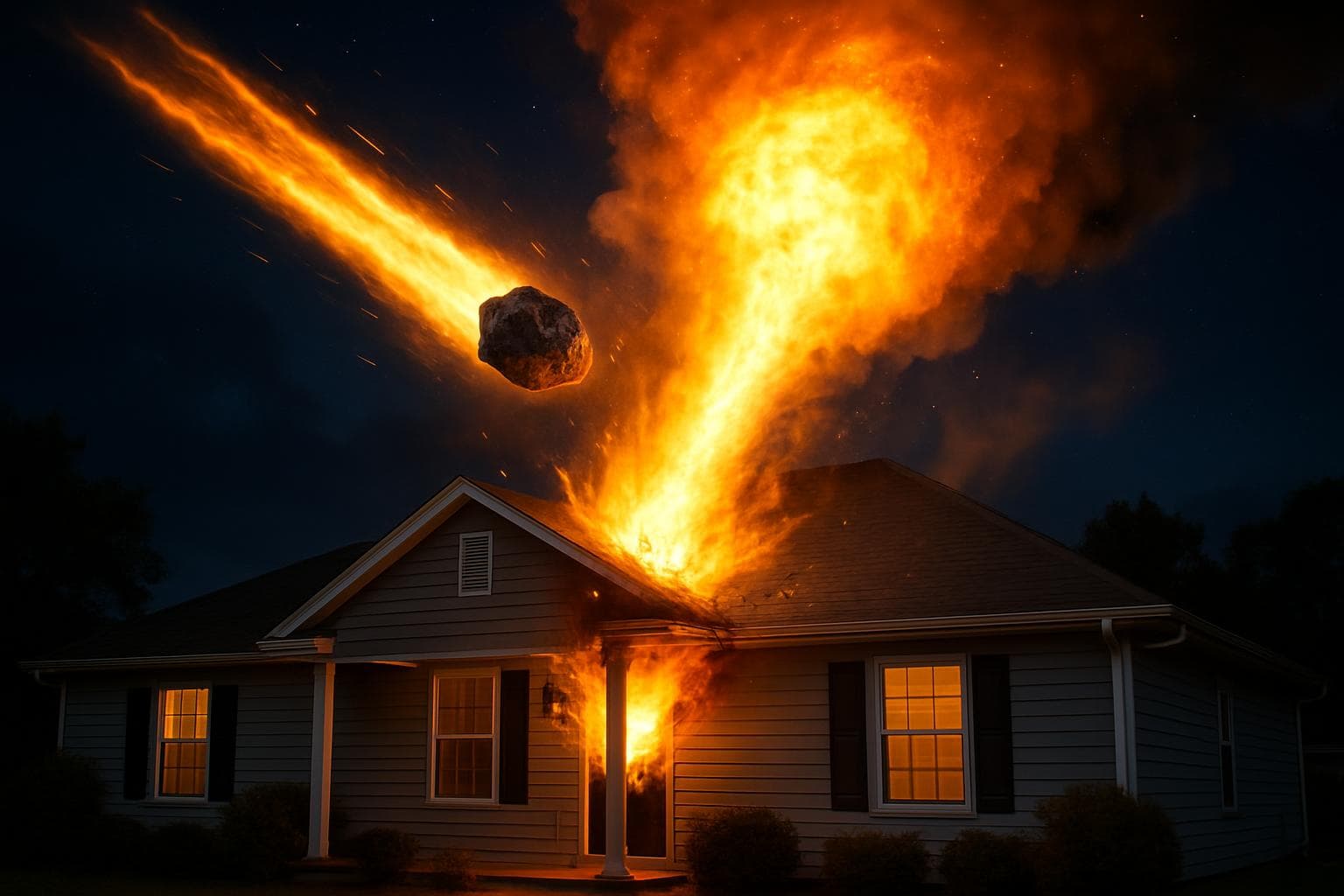
In a remarkable astronomical event, a meteorite older than Earth itself crashed into a home in McDonough, Georgia, on June 26, 2023. The meteorite, identified as a chondrite, is estimated to be 4.56 billion years old, surpassing Earth's age by 20 million years, according to researchers at the University of Georgia. The meteorite's dramatic entry was marked by a loud boom and a fireball visible across Georgia and neighboring states.
Scott Harris, a geologist at the University of Georgia, explained that the meteorite's age and composition were determined using optical and electron microscopy. "This particular meteor that entered the atmosphere has a long history before it made it to the ground of McDonough," Harris noted. The meteorite, now named the McDonough meteorite, is the 27th to be recovered from Georgia. Harris emphasized the growing role of technology and public awareness in meteorite recovery, stating, "Modern technology, in addition to an attentive public, is going to help us recover more and more meteorites."
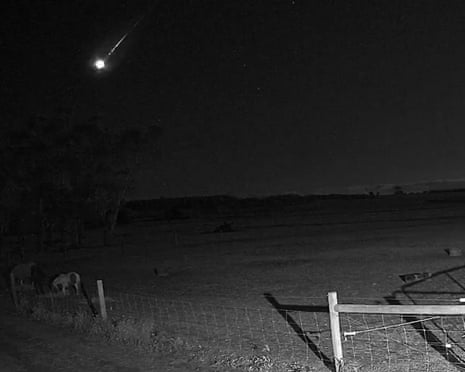
Meanwhile, in central Victoria, Australia, residents were treated to a celestial spectacle as a large meteor streaked across the night sky on a recent Sunday. Witnesses described an extremely bright fireball accompanied by a loud sound. Saskia Reus-Smit from Fryerstown recounted seeing the meteor pass directly overhead, describing it as "like a volcanic rock burning orange." The event was captured on CCTV and shared widely on social media.
Astrophysicist Prof Jonti Horner from the University of Southern Queensland confirmed the meteor's presence, noting its brightness and the subsequent sonic boom. "It was definitely a meteor," Horner stated, adding that while no fragments have been found yet, the event's documentation could aid in future recoveries.
WHAT THIS MIGHT MEAN
The recent meteorite events in Georgia and Victoria highlight the increasing frequency and visibility of such astronomical phenomena. As technology advances and public interest grows, the recovery and study of meteorites are expected to improve, providing valuable insights into the composition and origins of these ancient space travelers. Understanding meteorites is crucial for assessing potential asteroid threats, as emphasized by experts like Scott Harris. The possibility of a large asteroid impact, though rare, underscores the importance of continued vigilance and research in this field.
Images from the Web
Related Articles

Canada and Australia Forge Strategic Partnership Amid Global Uncertainty

Canada Calls for De-escalation Amid US-Israel Strikes on Iran

Trump's New Tariff Strategy Sparks Global Trade Uncertainty

Trump Raises Import Tariffs to 15% After Supreme Court Setback

Anna Murdoch-Mann: Influential Figure in Media and Philanthropy Dies at 81

Prince Andrew's Arrest Raises Questions About Royal Succession and Monarchy's Future
Ancient Meteorite Strikes Georgia Home, Sparks Global Fireball Sightings
In This Article
 Himanshu Kaushik| Published
 HIGHLIGHTS
- A meteorite older than Earth crashed into a home in McDonough, Georgia, on June 26, 2023, creating a loud boom and leaving fragments.
- The meteorite, identified as a chondrite, is approximately 4.56 billion years old, making it 20 million years older than Earth.
- In central Victoria, Australia, residents witnessed a bright fireball and heard a sonic boom, with no fragments yet found.
- Modern technology and public vigilance are aiding in the recovery of meteorites, which are becoming more frequently observed.
- Experts emphasize the importance of studying meteorites to understand potential asteroid threats.
In a remarkable astronomical event, a meteorite older than Earth itself crashed into a home in McDonough, Georgia, on June 26, 2023. The meteorite, identified as a chondrite, is estimated to be 4.56 billion years old, surpassing Earth's age by 20 million years, according to researchers at the University of Georgia. The meteorite's dramatic entry was marked by a loud boom and a fireball visible across Georgia and neighboring states.
Scott Harris, a geologist at the University of Georgia, explained that the meteorite's age and composition were determined using optical and electron microscopy. "This particular meteor that entered the atmosphere has a long history before it made it to the ground of McDonough," Harris noted. The meteorite, now named the McDonough meteorite, is the 27th to be recovered from Georgia. Harris emphasized the growing role of technology and public awareness in meteorite recovery, stating, "Modern technology, in addition to an attentive public, is going to help us recover more and more meteorites."
Meanwhile, in central Victoria, Australia, residents were treated to a celestial spectacle as a large meteor streaked across the night sky on a recent Sunday. Witnesses described an extremely bright fireball accompanied by a loud sound. Saskia Reus-Smit from Fryerstown recounted seeing the meteor pass directly overhead, describing it as "like a volcanic rock burning orange." The event was captured on CCTV and shared widely on social media.
Astrophysicist Prof Jonti Horner from the University of Southern Queensland confirmed the meteor's presence, noting its brightness and the subsequent sonic boom. "It was definitely a meteor," Horner stated, adding that while no fragments have been found yet, the event's documentation could aid in future recoveries.
WHAT THIS MIGHT MEAN
The recent meteorite events in Georgia and Victoria highlight the increasing frequency and visibility of such astronomical phenomena. As technology advances and public interest grows, the recovery and study of meteorites are expected to improve, providing valuable insights into the composition and origins of these ancient space travelers. Understanding meteorites is crucial for assessing potential asteroid threats, as emphasized by experts like Scott Harris. The possibility of a large asteroid impact, though rare, underscores the importance of continued vigilance and research in this field.
Images from the Web
Related Articles
Canada and Australia Forge Strategic Partnership Amid Global Uncertainty
Canada Calls for De-escalation Amid US-Israel Strikes on Iran
Trump's New Tariff Strategy Sparks Global Trade Uncertainty
Trump Raises Import Tariffs to 15% After Supreme Court Setback
Anna Murdoch-Mann: Influential Figure in Media and Philanthropy Dies at 81
Prince Andrew's Arrest Raises Questions About Royal Succession and Monarchy's Future