
Apple's Record iPhone Sales Drive Revenue Surge Amid AI Strategy Concerns
In This Article
HIGHLIGHTS
- Apple reported a 16% increase in revenue to $144 billion, driven by record iPhone sales, particularly in China.
- iPhone 17 sales exceeded expectations, contributing to a 23% rise in iPhone revenue compared to the previous year.
- Despite strong iPhone sales, Apple's Mac and wearables segments saw declines of 7% and 3%, respectively.
- Apple announced a partnership with Google to use its Gemini AI for future Siri updates, amid investor concerns about its AI strategy.
- Apple's stock fell by 10% following the earnings report, despite surpassing Wall Street expectations.
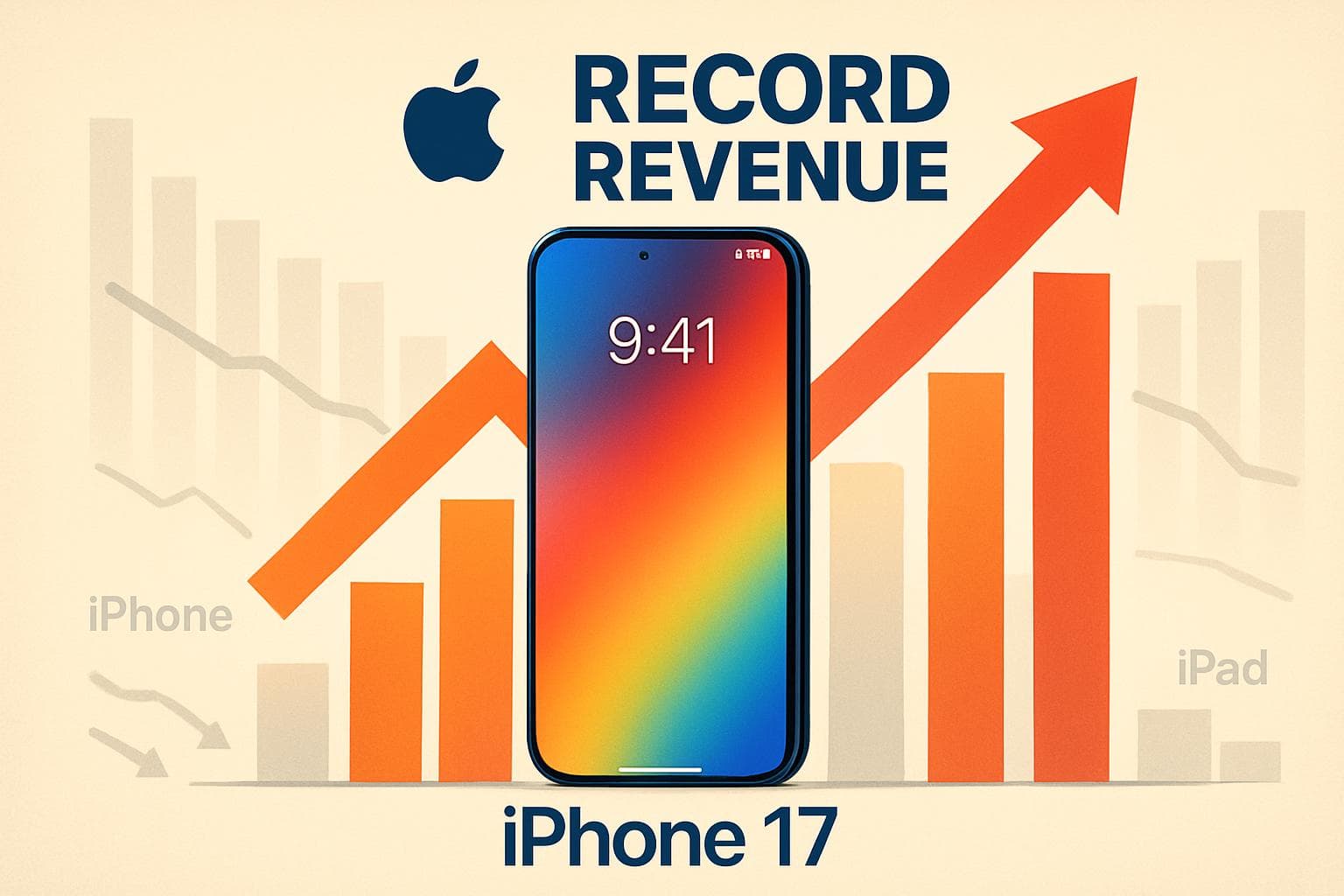
Apple has reported a remarkable 16% increase in revenue for the final quarter of last year, reaching $144 billion, largely due to unprecedented demand for its new iPhone 17 lineup. The tech giant's earnings, announced on Thursday, exceeded Wall Street's expectations, with iPhone sales setting all-time records across various regions, particularly in China, where sales surged by 38%.
iPhone Sales Propel Revenue Growth
The introduction of the iPhone 17 and 17 Pro has reinvigorated Apple's product demand, contributing to a 23% increase in iPhone revenue compared to the same period last year. CEO Tim Cook highlighted the company's success in China, stating, "It was the best iPhone quarter in history in greater China." The global active device base, including iPhones and Macs, has now reached 2.5 billion, up from 2.35 billion a year ago.
Challenges in Other Segments
Despite the iPhone's success, other segments of Apple's business faced challenges. Sales of Mac computers declined by over 7%, while wearables and accessories, including the Apple Watch and AirPods, fell by approximately 3%. Cook acknowledged the supply constraints due to high demand, stating that the company is in "supply chase mode."
AI Strategy and Investor Concerns
Apple's cautious approach to artificial intelligence has drawn investor scrutiny. The company recently announced a collaboration with Google to integrate its Gemini AI into future Siri updates. Cook promised a "more personalized Siri" this year, aiming to enhance user experiences. However, some analysts, like Jacob Bourne from Emarketer, believe Apple's AI strategy remains uncertain compared to competitors.
Stock Performance and Future Plans
Following the earnings announcement, Apple's stock experienced a 10% drop, its largest single-day decline since 2020. Despite this, analysts like Thomas Monteiro from Investing.com argue that the strong iPhone demand demonstrates consumer preference for execution and ecosystem reliability over AI features. Apple plans to invest $16 billion in expanding its business infrastructure, contrasting with Microsoft's more aggressive AI spending.
WHAT THIS MIGHT MEAN
Looking ahead, Apple's partnership with Google could significantly influence its AI capabilities, potentially reshaping its product offerings and market position. The company's cautious AI strategy may evolve as it seeks to balance innovation with consumer expectations. Meanwhile, the strong demand for iPhones suggests that Apple can maintain its revenue growth, even as it navigates challenges in other product segments. Investors will likely continue to monitor Apple's AI developments closely, as the tech giant strives to remain competitive in an increasingly AI-driven market.
Related Articles
China Sets Lowest GDP Growth Target in Decades Amid Economic Challenges
Tech Giants Pledge to Cover AI Data Center Energy Costs Amid Rising Electricity Concerns

Trump's New Tariff Strategy Sparks Global Trade Uncertainty

Trump's Tariff Strategy Faces Supreme Court Setback, New Measures Announced

Trump's Tariff Strategy Faces Supreme Court Setback, Sparks New Trade Policy

UK Faces Dilemmas Amid Iran Conflict and China Spying Allegations
Apple's Record iPhone Sales Drive Revenue Surge Amid AI Strategy Concerns
In This Article
 Daniel Rivera| Published
 HIGHLIGHTS
- Apple reported a 16% increase in revenue to $144 billion, driven by record iPhone sales, particularly in China.
- iPhone 17 sales exceeded expectations, contributing to a 23% rise in iPhone revenue compared to the previous year.
- Despite strong iPhone sales, Apple's Mac and wearables segments saw declines of 7% and 3%, respectively.
- Apple announced a partnership with Google to use its Gemini AI for future Siri updates, amid investor concerns about its AI strategy.
- Apple's stock fell by 10% following the earnings report, despite surpassing Wall Street expectations.
Apple has reported a remarkable 16% increase in revenue for the final quarter of last year, reaching $144 billion, largely due to unprecedented demand for its new iPhone 17 lineup. The tech giant's earnings, announced on Thursday, exceeded Wall Street's expectations, with iPhone sales setting all-time records across various regions, particularly in China, where sales surged by 38%.
iPhone Sales Propel Revenue Growth
The introduction of the iPhone 17 and 17 Pro has reinvigorated Apple's product demand, contributing to a 23% increase in iPhone revenue compared to the same period last year. CEO Tim Cook highlighted the company's success in China, stating, "It was the best iPhone quarter in history in greater China." The global active device base, including iPhones and Macs, has now reached 2.5 billion, up from 2.35 billion a year ago.
Challenges in Other Segments
Despite the iPhone's success, other segments of Apple's business faced challenges. Sales of Mac computers declined by over 7%, while wearables and accessories, including the Apple Watch and AirPods, fell by approximately 3%. Cook acknowledged the supply constraints due to high demand, stating that the company is in "supply chase mode."
AI Strategy and Investor Concerns
Apple's cautious approach to artificial intelligence has drawn investor scrutiny. The company recently announced a collaboration with Google to integrate its Gemini AI into future Siri updates. Cook promised a "more personalized Siri" this year, aiming to enhance user experiences. However, some analysts, like Jacob Bourne from Emarketer, believe Apple's AI strategy remains uncertain compared to competitors.
Stock Performance and Future Plans
Following the earnings announcement, Apple's stock experienced a 10% drop, its largest single-day decline since 2020. Despite this, analysts like Thomas Monteiro from Investing.com argue that the strong iPhone demand demonstrates consumer preference for execution and ecosystem reliability over AI features. Apple plans to invest $16 billion in expanding its business infrastructure, contrasting with Microsoft's more aggressive AI spending.
WHAT THIS MIGHT MEAN
Looking ahead, Apple's partnership with Google could significantly influence its AI capabilities, potentially reshaping its product offerings and market position. The company's cautious AI strategy may evolve as it seeks to balance innovation with consumer expectations. Meanwhile, the strong demand for iPhones suggests that Apple can maintain its revenue growth, even as it navigates challenges in other product segments. Investors will likely continue to monitor Apple's AI developments closely, as the tech giant strives to remain competitive in an increasingly AI-driven market.
Related Articles
China Sets Lowest GDP Growth Target in Decades Amid Economic Challenges
Tech Giants Pledge to Cover AI Data Center Energy Costs Amid Rising Electricity Concerns
Trump's New Tariff Strategy Sparks Global Trade Uncertainty
Trump's Tariff Strategy Faces Supreme Court Setback, New Measures Announced
Trump's Tariff Strategy Faces Supreme Court Setback, Sparks New Trade Policy
UK Faces Dilemmas Amid Iran Conflict and China Spying Allegations