
Assisted Dying Bill Faces Legislative Hurdles Amidst Potential Use of Parliament Act
In This Article
HIGHLIGHTS
- The assisted dying bill faces significant hurdles in the House of Lords, with little chance of passing without a change in approach.
- Lord Falconer and Kim Leadbeater are considering using the Parliament Act 1911 to bypass the Lords' opposition.
- The Parliament Act has been used only seven times since 1911, primarily for contentious issues.
- Opponents argue that the bill is unsafe and requires extensive amendments before becoming law.
- The bill must pass the Lords by May, or it will automatically fail, prompting supporters to explore alternative legislative routes.
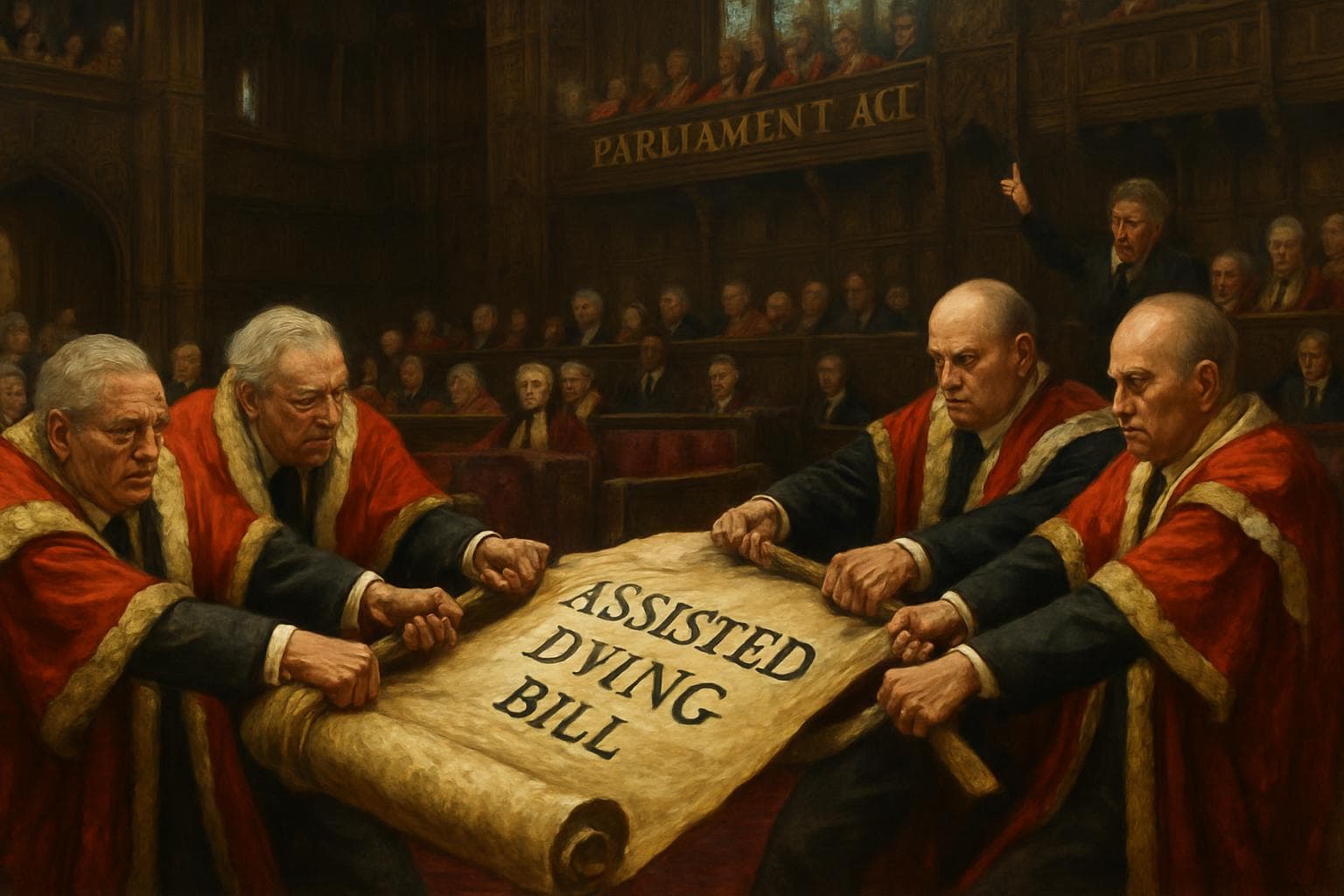
The assisted dying bill, a contentious piece of legislation, is encountering significant resistance in the House of Lords, casting doubt on its ability to become law this year. Lord Falconer, a prominent advocate for the bill, has expressed concerns about its prospects, stating that without a fundamental change in the Lords' approach, the bill has "absolutely no hope" of passing.
Parliament Act as a Last Resort
In a bid to overcome the legislative impasse, Lord Falconer and Labour MP Kim Leadbeater are contemplating invoking the Parliament Act 1911. This rarely used legislative tool allows the House of Commons to bypass the Lords if a bill is repeatedly blocked. The act has been employed only seven times since its inception, primarily for deeply divisive issues such as decriminalizing homosexuality and banning foxhunting.
Opposition and Concerns
Opponents of the assisted dying bill argue that it poses risks to vulnerable individuals and requires substantial amendments. A government source indicated that many ministers believe the bill will not pass through the Lords, suggesting that a Royal Commission might be necessary to address practical concerns. Critics have labeled the potential use of the Parliament Act as a "nuclear option," warning that it could force a flawed bill into law without the opportunity for amendments.
Legislative Timelines and Challenges
The bill must clear the House of Lords by May, coinciding with the end of the current parliamentary session. If it fails to do so, it will automatically lapse. Supporters are exploring alternative routes, including reintroducing the bill in the next session or securing government time for its consideration. However, the bill must remain identical to its current form to qualify for the Parliament Act's provisions.
WHAT THIS MIGHT MEAN
If the assisted dying bill fails to pass the Lords by May, its supporters may face a challenging path forward. Invoking the Parliament Act could lead to a constitutional clash, testing the limits of parliamentary procedures. The move might also provoke significant public and political debate, given the sensitive nature of the issue. Experts suggest that even if the bill is reintroduced, it will require strategic maneuvering to navigate the legislative process successfully. The outcome could set a precedent for future private member's bills facing similar opposition in the Lords.
Related Articles

Keir Starmer Faces Pressure Over Appointments and Calls for Cultural Change

Lib Dem Peer Chris Rennard Suspended Amid Renewed Sexual Harassment Probe

Restoration of Westminster: A £40bn Dilemma for UK Parliament

Diplomatic Tensions Rise as Trump Criticizes Starmer's Iran Policy

US Congress Seeks Testimony from Peter Mandelson Over Epstein Ties
Labour Party Faces Turmoil Over Links to Convicted Sex Offender
Assisted Dying Bill Faces Legislative Hurdles Amidst Potential Use of Parliament Act
In This Article
 Alex Carter| Published
 HIGHLIGHTS
- The assisted dying bill faces significant hurdles in the House of Lords, with little chance of passing without a change in approach.
- Lord Falconer and Kim Leadbeater are considering using the Parliament Act 1911 to bypass the Lords' opposition.
- The Parliament Act has been used only seven times since 1911, primarily for contentious issues.
- Opponents argue that the bill is unsafe and requires extensive amendments before becoming law.
- The bill must pass the Lords by May, or it will automatically fail, prompting supporters to explore alternative legislative routes.
The assisted dying bill, a contentious piece of legislation, is encountering significant resistance in the House of Lords, casting doubt on its ability to become law this year. Lord Falconer, a prominent advocate for the bill, has expressed concerns about its prospects, stating that without a fundamental change in the Lords' approach, the bill has "absolutely no hope" of passing.
Parliament Act as a Last Resort
In a bid to overcome the legislative impasse, Lord Falconer and Labour MP Kim Leadbeater are contemplating invoking the Parliament Act 1911. This rarely used legislative tool allows the House of Commons to bypass the Lords if a bill is repeatedly blocked. The act has been employed only seven times since its inception, primarily for deeply divisive issues such as decriminalizing homosexuality and banning foxhunting.
Opposition and Concerns
Opponents of the assisted dying bill argue that it poses risks to vulnerable individuals and requires substantial amendments. A government source indicated that many ministers believe the bill will not pass through the Lords, suggesting that a Royal Commission might be necessary to address practical concerns. Critics have labeled the potential use of the Parliament Act as a "nuclear option," warning that it could force a flawed bill into law without the opportunity for amendments.
Legislative Timelines and Challenges
The bill must clear the House of Lords by May, coinciding with the end of the current parliamentary session. If it fails to do so, it will automatically lapse. Supporters are exploring alternative routes, including reintroducing the bill in the next session or securing government time for its consideration. However, the bill must remain identical to its current form to qualify for the Parliament Act's provisions.
WHAT THIS MIGHT MEAN
If the assisted dying bill fails to pass the Lords by May, its supporters may face a challenging path forward. Invoking the Parliament Act could lead to a constitutional clash, testing the limits of parliamentary procedures. The move might also provoke significant public and political debate, given the sensitive nature of the issue. Experts suggest that even if the bill is reintroduced, it will require strategic maneuvering to navigate the legislative process successfully. The outcome could set a precedent for future private member's bills facing similar opposition in the Lords.
Related Articles
Keir Starmer Faces Pressure Over Appointments and Calls for Cultural Change
Lib Dem Peer Chris Rennard Suspended Amid Renewed Sexual Harassment Probe
Restoration of Westminster: A £40bn Dilemma for UK Parliament
Diplomatic Tensions Rise as Trump Criticizes Starmer's Iran Policy
US Congress Seeks Testimony from Peter Mandelson Over Epstein Ties
Labour Party Faces Turmoil Over Links to Convicted Sex Offender