
Assisted Dying Bill Clears Commons, Faces Scrutiny in Lords
In This Article
HIGHLIGHTS
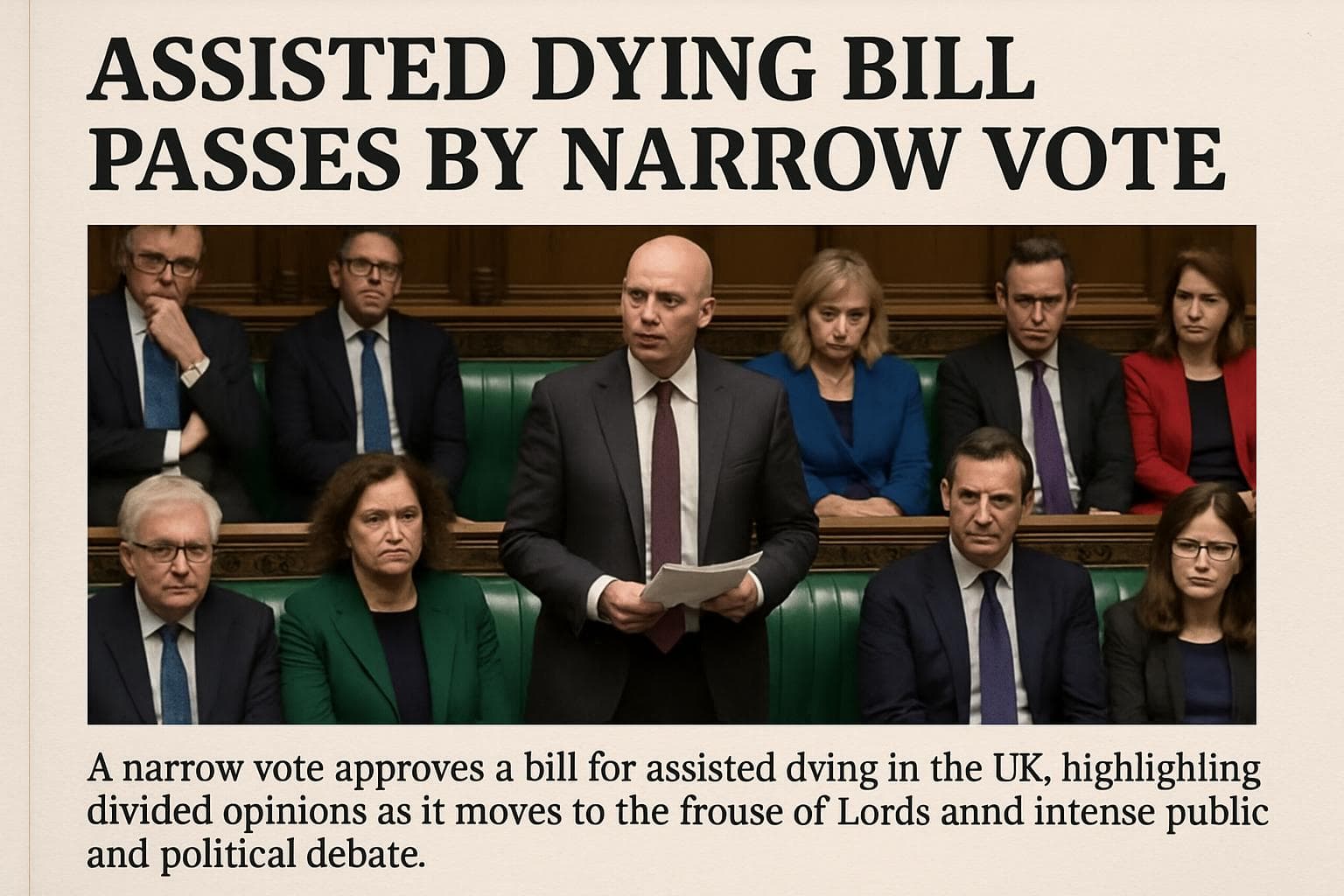
- The Terminally Ill Adults (End of Life) Bill passed the House of Commons with a narrow majority of 23 votes.
- The bill allows terminally ill adults in England and Wales to seek medical assistance to end their lives.
- The legislation now moves to the House of Lords for further scrutiny and potential amendments.
- Debate remains polarized, with concerns about safeguards for vulnerable individuals.
- If passed, the law could take up to four years to implement, with the first assisted deaths potentially occurring by 2029.
The contentious Terminally Ill Adults (End of Life) Bill, which seeks to legalize assisted dying in England and Wales, has passed a critical vote in the House of Commons. The bill, spearheaded by Labour MP Kim Leadbeater, was approved by a narrow margin of 314 to 291 votes, reflecting the deeply divided opinions on the issue.
Commons Approval and Next Steps
Having cleared the Commons, the bill now proceeds to the House of Lords, where it will undergo detailed examination. The Lords, comprising experts from various fields including medicine, law, and disability rights, will have the opportunity to propose amendments. The bill's passage through the Lords is not guaranteed, as it is a private member's bill and not backed by the government, which remains neutral on the matter.
Public and Political Reactions
The debate over assisted dying has been marked by emotional and ethical considerations. Proponents argue that the bill provides a dignified option for terminally ill adults with less than six months to live, while opponents raise concerns about the potential risks to vulnerable individuals. Demonstrations outside Parliament have highlighted the polarized nature of the debate, with campaigners on both sides voicing their views.
Implementation Timeline and Safeguards
If the bill becomes law, the government estimates that it could take up to four years to establish the necessary framework for assisted dying services. Health Minister Stephen Kinnock emphasized the importance of "safe and effective implementation" with robust safeguards. The proposed process includes multiple declarations by the patient, assessments by independent doctors, and a multidisciplinary panel review.
Regional and Political Dynamics
The bill's impact extends beyond England and Wales, with Northern Ireland MPs also weighing in. While the legislation does not apply to Northern Ireland, an amendment allows for the manufacture of lethal drugs there. The debate has seen shifts in political stances, with some MPs reversing their support due to concerns over the bill's safeguards.
WHAT THIS MIGHT MEAN
As the bill moves to the House of Lords, its future remains uncertain. The Lords' scrutiny could lead to significant amendments, potentially altering the bill's provisions. If the bill passes, the lengthy implementation process means that assisted dying services may not be available until the end of the decade. The ongoing debate highlights the ethical complexities and societal implications of assisted dying, with potential legal challenges and public opinion continuing to shape the discourse.
Images from the Web

Related Articles

Saharan Dust to Illuminate UK Skies with Vivid Sunrises and Sunsets

Sisters Tragically Drown at Eryri National Park's Watkin Path

Labour MP's Husband Arrested in UK-China Espionage Probe

Police Federation Chief Arrested Amid Fraud Investigation

Diplomatic Tensions Rise as Trump Criticizes Starmer's Iran Policy

Government Announces £4 Billion Overhaul of SEND Support in England
Assisted Dying Bill Clears Commons, Faces Scrutiny in Lords
In This Article
 Maya Singh| Published
 HIGHLIGHTS
- The Terminally Ill Adults (End of Life) Bill passed the House of Commons with a narrow majority of 23 votes.
- The bill allows terminally ill adults in England and Wales to seek medical assistance to end their lives.
- The legislation now moves to the House of Lords for further scrutiny and potential amendments.
- Debate remains polarized, with concerns about safeguards for vulnerable individuals.
- If passed, the law could take up to four years to implement, with the first assisted deaths potentially occurring by 2029.
The contentious Terminally Ill Adults (End of Life) Bill, which seeks to legalize assisted dying in England and Wales, has passed a critical vote in the House of Commons. The bill, spearheaded by Labour MP Kim Leadbeater, was approved by a narrow margin of 314 to 291 votes, reflecting the deeply divided opinions on the issue.
Commons Approval and Next Steps
Having cleared the Commons, the bill now proceeds to the House of Lords, where it will undergo detailed examination. The Lords, comprising experts from various fields including medicine, law, and disability rights, will have the opportunity to propose amendments. The bill's passage through the Lords is not guaranteed, as it is a private member's bill and not backed by the government, which remains neutral on the matter.
Public and Political Reactions
The debate over assisted dying has been marked by emotional and ethical considerations. Proponents argue that the bill provides a dignified option for terminally ill adults with less than six months to live, while opponents raise concerns about the potential risks to vulnerable individuals. Demonstrations outside Parliament have highlighted the polarized nature of the debate, with campaigners on both sides voicing their views.
Implementation Timeline and Safeguards
If the bill becomes law, the government estimates that it could take up to four years to establish the necessary framework for assisted dying services. Health Minister Stephen Kinnock emphasized the importance of "safe and effective implementation" with robust safeguards. The proposed process includes multiple declarations by the patient, assessments by independent doctors, and a multidisciplinary panel review.
Regional and Political Dynamics
The bill's impact extends beyond England and Wales, with Northern Ireland MPs also weighing in. While the legislation does not apply to Northern Ireland, an amendment allows for the manufacture of lethal drugs there. The debate has seen shifts in political stances, with some MPs reversing their support due to concerns over the bill's safeguards.
WHAT THIS MIGHT MEAN
As the bill moves to the House of Lords, its future remains uncertain. The Lords' scrutiny could lead to significant amendments, potentially altering the bill's provisions. If the bill passes, the lengthy implementation process means that assisted dying services may not be available until the end of the decade. The ongoing debate highlights the ethical complexities and societal implications of assisted dying, with potential legal challenges and public opinion continuing to shape the discourse.
Images from the Web
Related Articles
Saharan Dust to Illuminate UK Skies with Vivid Sunrises and Sunsets
Sisters Tragically Drown at Eryri National Park's Watkin Path
Labour MP's Husband Arrested in UK-China Espionage Probe
Police Federation Chief Arrested Amid Fraud Investigation
Diplomatic Tensions Rise as Trump Criticizes Starmer's Iran Policy
Government Announces £4 Billion Overhaul of SEND Support in England