
Australia to Strengthen Childcare Worker Screening with New Reforms
In This Article
HIGHLIGHTS
- Australia plans to close loopholes in childcare worker screening by enhancing information sharing across states and territories.
- The "banned in one, banned in all" policy aims to prevent individuals with criminal histories from moving between jurisdictions to work with children.
- Attorney-General Michelle Rowland announced reforms to be implemented by the end of 2025, with a pilot program for continuous checking capability by the end of 2023.
- Recent high-profile abuse cases, including charges against a Melbourne childcare worker, have intensified scrutiny on the current system.
- The reforms follow recommendations from a 2015 royal commission and aim to improve safety in the childcare sector.
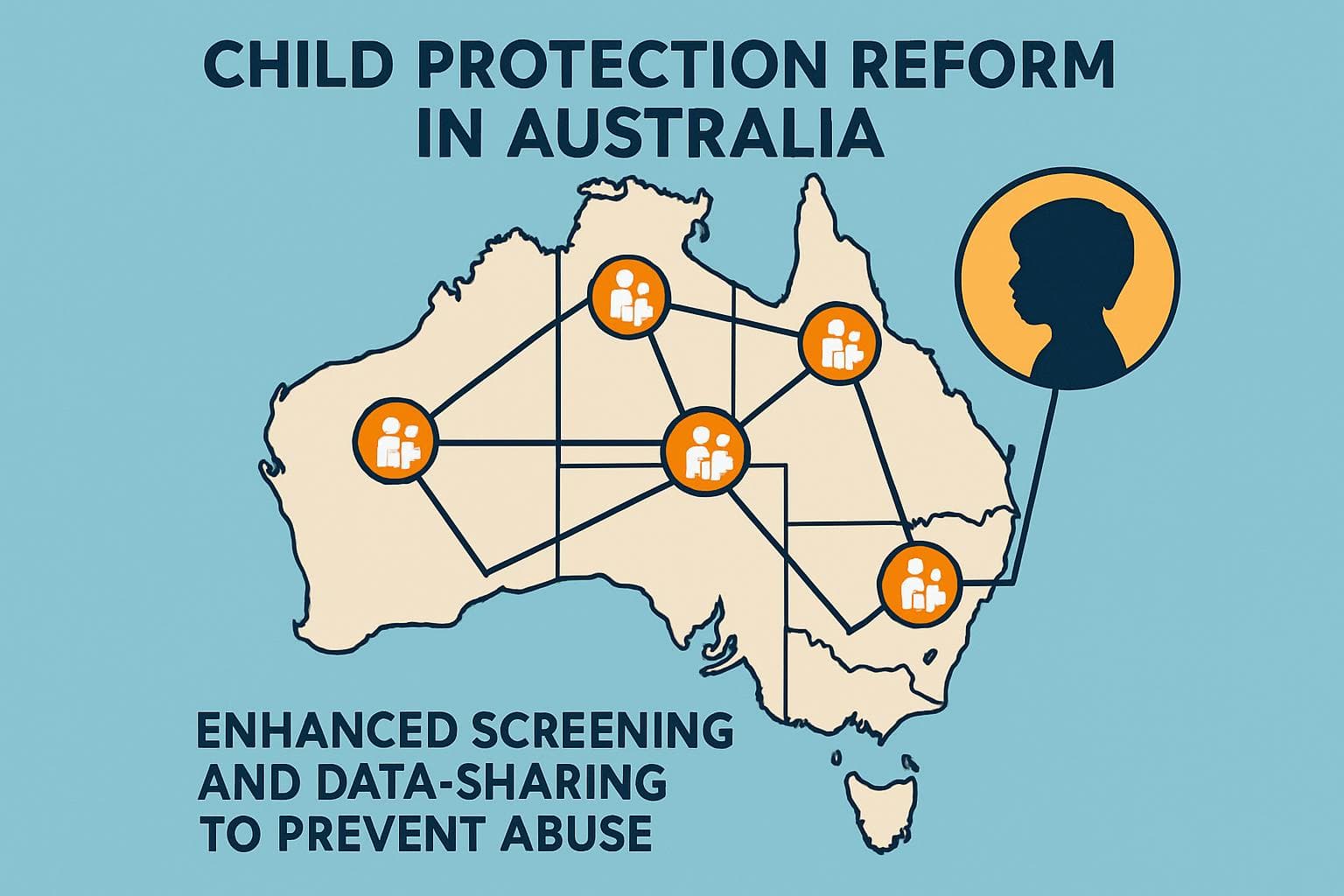
Australia is set to implement significant reforms aimed at closing loopholes in the screening of childcare workers, following a series of alarming abuse cases. The proposed "banned in one, banned in all" legislation will ensure that individuals prohibited from working with children in one state cannot simply relocate to another jurisdiction to continue their employment. This initiative is part of a broader effort to enhance child protection laws across the nation.
Closing Loopholes in Childcare Worker Screening
Attorney-General Michelle Rowland announced the reforms after a meeting with state and territory attorneys-general. The new laws, expected to be fully implemented by the end of 2025, will facilitate near real-time information sharing between jurisdictions. This move addresses a critical gap in the current system, where each state operates its own working with children checks without sharing data, allowing potential abusers to exploit these discrepancies.
Rowland emphasized the urgency of the reforms, stating, "It is absolutely horrific what has happened, it should never have happened." She highlighted the need for a comprehensive approach to prevent individuals with criminal histories from "gaming the system."
Recent Abuse Cases Highlight Urgency
The reforms come in the wake of several high-profile abuse cases, including the arrest of Melbourne childcare worker Joshua Dale Brown, who faces 70 charges, including child rape. This case has underscored the vulnerabilities in the existing system, as Brown held a valid working with children check despite previous terminations from multiple centers.
National Continuous Checking Capability
The Australian Criminal Intelligence Commission is spearheading the development of a national continuous checking capability, with a pilot program set to conclude by the end of 2023. This initiative aims to ensure that changes in criminal history are promptly captured and shared across jurisdictions, further tightening the net on potential abusers.
While the reforms stop short of creating a national working with children check system, they focus on achieving consistency and efficiency through improved communication between state schemes. The move aligns with recommendations from a 2015 royal commission into child abuse, which called for a nationalized approach to working with children checks.
WHAT THIS MIGHT MEAN
The implementation of these reforms could significantly enhance the safety of children in childcare settings across Australia. By closing existing loopholes, the government aims to prevent individuals with criminal backgrounds from exploiting jurisdictional gaps. However, the success of these measures will depend on the seamless integration of IT systems and the commitment of all states and territories to maintain robust information-sharing practices.
As the pilot program for continuous checking capability progresses, it will be crucial to monitor its effectiveness and address any technical or operational challenges. The reforms also have the potential to set a precedent for other sectors requiring stringent background checks, further strengthening Australia's overall child protection framework.
Related Articles

Prince Andrew's Arrest Raises Questions About Royal Succession and Monarchy's Future

Queensland Man Faces 596 Child Abuse Charges in Global Online Grooming Case

Canada and Australia Forge Strategic Partnership Amid Global Uncertainty

Canada Calls for De-escalation Amid US-Israel Strikes on Iran

Trump's New Tariff Strategy Sparks Global Trade Uncertainty

Trump Raises Import Tariffs to 15% After Supreme Court Setback
Australia to Strengthen Childcare Worker Screening with New Reforms
In This Article
 Sofia Romano| Published
 HIGHLIGHTS
- Australia plans to close loopholes in childcare worker screening by enhancing information sharing across states and territories.
- The "banned in one, banned in all" policy aims to prevent individuals with criminal histories from moving between jurisdictions to work with children.
- Attorney-General Michelle Rowland announced reforms to be implemented by the end of 2025, with a pilot program for continuous checking capability by the end of 2023.
- Recent high-profile abuse cases, including charges against a Melbourne childcare worker, have intensified scrutiny on the current system.
- The reforms follow recommendations from a 2015 royal commission and aim to improve safety in the childcare sector.
Australia is set to implement significant reforms aimed at closing loopholes in the screening of childcare workers, following a series of alarming abuse cases. The proposed "banned in one, banned in all" legislation will ensure that individuals prohibited from working with children in one state cannot simply relocate to another jurisdiction to continue their employment. This initiative is part of a broader effort to enhance child protection laws across the nation.
Closing Loopholes in Childcare Worker Screening
Attorney-General Michelle Rowland announced the reforms after a meeting with state and territory attorneys-general. The new laws, expected to be fully implemented by the end of 2025, will facilitate near real-time information sharing between jurisdictions. This move addresses a critical gap in the current system, where each state operates its own working with children checks without sharing data, allowing potential abusers to exploit these discrepancies.
Rowland emphasized the urgency of the reforms, stating, "It is absolutely horrific what has happened, it should never have happened." She highlighted the need for a comprehensive approach to prevent individuals with criminal histories from "gaming the system."
Recent Abuse Cases Highlight Urgency
The reforms come in the wake of several high-profile abuse cases, including the arrest of Melbourne childcare worker Joshua Dale Brown, who faces 70 charges, including child rape. This case has underscored the vulnerabilities in the existing system, as Brown held a valid working with children check despite previous terminations from multiple centers.
National Continuous Checking Capability
The Australian Criminal Intelligence Commission is spearheading the development of a national continuous checking capability, with a pilot program set to conclude by the end of 2023. This initiative aims to ensure that changes in criminal history are promptly captured and shared across jurisdictions, further tightening the net on potential abusers.
While the reforms stop short of creating a national working with children check system, they focus on achieving consistency and efficiency through improved communication between state schemes. The move aligns with recommendations from a 2015 royal commission into child abuse, which called for a nationalized approach to working with children checks.
WHAT THIS MIGHT MEAN
The implementation of these reforms could significantly enhance the safety of children in childcare settings across Australia. By closing existing loopholes, the government aims to prevent individuals with criminal backgrounds from exploiting jurisdictional gaps. However, the success of these measures will depend on the seamless integration of IT systems and the commitment of all states and territories to maintain robust information-sharing practices.
As the pilot program for continuous checking capability progresses, it will be crucial to monitor its effectiveness and address any technical or operational challenges. The reforms also have the potential to set a precedent for other sectors requiring stringent background checks, further strengthening Australia's overall child protection framework.
Related Articles
Prince Andrew's Arrest Raises Questions About Royal Succession and Monarchy's Future
Queensland Man Faces 596 Child Abuse Charges in Global Online Grooming Case
Canada and Australia Forge Strategic Partnership Amid Global Uncertainty
Canada Calls for De-escalation Amid US-Israel Strikes on Iran
Trump's New Tariff Strategy Sparks Global Trade Uncertainty
Trump Raises Import Tariffs to 15% After Supreme Court Setback