
Australia Urged to Set Ambitious Climate Targets Amidst Political Debate
In This Article
HIGHLIGHTS
- The UN climate chief, Simon Stiell, has urged Australia to adopt more ambitious climate targets, emphasizing economic benefits and regional stability.
- Australia is debating its emissions reduction targets, with a 2035 goal expected to be announced in September, amid pressure from various industry and climate groups.
- Former Deputy Prime Minister Barnaby Joyce has introduced a bill to reverse Australia's net zero emissions goal, though it is unlikely to pass.
- The Climate Change Authority suggests a 65-75% emissions reduction by 2035, while some groups advocate for net zero by 2035 to meet Paris Agreement goals.
- Australia's climate policy is under scrutiny as it seeks to co-host the UN's COP31 climate summit with the Pacific next year.
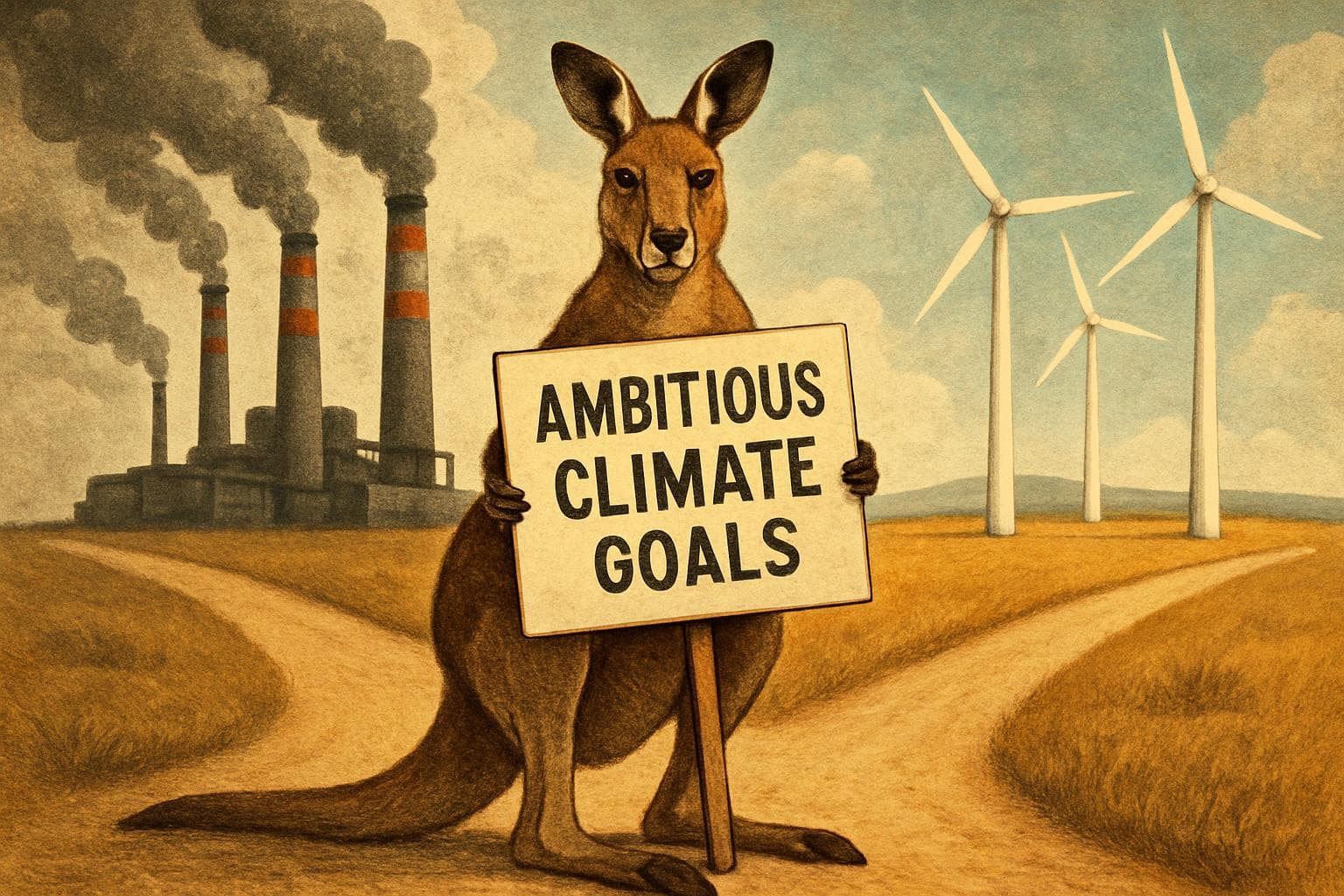
Australia is at a pivotal moment in its climate policy journey as the UN's climate chief, Simon Stiell, calls for the nation to adopt more ambitious emissions reduction targets. Speaking at an event organized by the Smart Energy Council, Stiell emphasized the potential economic rewards and regional stability that could be achieved by setting higher goals. "Bog standard is beneath you," he remarked, urging Australia to seize the opportunity to lead in the global clean tech boom.
Currently, Australia has committed to reducing emissions by 43% by 2030, but it remains one of the highest per capita polluters globally. The debate over its climate goals has intensified as the Labor government considers a new target for 2035, expected to be announced in September. This decision is seen as a defining moment for the country, with the potential to create jobs and secure economic prosperity.
The Climate Change Authority, a government agency, has suggested a reduction of 65-75% by 2035, a target deemed ambitious yet achievable. However, former Deputy Prime Minister Barnaby Joyce has introduced legislation to roll back the nation's net zero emissions goal, arguing it would have no significant impact on the climate. Despite this, Joyce's bill is unlikely to succeed due to the Labor government's majority in the House of Representatives.
Australia's climate policy is under intense scrutiny, especially as it seeks to co-host the UN's COP31 climate summit with the Pacific next year. The country faces pressure from both industry and climate-focused organizations to set a target that aligns with the Paris Climate Agreement's goal of limiting global temperature rise to 1.5°C above pre-industrial levels.
WHAT THIS MIGHT MEAN
As Australia approaches the announcement of its 2035 emissions target, the decision will likely have significant implications for its domestic and international standing. Should the government opt for a more ambitious target, it could position Australia as a leader in the global transition to clean energy, attracting investment and fostering innovation. Conversely, a conservative approach may draw criticism and hinder its ability to influence regional climate policy.
The political landscape may also shift, with the Coalition reconsidering its stance on net zero emissions by 2050. This internal debate could lead to changes in party policies and impact future elections. As Australia prepares to co-host the COP31 summit, its climate commitments will be under the global spotlight, potentially affecting its diplomatic relationships and trade partnerships.
Related Articles

Australia Bars IS-Linked Citizen from Returning Amidst Repatriation Debate

Canada and Australia Forge Strategic Partnership Amid Global Uncertainty

Senate Blocks Resolution to Limit Trump's Military Actions in Iran

Canada Calls for De-escalation Amid US-Israel Strikes on Iran

Trump's New Tariff Strategy Sparks Global Trade Uncertainty

US-Iran Tensions Escalate Amid Renewed Nuclear Talks and Protests
Australia Urged to Set Ambitious Climate Targets Amidst Political Debate
In This Article
HIGHLIGHTS
- The UN climate chief, Simon Stiell, has urged Australia to adopt more ambitious climate targets, emphasizing economic benefits and regional stability.
- Australia is debating its emissions reduction targets, with a 2035 goal expected to be announced in September, amid pressure from various industry and climate groups.
- Former Deputy Prime Minister Barnaby Joyce has introduced a bill to reverse Australia's net zero emissions goal, though it is unlikely to pass.
- The Climate Change Authority suggests a 65-75% emissions reduction by 2035, while some groups advocate for net zero by 2035 to meet Paris Agreement goals.
- Australia's climate policy is under scrutiny as it seeks to co-host the UN's COP31 climate summit with the Pacific next year.
Australia is at a pivotal moment in its climate policy journey as the UN's climate chief, Simon Stiell, calls for the nation to adopt more ambitious emissions reduction targets. Speaking at an event organized by the Smart Energy Council, Stiell emphasized the potential economic rewards and regional stability that could be achieved by setting higher goals. "Bog standard is beneath you," he remarked, urging Australia to seize the opportunity to lead in the global clean tech boom.
Currently, Australia has committed to reducing emissions by 43% by 2030, but it remains one of the highest per capita polluters globally. The debate over its climate goals has intensified as the Labor government considers a new target for 2035, expected to be announced in September. This decision is seen as a defining moment for the country, with the potential to create jobs and secure economic prosperity.
The Climate Change Authority, a government agency, has suggested a reduction of 65-75% by 2035, a target deemed ambitious yet achievable. However, former Deputy Prime Minister Barnaby Joyce has introduced legislation to roll back the nation's net zero emissions goal, arguing it would have no significant impact on the climate. Despite this, Joyce's bill is unlikely to succeed due to the Labor government's majority in the House of Representatives.
Australia's climate policy is under intense scrutiny, especially as it seeks to co-host the UN's COP31 climate summit with the Pacific next year. The country faces pressure from both industry and climate-focused organizations to set a target that aligns with the Paris Climate Agreement's goal of limiting global temperature rise to 1.5°C above pre-industrial levels.
WHAT THIS MIGHT MEAN
As Australia approaches the announcement of its 2035 emissions target, the decision will likely have significant implications for its domestic and international standing. Should the government opt for a more ambitious target, it could position Australia as a leader in the global transition to clean energy, attracting investment and fostering innovation. Conversely, a conservative approach may draw criticism and hinder its ability to influence regional climate policy.
The political landscape may also shift, with the Coalition reconsidering its stance on net zero emissions by 2050. This internal debate could lead to changes in party policies and impact future elections. As Australia prepares to co-host the COP31 summit, its climate commitments will be under the global spotlight, potentially affecting its diplomatic relationships and trade partnerships.
Related Articles
Australia Bars IS-Linked Citizen from Returning Amidst Repatriation Debate
Canada and Australia Forge Strategic Partnership Amid Global Uncertainty
Senate Blocks Resolution to Limit Trump's Military Actions in Iran
Canada Calls for De-escalation Amid US-Israel Strikes on Iran
Trump's New Tariff Strategy Sparks Global Trade Uncertainty
US-Iran Tensions Escalate Amid Renewed Nuclear Talks and Protests