
Australia's Environmental Laws Overhauled in Landmark Labor-Greens Deal
In This Article
HIGHLIGHTS
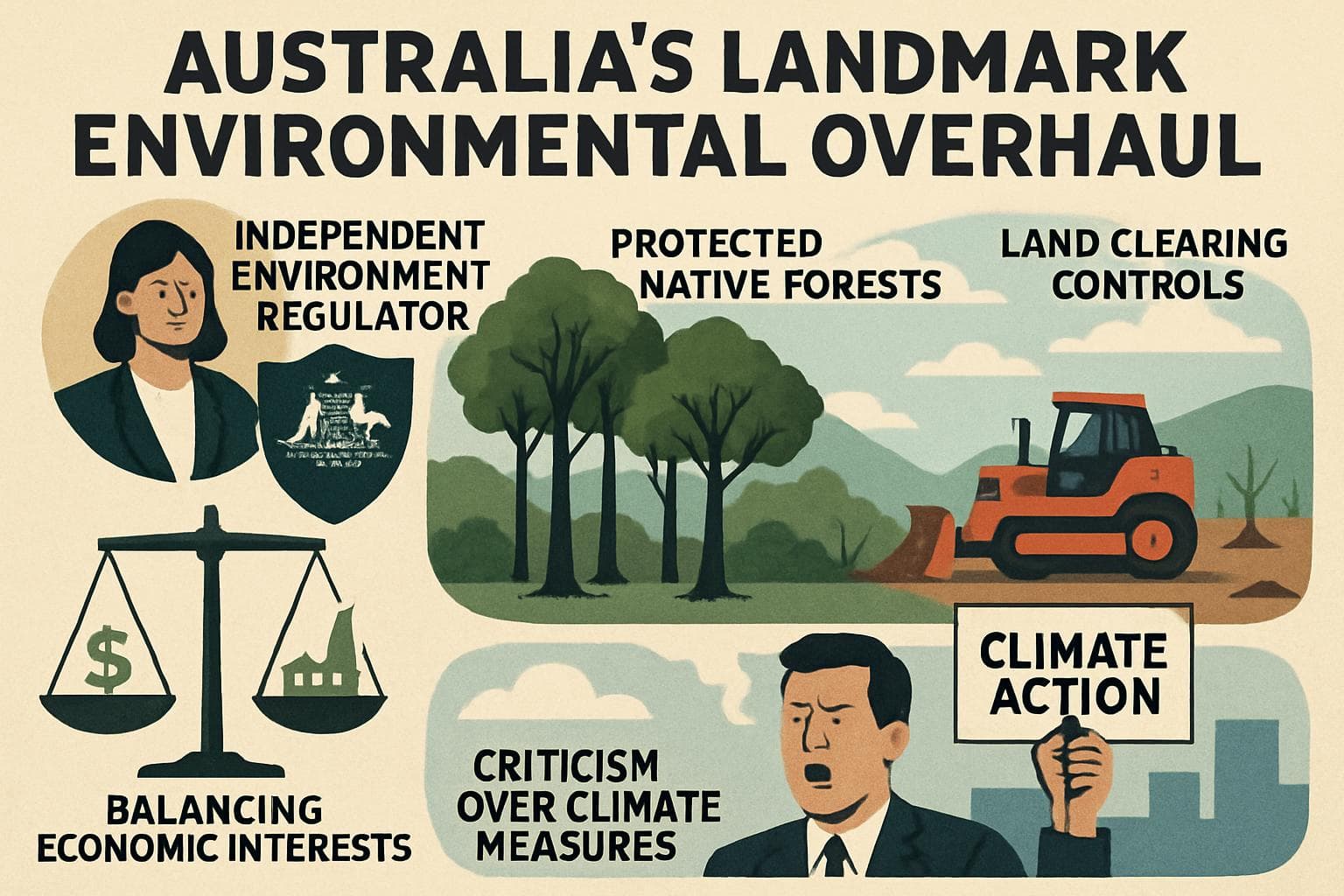
- Australia is set to overhaul its environmental laws with a new independent regulator, following a deal between Labor and the Greens.
- The reforms include stricter rules on land clearing and protections for native forests, but critics argue they fall short on climate change measures.
- The new laws will establish a national environment protection agency and introduce national environmental standards.
- The legislation aims to balance environmental protection with economic productivity, particularly in housing and renewable energy sectors.
- The reforms have faced criticism for being rushed through parliament with limited scrutiny, raising concerns about their effectiveness.
Australia is poised to implement its most significant environmental law reforms in decades, following a pivotal agreement between the Labor government and the Greens. The new legislation, set to pass through the Senate, introduces an independent environment regulator and aims to enhance protections for native forests while imposing stricter controls on land clearing.
Historic Legislative Changes
The reforms, inspired by the 2020 review of the Environment Protection and Biodiversity Conservation (EPBC) Act, promise to address longstanding inadequacies in Australia's environmental protection framework. Prime Minister Anthony Albanese hailed the changes as a "landmark day for the environment," emphasizing their dual focus on safeguarding nature and boosting economic productivity. The new laws will establish Australia's first national environment protection agency, tasked with enforcing higher penalties for environmental breaches and issuing stop-work orders when necessary.
Balancing Environmental and Economic Interests
The legislation seeks to strike a balance between environmental conservation and economic growth. It introduces national environmental standards and aims to expedite project assessments in key sectors such as housing, renewable energy, and critical minerals. However, the absence of a "climate trigger" to halt fossil fuel projects based on carbon emissions has drawn criticism. Instead, projects must report emissions and outline plans to achieve net-zero by 2050.
Criticism and Political Dynamics
Despite the reforms' ambitious scope, they have faced criticism for being rushed through parliament with minimal scrutiny. Independent Senator David Pocock and opposition leaders have expressed concerns about the lack of thorough examination. Critics also argue that the legislation does not adequately address climate change, with new coal and gas projects still receiving approval. Greens leader Larissa Waters acknowledged significant wins in negotiations but lamented the absence of stronger climate measures.
Future Implications
The passage of these reforms marks a significant political victory for the Albanese government, yet the debate over their effectiveness continues. Environmentalists warn that without robust climate provisions, the laws may fall short in combating the extinction crisis and climate change. As Australia remains one of the world's largest per capita polluters, the pressure to meet emissions reduction targets by 2035 looms large. The establishment of the national environment protection agency by 2026 will be a critical step in enforcing these new standards and ensuring accountability.
WHAT THIS MIGHT MEAN
The successful passage of these environmental reforms could set a precedent for future legislative efforts aimed at balancing ecological sustainability with economic development. However, the absence of a comprehensive climate trigger may necessitate further amendments to address climate change more effectively. As the new national environment protection agency becomes operational, its ability to enforce the laws and hold violators accountable will be crucial in determining the reforms' long-term impact. Political dynamics may also shift, with potential future negotiations required to strengthen climate-related provisions and address ongoing criticisms from environmental advocates and industry stakeholders alike.
Images from the Web

Related Articles

Canada and Australia Forge Strategic Partnership Amid Global Uncertainty

Canada Calls for De-escalation Amid US-Israel Strikes on Iran

Trump's New Tariff Strategy Sparks Global Trade Uncertainty
Prince Andrew's Arrest Raises Questions About Royal Succession and Monarchy's Future

Trump Raises Import Tariffs to 15% After Supreme Court Setback

Anna Murdoch-Mann: Influential Figure in Media and Philanthropy Dies at 81
Australia's Environmental Laws Overhauled in Landmark Labor-Greens Deal
In This Article
 Leila Hassan| Published
 HIGHLIGHTS
- Australia is set to overhaul its environmental laws with a new independent regulator, following a deal between Labor and the Greens.
- The reforms include stricter rules on land clearing and protections for native forests, but critics argue they fall short on climate change measures.
- The new laws will establish a national environment protection agency and introduce national environmental standards.
- The legislation aims to balance environmental protection with economic productivity, particularly in housing and renewable energy sectors.
- The reforms have faced criticism for being rushed through parliament with limited scrutiny, raising concerns about their effectiveness.
Australia is poised to implement its most significant environmental law reforms in decades, following a pivotal agreement between the Labor government and the Greens. The new legislation, set to pass through the Senate, introduces an independent environment regulator and aims to enhance protections for native forests while imposing stricter controls on land clearing.
Historic Legislative Changes
The reforms, inspired by the 2020 review of the Environment Protection and Biodiversity Conservation (EPBC) Act, promise to address longstanding inadequacies in Australia's environmental protection framework. Prime Minister Anthony Albanese hailed the changes as a "landmark day for the environment," emphasizing their dual focus on safeguarding nature and boosting economic productivity. The new laws will establish Australia's first national environment protection agency, tasked with enforcing higher penalties for environmental breaches and issuing stop-work orders when necessary.
Balancing Environmental and Economic Interests
The legislation seeks to strike a balance between environmental conservation and economic growth. It introduces national environmental standards and aims to expedite project assessments in key sectors such as housing, renewable energy, and critical minerals. However, the absence of a "climate trigger" to halt fossil fuel projects based on carbon emissions has drawn criticism. Instead, projects must report emissions and outline plans to achieve net-zero by 2050.
Criticism and Political Dynamics
Despite the reforms' ambitious scope, they have faced criticism for being rushed through parliament with minimal scrutiny. Independent Senator David Pocock and opposition leaders have expressed concerns about the lack of thorough examination. Critics also argue that the legislation does not adequately address climate change, with new coal and gas projects still receiving approval. Greens leader Larissa Waters acknowledged significant wins in negotiations but lamented the absence of stronger climate measures.
Future Implications
The passage of these reforms marks a significant political victory for the Albanese government, yet the debate over their effectiveness continues. Environmentalists warn that without robust climate provisions, the laws may fall short in combating the extinction crisis and climate change. As Australia remains one of the world's largest per capita polluters, the pressure to meet emissions reduction targets by 2035 looms large. The establishment of the national environment protection agency by 2026 will be a critical step in enforcing these new standards and ensuring accountability.
WHAT THIS MIGHT MEAN
The successful passage of these environmental reforms could set a precedent for future legislative efforts aimed at balancing ecological sustainability with economic development. However, the absence of a comprehensive climate trigger may necessitate further amendments to address climate change more effectively. As the new national environment protection agency becomes operational, its ability to enforce the laws and hold violators accountable will be crucial in determining the reforms' long-term impact. Political dynamics may also shift, with potential future negotiations required to strengthen climate-related provisions and address ongoing criticisms from environmental advocates and industry stakeholders alike.
Images from the Web
Related Articles
Canada and Australia Forge Strategic Partnership Amid Global Uncertainty
Canada Calls for De-escalation Amid US-Israel Strikes on Iran
Trump's New Tariff Strategy Sparks Global Trade Uncertainty
Prince Andrew's Arrest Raises Questions About Royal Succession and Monarchy's Future
Trump Raises Import Tariffs to 15% After Supreme Court Setback
Anna Murdoch-Mann: Influential Figure in Media and Philanthropy Dies at 81