
Bank of England Set to Cut Interest Rates Amid Economic Challenges
In This Article
HIGHLIGHTS
- The Bank of England is expected to cut interest rates to 4% from 4.25%, marking the fifth reduction since August last year.
- A rate cut could lower mortgage payments for homeowners but also reduce returns for savers, with average savings rates dropping to 3.5%.
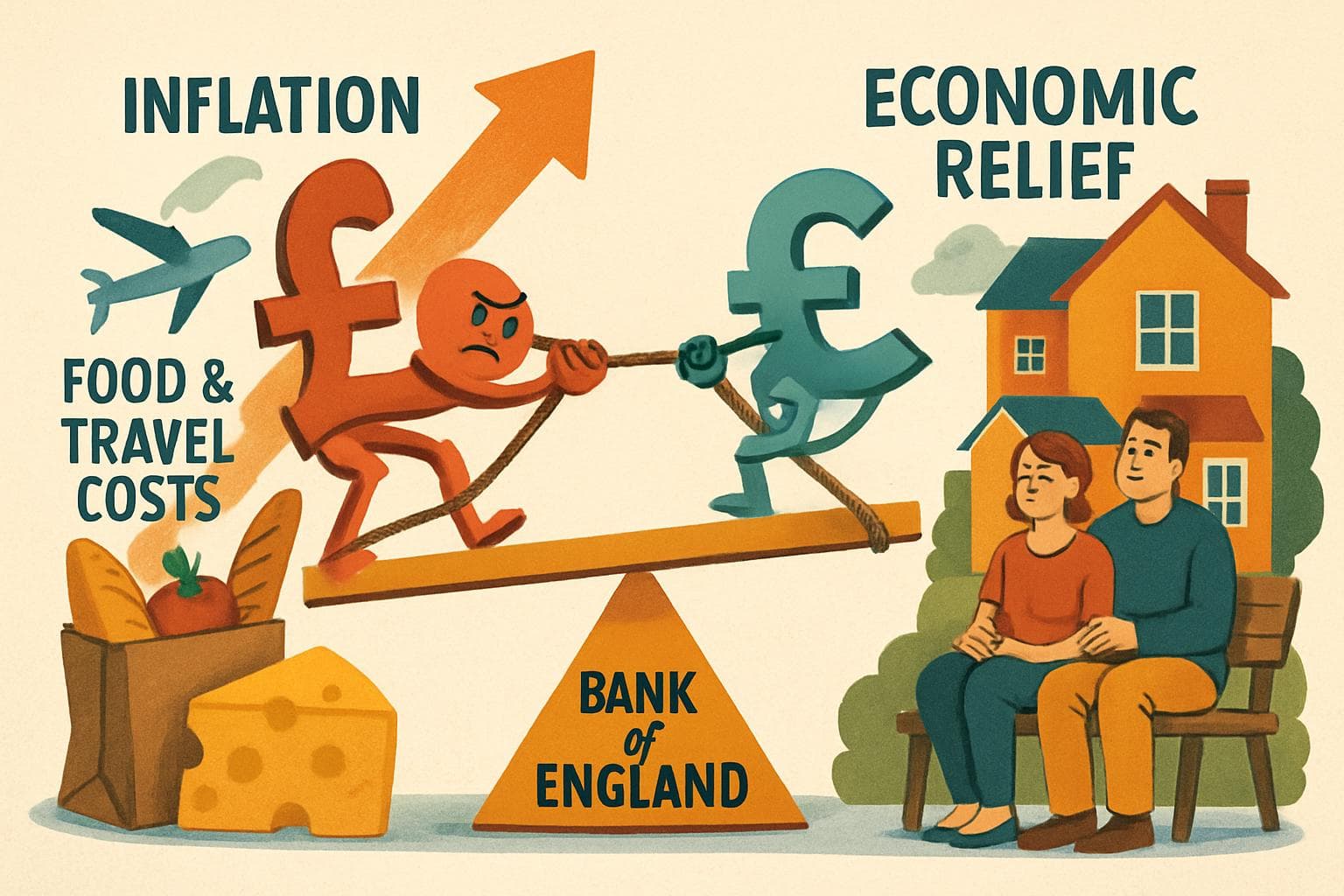
- Inflation has risen to 3.6%, surpassing the Bank's 2% target, amid higher costs for food, clothing, and travel.
- The UK economy showed no growth in April and May, with unemployment rising and job vacancies declining.
- The Bank's monetary policy committee is divided on the rate cut, reflecting concerns over inflation and economic slowdown.
The Bank of England is poised to announce a reduction in interest rates on Thursday, a move anticipated to ease financial pressure on households and businesses. This expected cut, from 4.25% to 4%, would be the fifth since last August, bringing borrowing costs to their lowest in over two years.
Impact on Borrowers and Savers
A lower base rate is likely to benefit homeowners by reducing monthly mortgage payments. According to Moneyfacts, repayments on a standard variable rate mortgage of £250,000 over 25 years could decrease by £40 per month. However, savers may face diminishing returns, with average savings rates projected to fall to 3.5%.
Economic Context and Inflation Concerns
The decision comes amid a complex economic landscape, with inflation rising to 3.6% in the year to June, driven by increased costs in food, clothing, and travel. Despite the inflationary pressures, the UK economy showed no growth in April and May, and unemployment figures are on the rise, indicating a cooling job market.
Divisions Within the Bank's Committee
The Bank's monetary policy committee is reportedly divided over the rate cut. While most members, including Governor Andrew Bailey, support a quarter-point reduction, others, like Chief Economist Huw Pill, are concerned about mounting inflationary pressures. External economists Alan Taylor and Swati Dhingra are advocating for a more significant half-point cut due to rising job losses.
Political and Economic Implications
The anticipated rate cut is seen as a relief for the Labour government, which faces scrutiny over its economic management. Chancellor Rachel Reeves is expected to welcome the decision, as it aligns with efforts to stabilize the economy. However, the cut also underscores the challenges of balancing inflation control with economic growth and employment.
WHAT THIS MIGHT MEAN
As the Bank of England prepares to cut interest rates, the economic implications are multifaceted. A reduction could stimulate consumer spending and ease financial burdens on borrowers, but it may also exacerbate challenges for savers and heighten inflationary pressures. The division within the Bank's committee highlights the complexity of navigating these economic dynamics.
Looking ahead, the government's response, particularly in the upcoming Autumn Budget, will be crucial in addressing potential fiscal gaps. Additionally, the release of economic performance data by the Office for National Statistics next week will provide further insights into the UK's economic trajectory. As policymakers weigh these factors, the balance between fostering growth and controlling inflation remains a critical focus.
Related Articles
Middle East Conflict Drives UK Energy Prices to New Highs

Canada and Australia Forge Strategic Partnership Amid Global Uncertainty

UK Government to Reform Asylum Seeker Support and Employment Policies

UK Faces Dilemmas Amid Iran Conflict and China Spying Allegations

UK Reinforces Military Presence in Cyprus Amid Middle East Tensions

Police Federation Chief Arrested Amid Fraud Investigation
Bank of England Set to Cut Interest Rates Amid Economic Challenges
In This Article
 Daniel Rivera| Published
 HIGHLIGHTS
- The Bank of England is expected to cut interest rates to 4% from 4.25%, marking the fifth reduction since August last year.
- A rate cut could lower mortgage payments for homeowners but also reduce returns for savers, with average savings rates dropping to 3.5%.
- Inflation has risen to 3.6%, surpassing the Bank's 2% target, amid higher costs for food, clothing, and travel.
- The UK economy showed no growth in April and May, with unemployment rising and job vacancies declining.
- The Bank's monetary policy committee is divided on the rate cut, reflecting concerns over inflation and economic slowdown.
The Bank of England is poised to announce a reduction in interest rates on Thursday, a move anticipated to ease financial pressure on households and businesses. This expected cut, from 4.25% to 4%, would be the fifth since last August, bringing borrowing costs to their lowest in over two years.
Impact on Borrowers and Savers
A lower base rate is likely to benefit homeowners by reducing monthly mortgage payments. According to Moneyfacts, repayments on a standard variable rate mortgage of £250,000 over 25 years could decrease by £40 per month. However, savers may face diminishing returns, with average savings rates projected to fall to 3.5%.
Economic Context and Inflation Concerns
The decision comes amid a complex economic landscape, with inflation rising to 3.6% in the year to June, driven by increased costs in food, clothing, and travel. Despite the inflationary pressures, the UK economy showed no growth in April and May, and unemployment figures are on the rise, indicating a cooling job market.
Divisions Within the Bank's Committee
The Bank's monetary policy committee is reportedly divided over the rate cut. While most members, including Governor Andrew Bailey, support a quarter-point reduction, others, like Chief Economist Huw Pill, are concerned about mounting inflationary pressures. External economists Alan Taylor and Swati Dhingra are advocating for a more significant half-point cut due to rising job losses.
Political and Economic Implications
The anticipated rate cut is seen as a relief for the Labour government, which faces scrutiny over its economic management. Chancellor Rachel Reeves is expected to welcome the decision, as it aligns with efforts to stabilize the economy. However, the cut also underscores the challenges of balancing inflation control with economic growth and employment.
WHAT THIS MIGHT MEAN
As the Bank of England prepares to cut interest rates, the economic implications are multifaceted. A reduction could stimulate consumer spending and ease financial burdens on borrowers, but it may also exacerbate challenges for savers and heighten inflationary pressures. The division within the Bank's committee highlights the complexity of navigating these economic dynamics.
Looking ahead, the government's response, particularly in the upcoming Autumn Budget, will be crucial in addressing potential fiscal gaps. Additionally, the release of economic performance data by the Office for National Statistics next week will provide further insights into the UK's economic trajectory. As policymakers weigh these factors, the balance between fostering growth and controlling inflation remains a critical focus.
Related Articles
Middle East Conflict Drives UK Energy Prices to New Highs
Canada and Australia Forge Strategic Partnership Amid Global Uncertainty
UK Government to Reform Asylum Seeker Support and Employment Policies
UK Faces Dilemmas Amid Iran Conflict and China Spying Allegations
UK Reinforces Military Presence in Cyprus Amid Middle East Tensions
Police Federation Chief Arrested Amid Fraud Investigation