
Barcelona and Southern Europe See Rising Protests Against Mass Tourism
In This Article
HIGHLIGHTS
- Protests erupted in Barcelona and other southern European cities against the impact of mass tourism on local communities.
- Demonstrators, including 600-800 in Barcelona, expressed concerns over rising rents and displacement due to touristification.
- The Southern European Network Against Touristification coordinated these protests, highlighting shared issues across Spain, Italy, and Portugal.
- Protesters emphasized that their grievances are not against tourists but against those profiting from the tourism boom.
- The protests called for a sustainable tourism model that balances economic benefits with residents' quality of life.
In a powerful display of unity, residents across southern Europe, including Barcelona, took to the streets to protest the adverse effects of mass tourism on their communities. The coordinated demonstrations, which occurred on Sunday, were organized by the Southern European Network Against Touristification, a coalition of groups from Spain, Italy, Portugal, and France. These protests mark the most extensive joint action to date against what locals describe as the "touristification" of their cities.
Rising Tensions in Barcelona
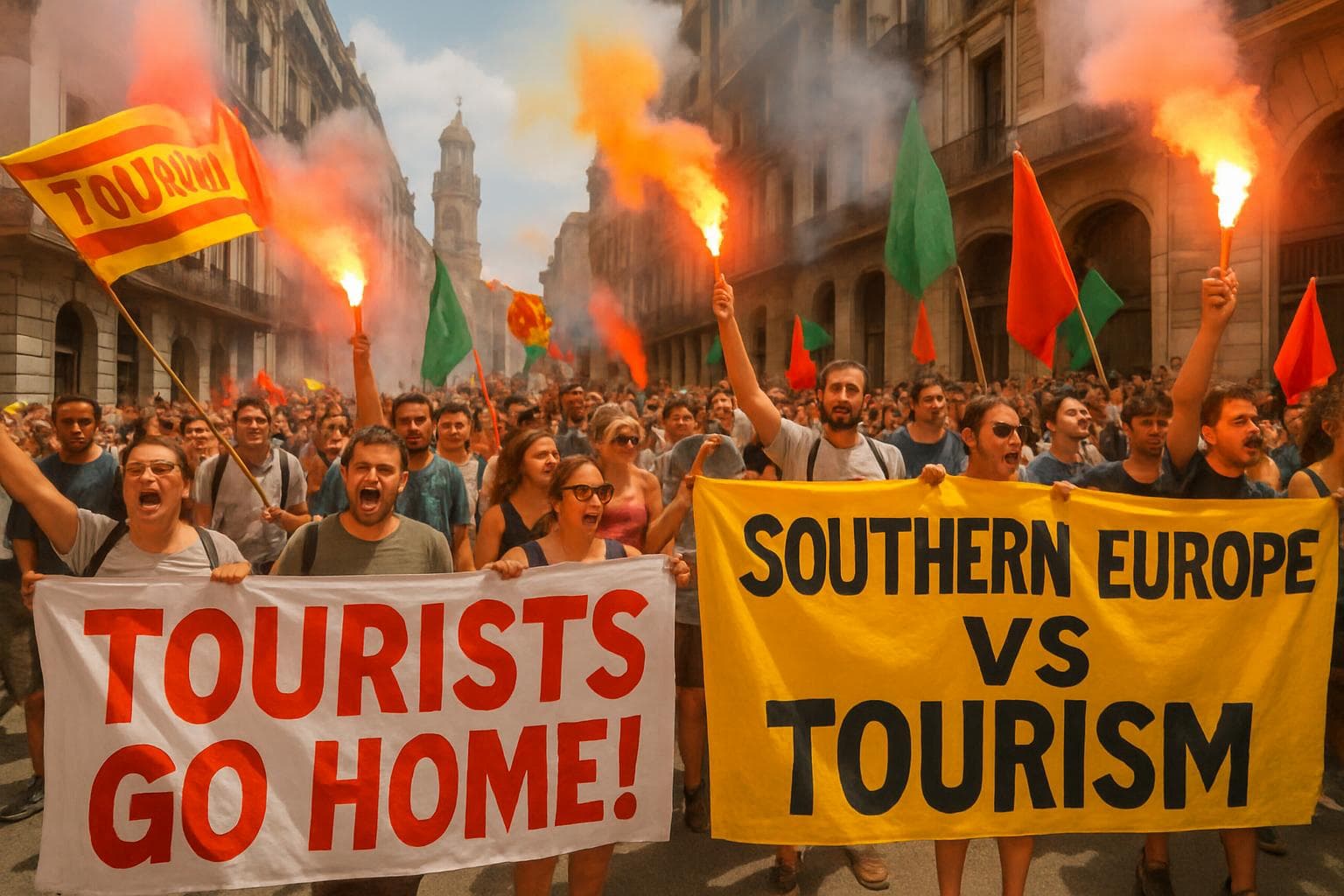
Barcelona, a city that welcomed 26 million tourists last year, has become a focal point for these protests. An estimated 600-800 demonstrators marched through the city center, chanting slogans like "Your holidays, my misery" and "Mass tourism kills the city." Protesters, armed with water pistols and colorful flares, plastered stickers on shop windows and hotels, urging tourists to "Go Home."
The protests underscore the growing frustration among residents who feel squeezed out by soaring rents and the proliferation of short-term rentals. "We cannot live in this city," said Marina, a local protester. "The rents are super high because of BnBs and also the expats who come and live here for the weather."
A Shared Struggle Across Europe
The protests were not limited to Barcelona. In Genoa, Italy, campaigners dragged a cardboard cruise ship through the city's narrow alleyways, symbolizing the ill fit of mass tourism. Meanwhile, in Lisbon, a replica of St. Anthony was carried from his church to the site of a prospective luxury hotel, highlighting the cultural displacement caused by tourism.
Asier Basurto, a member of the "tourism degrowth" platform, clarified that the protests are not against tourists themselves but against those who exploit housing and labor markets for profit. "Our enemies are those who speculate on housing, who exploit workers and those who are profiting handsomely from the touristification of our cities," he stated.
Calls for Sustainable Tourism
The protests have sparked a broader conversation about the need for a sustainable tourism model that balances economic benefits with the quality of life for local residents. María Cardona of Canviem el Rumb, a group involved in the Ibiza protests, emphasized the shared challenges faced by cities across southern Europe. "Despite the distance between us, we’re all grappling with a similar problem," she said.
WHAT THIS MIGHT MEAN
The protests against mass tourism in southern Europe highlight a growing tension between economic interests and community well-being. As cities like Barcelona continue to attract millions of visitors, local governments may face increasing pressure to implement policies that address the housing crisis and ensure sustainable tourism practices. Experts suggest that without significant changes, the strain on local communities could lead to more frequent and widespread protests. Policymakers will need to balance the economic benefits of tourism with the preservation of local culture and the rights of residents to maintain a dignified life.
Related Articles

Rubio Reaffirms US Commitment to Europe Amid Criticisms at Munich Conference
German Chancellor Warns of Eroding Global Order at Munich Security Conference

France Releases Russian 'Shadow Fleet' Tanker Amid Rising Tensions

Spain's Sánchez Stands Firm Against Trump's Trade Threat Over Iran Stance
St Francis of Assisi's Bones Draw Global Pilgrims to Italy

Sicilian Man Trains Dog for Illegal Rubbish Dumping, Faces Fine
Barcelona and Southern Europe See Rising Protests Against Mass Tourism
In This Article
 Alex Carter| Published
 HIGHLIGHTS
- Protests erupted in Barcelona and other southern European cities against the impact of mass tourism on local communities.
- Demonstrators, including 600-800 in Barcelona, expressed concerns over rising rents and displacement due to touristification.
- The Southern European Network Against Touristification coordinated these protests, highlighting shared issues across Spain, Italy, and Portugal.
- Protesters emphasized that their grievances are not against tourists but against those profiting from the tourism boom.
- The protests called for a sustainable tourism model that balances economic benefits with residents' quality of life.
In a powerful display of unity, residents across southern Europe, including Barcelona, took to the streets to protest the adverse effects of mass tourism on their communities. The coordinated demonstrations, which occurred on Sunday, were organized by the Southern European Network Against Touristification, a coalition of groups from Spain, Italy, Portugal, and France. These protests mark the most extensive joint action to date against what locals describe as the "touristification" of their cities.
Rising Tensions in Barcelona
Barcelona, a city that welcomed 26 million tourists last year, has become a focal point for these protests. An estimated 600-800 demonstrators marched through the city center, chanting slogans like "Your holidays, my misery" and "Mass tourism kills the city." Protesters, armed with water pistols and colorful flares, plastered stickers on shop windows and hotels, urging tourists to "Go Home."
The protests underscore the growing frustration among residents who feel squeezed out by soaring rents and the proliferation of short-term rentals. "We cannot live in this city," said Marina, a local protester. "The rents are super high because of BnBs and also the expats who come and live here for the weather."
A Shared Struggle Across Europe
The protests were not limited to Barcelona. In Genoa, Italy, campaigners dragged a cardboard cruise ship through the city's narrow alleyways, symbolizing the ill fit of mass tourism. Meanwhile, in Lisbon, a replica of St. Anthony was carried from his church to the site of a prospective luxury hotel, highlighting the cultural displacement caused by tourism.
Asier Basurto, a member of the "tourism degrowth" platform, clarified that the protests are not against tourists themselves but against those who exploit housing and labor markets for profit. "Our enemies are those who speculate on housing, who exploit workers and those who are profiting handsomely from the touristification of our cities," he stated.
Calls for Sustainable Tourism
The protests have sparked a broader conversation about the need for a sustainable tourism model that balances economic benefits with the quality of life for local residents. María Cardona of Canviem el Rumb, a group involved in the Ibiza protests, emphasized the shared challenges faced by cities across southern Europe. "Despite the distance between us, we’re all grappling with a similar problem," she said.
WHAT THIS MIGHT MEAN
The protests against mass tourism in southern Europe highlight a growing tension between economic interests and community well-being. As cities like Barcelona continue to attract millions of visitors, local governments may face increasing pressure to implement policies that address the housing crisis and ensure sustainable tourism practices. Experts suggest that without significant changes, the strain on local communities could lead to more frequent and widespread protests. Policymakers will need to balance the economic benefits of tourism with the preservation of local culture and the rights of residents to maintain a dignified life.
Related Articles
Rubio Reaffirms US Commitment to Europe Amid Criticisms at Munich Conference
German Chancellor Warns of Eroding Global Order at Munich Security Conference
France Releases Russian 'Shadow Fleet' Tanker Amid Rising Tensions
Spain's Sánchez Stands Firm Against Trump's Trade Threat Over Iran Stance
St Francis of Assisi's Bones Draw Global Pilgrims to Italy
Sicilian Man Trains Dog for Illegal Rubbish Dumping, Faces Fine