
German Chancellor Warns of Eroding Global Order at Munich Security Conference
In This Article
HIGHLIGHTS
- German Chancellor Friedrich Merz declared the rules-based world order "no longer exists" at the Munich Security Conference.
- Merz emphasized the need for Europe to develop a stronger, independent security strategy, including talks with France on a joint nuclear deterrent.
- The conference highlighted tensions in US-EU relations, with Merz criticizing US unilateralism and advocating for renewed transatlantic trust.
- US President Donald Trump's ambitions regarding Greenland and tariffs on European imports have strained the transatlantic alliance.
- The conference agenda included discussions on the Russia-Ukraine war, US-China tensions, and a potential Iran-US nuclear deal.
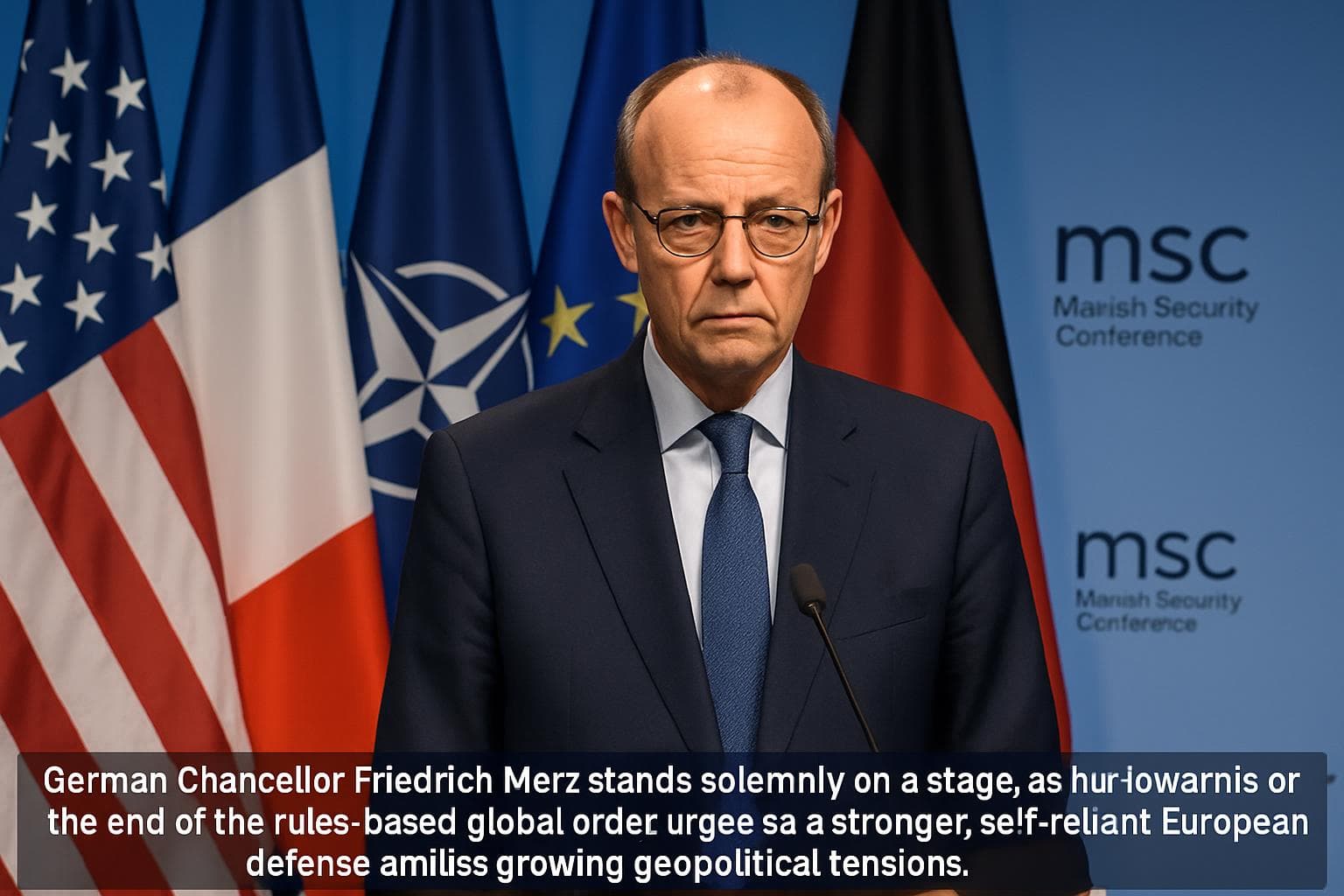
At the Munich Security Conference, German Chancellor Friedrich Merz delivered a stark warning that the rules-based world order "no longer exists," urging Europe to bolster its defense strategy amid shifting global power dynamics. Addressing an audience of world leaders, Merz underscored the need for Europe to prepare for an era where "our freedom is not guaranteed" and to consider a more self-reliant security posture.
Transatlantic Tensions and European Defense
Merz's remarks come at a time of heightened tensions between the United States and Europe, exacerbated by US President Donald Trump's controversial foreign policy moves, including his ambitions to annex Greenland and impose tariffs on European imports. These actions have been perceived by many European leaders as undermining the transatlantic relationship.
In response, Merz revealed ongoing discussions with French President Emmanuel Macron about establishing a joint European nuclear deterrent, highlighting the need for Europe to "learn to become a geopolitical power." This initiative aims to reduce Europe's reliance on the US nuclear umbrella provided through NATO.
Criticism of US Unilateralism
The German Chancellor did not shy away from criticizing the current US administration's unilateral approach, particularly the "culture war" of the "Make America Great Again" movement. Merz emphasized that Europe stands by free trade, climate agreements, and the World Health Organization, contrasting these values with US protectionism.
Despite these criticisms, Merz called for a revival of transatlantic trust, acknowledging the historical partnership between Europe and the United States. "Let's repair and revive transatlantic trust together," he urged, highlighting NATO's importance as a competitive advantage for both regions.
Global Challenges on the Agenda
The conference, attended by 50 world leaders, also addressed pressing global issues such as the ongoing Russia-Ukraine conflict, tensions between the West and China, and the potential for a new Iran-US nuclear deal. US Secretary of State Marco Rubio, who was present, echoed the sentiment of a "new era in geopolitics."
WHAT THIS MIGHT MEAN
The Munich Security Conference has underscored the fragility of the current global order and the need for Europe to reassess its security strategies. As discussions on a joint European nuclear deterrent progress, this could signal a shift towards a more autonomous European defense posture. However, the success of such initiatives will depend on the ability of European leaders to navigate internal divisions and external pressures.
The strained US-EU relations, exacerbated by President Trump's policies, may lead to a reevaluation of the transatlantic alliance's future. If Europe moves towards greater independence, it could reshape global power dynamics, potentially reducing US influence in the region. The outcome of these developments will likely hinge on diplomatic efforts to rebuild trust and cooperation between the two allies.
Related Articles

UK Faces Dilemmas Amid Iran Conflict and China Spying Allegations

Senate Blocks Resolution to Limit Trump's Military Actions in Iran
UK-Iran Tensions: Starmer Defends Cautious Approach Amid Trump Criticism
China Sets Lowest GDP Growth Target in Decades Amid Economic Challenges
Cuba Faces Widespread Blackout Amid Deepening Fuel Crisis
Russian LNG Tanker Sinks in Mediterranean Amid Accusations of Ukrainian Drone Attack
German Chancellor Warns of Eroding Global Order at Munich Security Conference
In This Article
 Alex Carter| Published
 HIGHLIGHTS
- German Chancellor Friedrich Merz declared the rules-based world order "no longer exists" at the Munich Security Conference.
- Merz emphasized the need for Europe to develop a stronger, independent security strategy, including talks with France on a joint nuclear deterrent.
- The conference highlighted tensions in US-EU relations, with Merz criticizing US unilateralism and advocating for renewed transatlantic trust.
- US President Donald Trump's ambitions regarding Greenland and tariffs on European imports have strained the transatlantic alliance.
- The conference agenda included discussions on the Russia-Ukraine war, US-China tensions, and a potential Iran-US nuclear deal.
At the Munich Security Conference, German Chancellor Friedrich Merz delivered a stark warning that the rules-based world order "no longer exists," urging Europe to bolster its defense strategy amid shifting global power dynamics. Addressing an audience of world leaders, Merz underscored the need for Europe to prepare for an era where "our freedom is not guaranteed" and to consider a more self-reliant security posture.
Transatlantic Tensions and European Defense
Merz's remarks come at a time of heightened tensions between the United States and Europe, exacerbated by US President Donald Trump's controversial foreign policy moves, including his ambitions to annex Greenland and impose tariffs on European imports. These actions have been perceived by many European leaders as undermining the transatlantic relationship.
In response, Merz revealed ongoing discussions with French President Emmanuel Macron about establishing a joint European nuclear deterrent, highlighting the need for Europe to "learn to become a geopolitical power." This initiative aims to reduce Europe's reliance on the US nuclear umbrella provided through NATO.
Criticism of US Unilateralism
The German Chancellor did not shy away from criticizing the current US administration's unilateral approach, particularly the "culture war" of the "Make America Great Again" movement. Merz emphasized that Europe stands by free trade, climate agreements, and the World Health Organization, contrasting these values with US protectionism.
Despite these criticisms, Merz called for a revival of transatlantic trust, acknowledging the historical partnership between Europe and the United States. "Let's repair and revive transatlantic trust together," he urged, highlighting NATO's importance as a competitive advantage for both regions.
Global Challenges on the Agenda
The conference, attended by 50 world leaders, also addressed pressing global issues such as the ongoing Russia-Ukraine conflict, tensions between the West and China, and the potential for a new Iran-US nuclear deal. US Secretary of State Marco Rubio, who was present, echoed the sentiment of a "new era in geopolitics."
WHAT THIS MIGHT MEAN
The Munich Security Conference has underscored the fragility of the current global order and the need for Europe to reassess its security strategies. As discussions on a joint European nuclear deterrent progress, this could signal a shift towards a more autonomous European defense posture. However, the success of such initiatives will depend on the ability of European leaders to navigate internal divisions and external pressures.
The strained US-EU relations, exacerbated by President Trump's policies, may lead to a reevaluation of the transatlantic alliance's future. If Europe moves towards greater independence, it could reshape global power dynamics, potentially reducing US influence in the region. The outcome of these developments will likely hinge on diplomatic efforts to rebuild trust and cooperation between the two allies.
Related Articles
UK Faces Dilemmas Amid Iran Conflict and China Spying Allegations
Senate Blocks Resolution to Limit Trump's Military Actions in Iran
UK-Iran Tensions: Starmer Defends Cautious Approach Amid Trump Criticism
China Sets Lowest GDP Growth Target in Decades Amid Economic Challenges
Cuba Faces Widespread Blackout Amid Deepening Fuel Crisis
Russian LNG Tanker Sinks in Mediterranean Amid Accusations of Ukrainian Drone Attack