
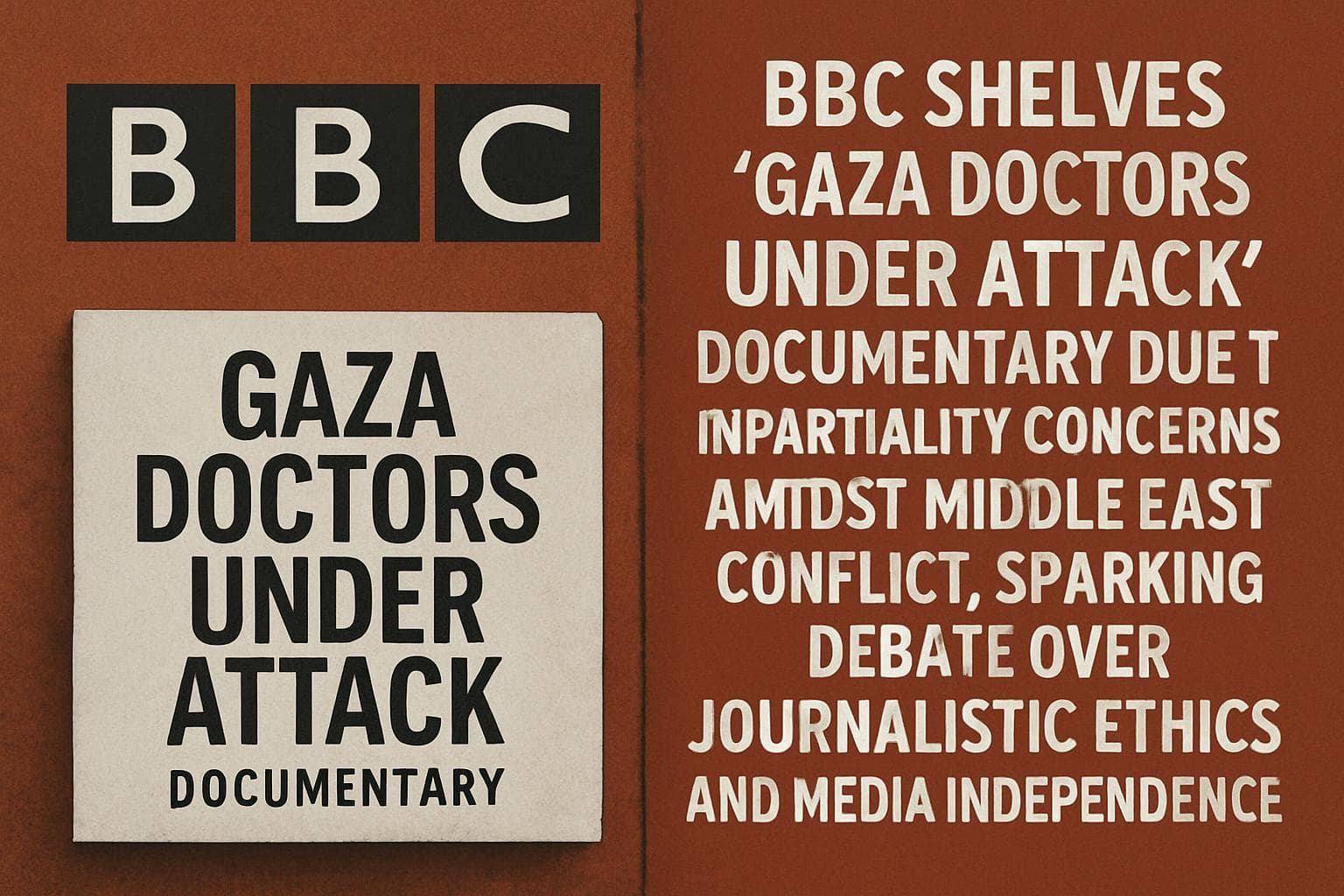
BBC Shelves Gaza Documentary Amid Impartiality Concerns
In This Article
HIGHLIGHTS
- The BBC has decided not to air the documentary "Gaza: Doctors Under Attack" due to concerns about impartiality.
- Ownership of the documentary has been transferred to the independent production company, Basement Films.
- The decision follows a review of another Gaza documentary, which was paused due to similar impartiality issues.
- BBC's Director General, Tim Davie, has been criticized for allegedly stifling journalistic efforts.
- The BBC aims to maintain its reputation for impartiality, a core principle of its news coverage.
The BBC has announced it will not broadcast the documentary "Gaza: Doctors Under Attack," citing concerns over impartiality in its coverage of the Middle East conflict. The decision has sparked debate over the broadcaster's commitment to journalistic standards and media ethics.
Background and Decision
The documentary, produced by the independent company Basement Films, was initially scheduled for release earlier this year. However, the BBC paused its broadcast following a review of another Gaza-related documentary, "Gaza: How to Survive a Warzone," which was pulled from iPlayer after it was revealed that its narrator was the son of a Hamas official.
In a statement, the BBC expressed its determination to report on the Middle East conflict impartially, stating that airing the documentary could create a perception of bias. As a result, the corporation has transferred ownership of the film to Basement Films, allowing them to seek alternative distribution channels.
Reactions and Criticism
The decision has drawn criticism from Ben de Pear, founder of Basement Films, who accused the BBC of silencing journalists. He specifically criticized BBC Director General Tim Davie, arguing that editorial decisions were being made by individuals lacking journalistic expertise. De Pear's comments were echoed by journalist Ramita Navai, who has been vocal about the challenges faced by journalists covering the Gaza conflict.
BBC's Commitment to Impartiality
The BBC has reiterated its commitment to impartiality, a cornerstone of its news coverage. The broadcaster emphasized that it had explored ways to incorporate parts of the documentary into its news programming while adhering to its impartiality standards. However, discussions with Basement Films ultimately reached an impasse, leading to the decision to shelve the documentary.
WHAT THIS MIGHT MEAN
The BBC's decision not to air "Gaza: Doctors Under Attack" underscores the complexities of maintaining impartiality in conflict reporting. As the broadcaster navigates these challenges, it may face increased scrutiny from both the public and media watchdogs. The transfer of the documentary's ownership to Basement Films opens the door for alternative platforms to showcase the film, potentially reaching audiences through independent channels.
Moving forward, the BBC's handling of similar content will likely be closely monitored, with implications for its reputation as a trusted global news source. The situation also highlights the broader debate over media ethics and the role of public broadcasters in conflict zones, raising questions about how to balance editorial independence with the need for impartiality.
Related Articles
BBC Faces Major Budget Cuts Amid Declining Licence Fee Income
Surge in Antisemitic Incidents in UK Following Manchester Synagogue Attack
Jimmy Lai's 20-Year Sentence Sparks Global Outcry Over Hong Kong's National Security Law

BBC Licence Fee to Increase Amidst Funding Model Review
Inside the Dark Web: How Investigator Greg Squire Rescues Children from Abuse
Gisèle Pelicot: A Journey from Horror to Advocacy in France's Largest Rape Trial
BBC Shelves Gaza Documentary Amid Impartiality Concerns
In This Article
 Ethan Brooks| Published
 HIGHLIGHTS
- The BBC has decided not to air the documentary "Gaza: Doctors Under Attack" due to concerns about impartiality.
- Ownership of the documentary has been transferred to the independent production company, Basement Films.
- The decision follows a review of another Gaza documentary, which was paused due to similar impartiality issues.
- BBC's Director General, Tim Davie, has been criticized for allegedly stifling journalistic efforts.
- The BBC aims to maintain its reputation for impartiality, a core principle of its news coverage.
The BBC has announced it will not broadcast the documentary "Gaza: Doctors Under Attack," citing concerns over impartiality in its coverage of the Middle East conflict. The decision has sparked debate over the broadcaster's commitment to journalistic standards and media ethics.
Background and Decision
The documentary, produced by the independent company Basement Films, was initially scheduled for release earlier this year. However, the BBC paused its broadcast following a review of another Gaza-related documentary, "Gaza: How to Survive a Warzone," which was pulled from iPlayer after it was revealed that its narrator was the son of a Hamas official.
In a statement, the BBC expressed its determination to report on the Middle East conflict impartially, stating that airing the documentary could create a perception of bias. As a result, the corporation has transferred ownership of the film to Basement Films, allowing them to seek alternative distribution channels.
Reactions and Criticism
The decision has drawn criticism from Ben de Pear, founder of Basement Films, who accused the BBC of silencing journalists. He specifically criticized BBC Director General Tim Davie, arguing that editorial decisions were being made by individuals lacking journalistic expertise. De Pear's comments were echoed by journalist Ramita Navai, who has been vocal about the challenges faced by journalists covering the Gaza conflict.
BBC's Commitment to Impartiality
The BBC has reiterated its commitment to impartiality, a cornerstone of its news coverage. The broadcaster emphasized that it had explored ways to incorporate parts of the documentary into its news programming while adhering to its impartiality standards. However, discussions with Basement Films ultimately reached an impasse, leading to the decision to shelve the documentary.
WHAT THIS MIGHT MEAN
The BBC's decision not to air "Gaza: Doctors Under Attack" underscores the complexities of maintaining impartiality in conflict reporting. As the broadcaster navigates these challenges, it may face increased scrutiny from both the public and media watchdogs. The transfer of the documentary's ownership to Basement Films opens the door for alternative platforms to showcase the film, potentially reaching audiences through independent channels.
Moving forward, the BBC's handling of similar content will likely be closely monitored, with implications for its reputation as a trusted global news source. The situation also highlights the broader debate over media ethics and the role of public broadcasters in conflict zones, raising questions about how to balance editorial independence with the need for impartiality.
Related Articles
BBC Faces Major Budget Cuts Amid Declining Licence Fee Income
Surge in Antisemitic Incidents in UK Following Manchester Synagogue Attack
Jimmy Lai's 20-Year Sentence Sparks Global Outcry Over Hong Kong's National Security Law
BBC Licence Fee to Increase Amidst Funding Model Review
Inside the Dark Web: How Investigator Greg Squire Rescues Children from Abuse
Gisèle Pelicot: A Journey from Horror to Advocacy in France's Largest Rape Trial