
Jimmy Lai's 20-Year Sentence Sparks Global Outcry Over Hong Kong's National Security Law
In This Article
HIGHLIGHTS
- Jimmy Lai, a pro-democracy media tycoon, has been sentenced to 20 years in prison under Hong Kong's national security law.
- Rights groups and international bodies, including the UK, UN, and EU, have condemned the sentence as politically motivated and a threat to press freedom.
- Lai's family and supporters fear for his health, describing the sentence as a "death sentence" due to his age and medical conditions.
- The UK government has expanded its visa scheme for Hongkongers in response to Lai's sentencing, allowing more people to seek refuge in the UK.
- Lai's case highlights the ongoing tensions between Hong Kong's pro-democracy advocates and the Chinese government's efforts to suppress dissent.
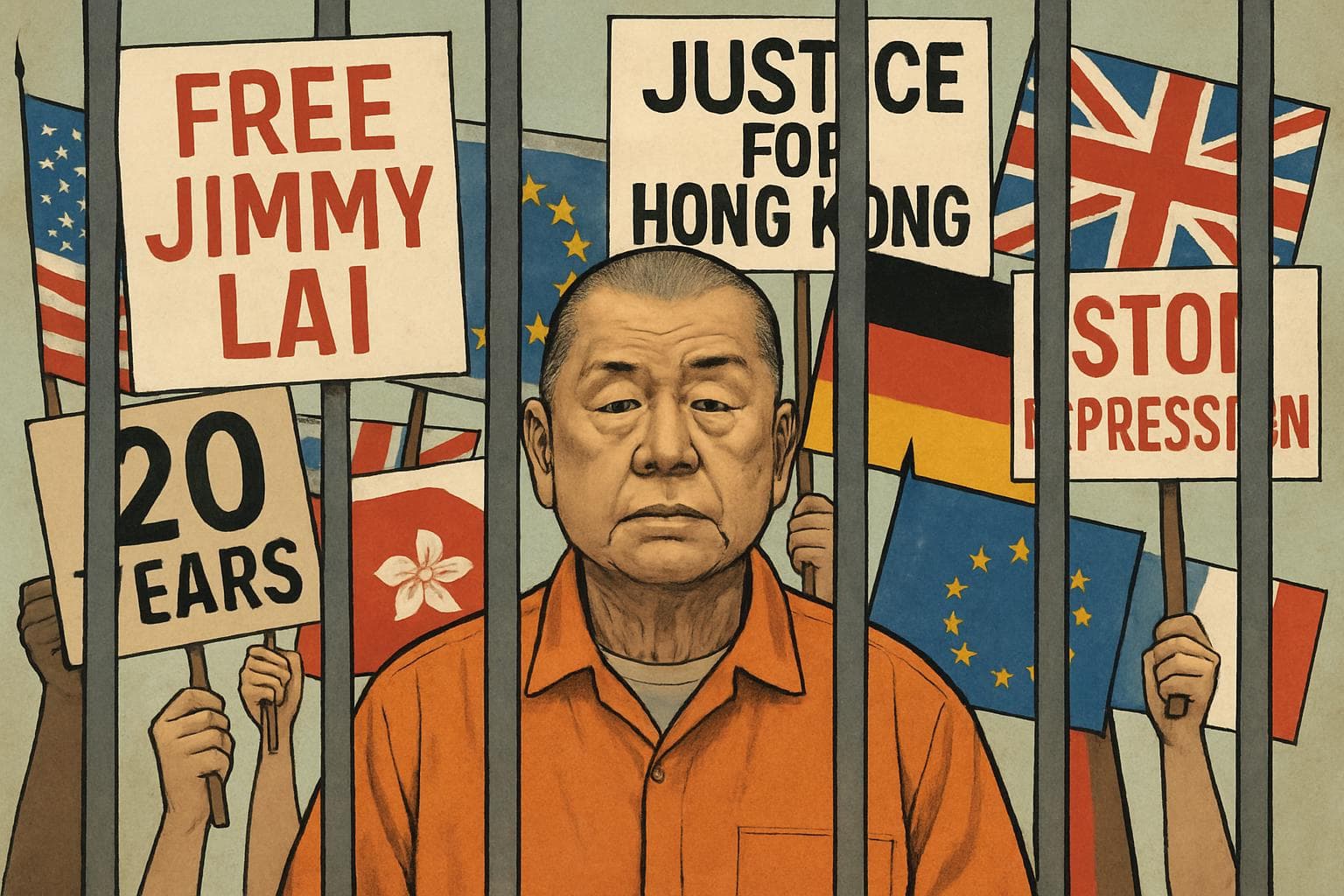
In a landmark case that has drawn international condemnation, Hong Kong media tycoon Jimmy Lai has been sentenced to 20 years in prison under the city's controversial national security law. The 78-year-old British citizen, known for his outspoken criticism of the Chinese government, was found guilty of colluding with foreign forces and publishing seditious material through his now-defunct newspaper, Apple Daily.
Global Condemnation and Human Rights Concerns
The sentencing has been met with widespread criticism from rights groups and international bodies. UK Foreign Secretary Yvette Cooper described the sentence as a "politically motivated prosecution" and called for Lai's immediate release. The UN's human rights chief, Volker Türk, stated that the verdict violates international law, while the EU has also deplored the outcome.
Lai's son, Sebastien, expressed deep concern over his father's health, noting that the harsh sentence effectively amounts to a "death sentence" given his age and deteriorating condition. "Surely a man who has given so much for liberty, for freedom deserves a bit of it himself," Sebastien told the BBC.
Legal and Political Implications
The case has underscored the contentious nature of Hong Kong's national security law, which was imposed by Beijing in 2020 following pro-democracy protests. Critics argue that the law is used to stifle dissent and silence opposition voices, while Chinese and Hong Kong authorities maintain it is necessary for stability.
Lai's legal team has labeled him the world's highest-profile political prisoner, and his sentence is the harshest handed down under the national security law. The case has drawn parallels to other high-profile political imprisonments, such as that of Chinese Nobel laureate Liu Xiaobo.
UK Response and Visa Expansion
In response to Lai's sentencing, the UK government has expanded its visa scheme for Hongkongers, allowing more individuals to seek refuge in the UK. The Home Office estimates that 26,000 people will arrive in the UK under the expanded scheme over the next five years.
Prime Minister Keir Starmer has raised Lai's case with Chinese authorities, emphasizing the UK's commitment to supporting Hong Kong's pro-democracy movement. The government has also pledged to engage further with Beijing on Lai's release.
WHAT THIS MIGHT MEAN
The sentencing of Jimmy Lai is likely to exacerbate tensions between Hong Kong's pro-democracy advocates and the Chinese government. As international pressure mounts, Beijing may face increased scrutiny over its human rights record and treatment of political prisoners. The expanded UK visa scheme could lead to a significant influx of Hongkongers seeking refuge, potentially straining diplomatic relations further. Experts suggest that continued international advocacy and diplomatic efforts will be crucial in addressing the broader implications of Lai's case and the future of press freedom in Hong Kong.
Related Articles

UK Faces Dilemmas Amid Iran Conflict and China Spying Allegations
UK Government to Reform Asylum Seeker Support and Employment Policies
UK-Iran Tensions: Starmer Defends Cautious Approach Amid Trump Criticism
Diplomatic Tensions Rise as Trump Criticizes Starmer's Iran Policy
UK Reinforces Military Presence in Cyprus Amid Middle East Tensions
Labour MP's Husband Arrested in UK-China Espionage Probe
Jimmy Lai's 20-Year Sentence Sparks Global Outcry Over Hong Kong's National Security Law
In This Article
 Ethan Brooks| Published
 HIGHLIGHTS
- Jimmy Lai, a pro-democracy media tycoon, has been sentenced to 20 years in prison under Hong Kong's national security law.
- Rights groups and international bodies, including the UK, UN, and EU, have condemned the sentence as politically motivated and a threat to press freedom.
- Lai's family and supporters fear for his health, describing the sentence as a "death sentence" due to his age and medical conditions.
- The UK government has expanded its visa scheme for Hongkongers in response to Lai's sentencing, allowing more people to seek refuge in the UK.
- Lai's case highlights the ongoing tensions between Hong Kong's pro-democracy advocates and the Chinese government's efforts to suppress dissent.
In a landmark case that has drawn international condemnation, Hong Kong media tycoon Jimmy Lai has been sentenced to 20 years in prison under the city's controversial national security law. The 78-year-old British citizen, known for his outspoken criticism of the Chinese government, was found guilty of colluding with foreign forces and publishing seditious material through his now-defunct newspaper, Apple Daily.
Global Condemnation and Human Rights Concerns
The sentencing has been met with widespread criticism from rights groups and international bodies. UK Foreign Secretary Yvette Cooper described the sentence as a "politically motivated prosecution" and called for Lai's immediate release. The UN's human rights chief, Volker Türk, stated that the verdict violates international law, while the EU has also deplored the outcome.
Lai's son, Sebastien, expressed deep concern over his father's health, noting that the harsh sentence effectively amounts to a "death sentence" given his age and deteriorating condition. "Surely a man who has given so much for liberty, for freedom deserves a bit of it himself," Sebastien told the BBC.
Legal and Political Implications
The case has underscored the contentious nature of Hong Kong's national security law, which was imposed by Beijing in 2020 following pro-democracy protests. Critics argue that the law is used to stifle dissent and silence opposition voices, while Chinese and Hong Kong authorities maintain it is necessary for stability.
Lai's legal team has labeled him the world's highest-profile political prisoner, and his sentence is the harshest handed down under the national security law. The case has drawn parallels to other high-profile political imprisonments, such as that of Chinese Nobel laureate Liu Xiaobo.
UK Response and Visa Expansion
In response to Lai's sentencing, the UK government has expanded its visa scheme for Hongkongers, allowing more individuals to seek refuge in the UK. The Home Office estimates that 26,000 people will arrive in the UK under the expanded scheme over the next five years.
Prime Minister Keir Starmer has raised Lai's case with Chinese authorities, emphasizing the UK's commitment to supporting Hong Kong's pro-democracy movement. The government has also pledged to engage further with Beijing on Lai's release.
WHAT THIS MIGHT MEAN
The sentencing of Jimmy Lai is likely to exacerbate tensions between Hong Kong's pro-democracy advocates and the Chinese government. As international pressure mounts, Beijing may face increased scrutiny over its human rights record and treatment of political prisoners. The expanded UK visa scheme could lead to a significant influx of Hongkongers seeking refuge, potentially straining diplomatic relations further. Experts suggest that continued international advocacy and diplomatic efforts will be crucial in addressing the broader implications of Lai's case and the future of press freedom in Hong Kong.
Related Articles
UK Faces Dilemmas Amid Iran Conflict and China Spying Allegations
UK Government to Reform Asylum Seeker Support and Employment Policies
UK-Iran Tensions: Starmer Defends Cautious Approach Amid Trump Criticism
Diplomatic Tensions Rise as Trump Criticizes Starmer's Iran Policy
UK Reinforces Military Presence in Cyprus Amid Middle East Tensions
Labour MP's Husband Arrested in UK-China Espionage Probe