
Bob Vylan Faces Backlash and Festival Cancellations Following Controversial Glastonbury Performance
In This Article
HIGHLIGHTS
- Bob Vylan's controversial Glastonbury performance led to their removal from multiple music festivals, including Manchester's Radar Festival and France's Kave Fest.
- The band's chants against the Israel Defense Forces sparked widespread criticism, including from UK Prime Minister and BBC's Director General Tim Davie.
- A criminal investigation has been launched by Avon and Somerset Police, with the Met Police also investigating a previous concert.
- The BBC faced backlash for streaming the performance and has since expressed regret for not pulling it sooner.
- Tim Davie has offered to meet with Jewish staff to address concerns and reiterated the BBC's stance against antisemitism.
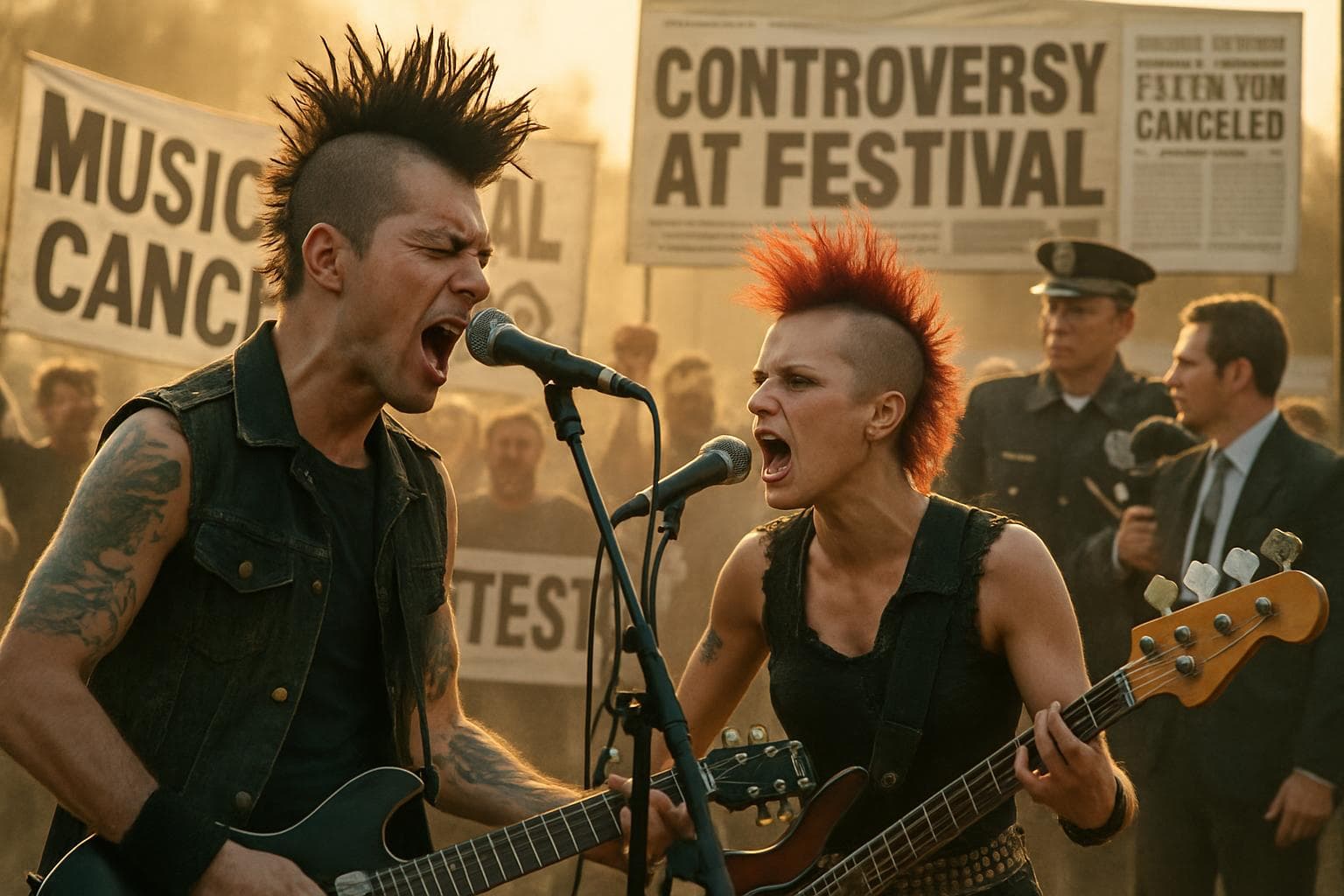
Punk duo Bob Vylan has been dropped from several music festivals following a controversial performance at Glastonbury, where they led chants against the Israel Defense Forces (IDF). The incident has sparked widespread criticism and prompted investigations by both Avon and Somerset Police and the Metropolitan Police.
Festival Cancellations and Public Outcry
Bob Vylan, initially set to headline Manchester's Radar Festival and perform at France's Kave Fest, has been removed from both line-ups. The band's Glastonbury performance, which included chants of "death, death to the IDF," drew condemnation from across the political spectrum, including UK Prime Minister Rishi Sunak, who labeled it "appalling hate speech."
BBC's Response and Internal Repercussions
The BBC, which streamed the performance live, faced significant backlash for not intervening sooner. Director General Tim Davie expressed his dismay, stating the performance had "no place on the BBC." He has offered to meet with Jewish staff to discuss their concerns, emphasizing the corporation's commitment to an environment free from antisemitism.
Ongoing Investigations
The controversy has also led to a criminal investigation by Avon and Somerset Police, with the Met Police looking into similar comments made by the band at a previous concert in May. The band, however, maintains that their statements are being misinterpreted and that they are being targeted for speaking out on issues related to Gaza.
Band's Defense and Future Plans
In response to the festival cancellations, Bob Vylan reiterated their stance on social media, stating, "Silence is not an option. We will be fine, the people of Palestine are hurting." They have assured fans of their return to Manchester in the future, despite the current setbacks.
WHAT THIS MIGHT MEAN
The fallout from Bob Vylan's Glastonbury performance could have significant implications for the band and the music industry at large. If the investigations lead to legal action, it could set a precedent for how controversial statements are handled in live performances. The BBC's handling of the situation may also influence future broadcasting policies, particularly concerning live events. As the situation unfolds, it will be crucial to monitor how public and industry responses shape the discourse around freedom of expression and accountability in the arts.
Related Articles
Labour MP's Husband Arrested in UK-China Espionage Probe
Prince Andrew's Ties to Epstein Under Scrutiny Amid Calls for Inquiry
UK Police Assess Epstein's Use of Private Flights Amid Trafficking Allegations
Allegations of Unlawful Reporting Methods in Stephen Lawrence Case Denied by Ex-Daily Mail Reporter
Arrest of Andrew Mountbatten-Windsor Captured in Iconic Photograph
UK Police Intensify Investigation into Andrew Mountbatten-Windsor Amid Misconduct Allegations
Bob Vylan Faces Backlash and Festival Cancellations Following Controversial Glastonbury Performance
In This Article
 Ethan Brooks| Published
 HIGHLIGHTS
- Bob Vylan's controversial Glastonbury performance led to their removal from multiple music festivals, including Manchester's Radar Festival and France's Kave Fest.
- The band's chants against the Israel Defense Forces sparked widespread criticism, including from UK Prime Minister and BBC's Director General Tim Davie.
- A criminal investigation has been launched by Avon and Somerset Police, with the Met Police also investigating a previous concert.
- The BBC faced backlash for streaming the performance and has since expressed regret for not pulling it sooner.
- Tim Davie has offered to meet with Jewish staff to address concerns and reiterated the BBC's stance against antisemitism.
Punk duo Bob Vylan has been dropped from several music festivals following a controversial performance at Glastonbury, where they led chants against the Israel Defense Forces (IDF). The incident has sparked widespread criticism and prompted investigations by both Avon and Somerset Police and the Metropolitan Police.
Festival Cancellations and Public Outcry
Bob Vylan, initially set to headline Manchester's Radar Festival and perform at France's Kave Fest, has been removed from both line-ups. The band's Glastonbury performance, which included chants of "death, death to the IDF," drew condemnation from across the political spectrum, including UK Prime Minister Rishi Sunak, who labeled it "appalling hate speech."
BBC's Response and Internal Repercussions
The BBC, which streamed the performance live, faced significant backlash for not intervening sooner. Director General Tim Davie expressed his dismay, stating the performance had "no place on the BBC." He has offered to meet with Jewish staff to discuss their concerns, emphasizing the corporation's commitment to an environment free from antisemitism.
Ongoing Investigations
The controversy has also led to a criminal investigation by Avon and Somerset Police, with the Met Police looking into similar comments made by the band at a previous concert in May. The band, however, maintains that their statements are being misinterpreted and that they are being targeted for speaking out on issues related to Gaza.
Band's Defense and Future Plans
In response to the festival cancellations, Bob Vylan reiterated their stance on social media, stating, "Silence is not an option. We will be fine, the people of Palestine are hurting." They have assured fans of their return to Manchester in the future, despite the current setbacks.
WHAT THIS MIGHT MEAN
The fallout from Bob Vylan's Glastonbury performance could have significant implications for the band and the music industry at large. If the investigations lead to legal action, it could set a precedent for how controversial statements are handled in live performances. The BBC's handling of the situation may also influence future broadcasting policies, particularly concerning live events. As the situation unfolds, it will be crucial to monitor how public and industry responses shape the discourse around freedom of expression and accountability in the arts.
Related Articles
Labour MP's Husband Arrested in UK-China Espionage Probe
Prince Andrew's Ties to Epstein Under Scrutiny Amid Calls for Inquiry
UK Police Assess Epstein's Use of Private Flights Amid Trafficking Allegations
Allegations of Unlawful Reporting Methods in Stephen Lawrence Case Denied by Ex-Daily Mail Reporter
Arrest of Andrew Mountbatten-Windsor Captured in Iconic Photograph
UK Police Intensify Investigation into Andrew Mountbatten-Windsor Amid Misconduct Allegations