
Budapest Pride Draws Massive Crowds in Defiance of Government Ban
In This Article
HIGHLIGHTS
- Between 100,000 and 200,000 people attended Budapest Pride, defying a government ban linked to a controversial Child Protection law.
- The event marked a significant protest against Prime Minister Viktor Orban's policies, with many participants mocking him through banners and attire.
- Budapest's mayor, Gergely Karacsony, supported the march as a municipal event, circumventing the ban and emphasizing human rights and solidarity.
- The law used to justify the ban equates homosexuality with paedophilia, sparking widespread criticism and protest.
- Despite the ban, the police maintained a discreet presence, while Orban attended a separate event in the city.
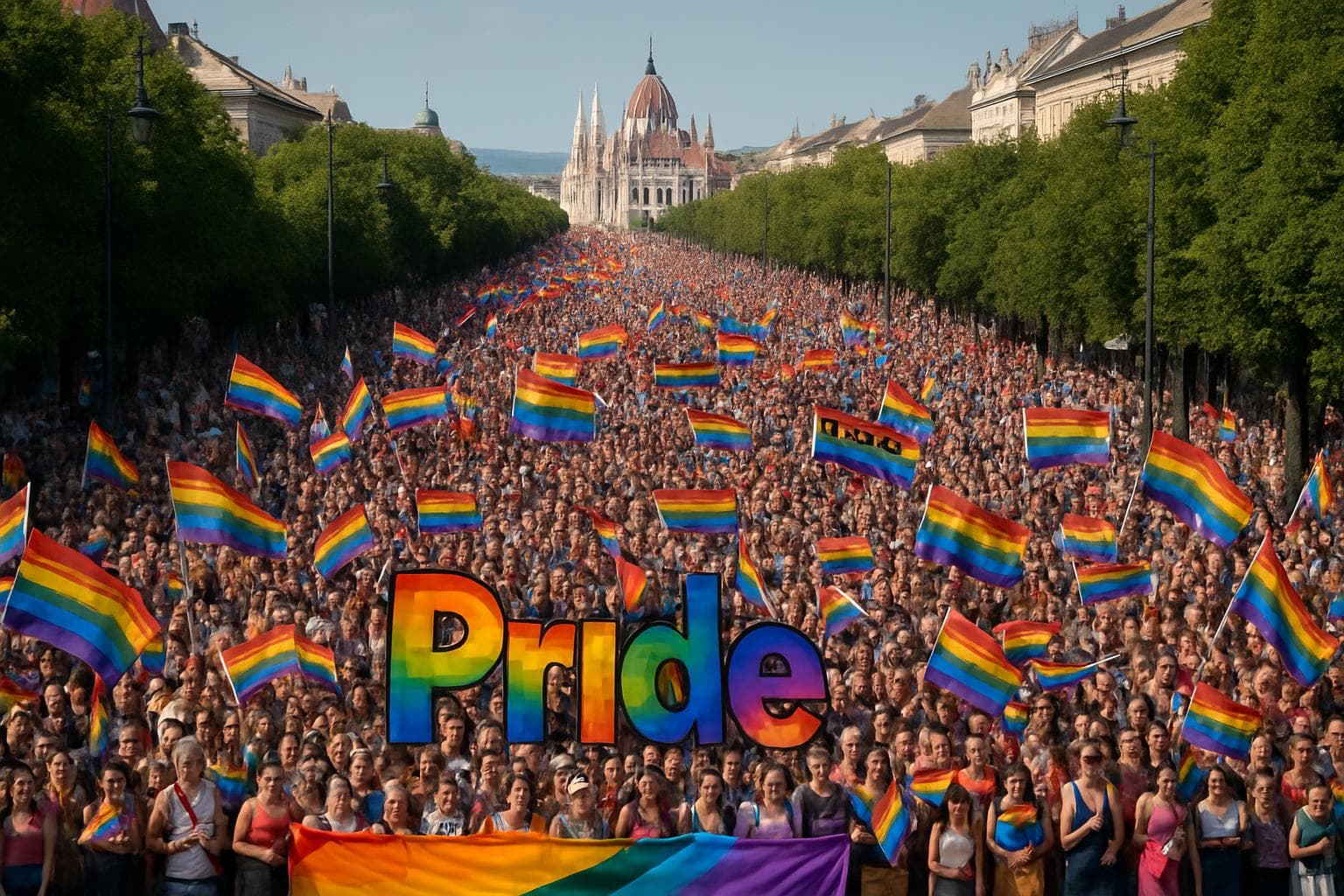
In a striking display of defiance against the Hungarian government's ban, tens of thousands of people flooded the streets of Budapest on Saturday to celebrate Pride. The event, which drew between 100,000 and 200,000 participants, became a powerful protest against Prime Minister Viktor Orban's policies, particularly a controversial law that equates homosexuality with paedophilia.
A Record-Breaking Turnout
The vibrant procession, which stretched from Pest to Buda, saw participants waving Pride flags and carrying banners mocking Orban. Organizers estimated the turnout far exceeded previous years, with many attendees motivated by the government's attempt to ban the event. "We came because they tried to ban it," said Timi, a Hungarian national marching with her daughter.
Circumventing the Ban
The ban was based on a 2021 Child Protection law, which prohibits the portrayal of homosexuality in areas accessible to minors. However, Budapest's progressive mayor, Gergely Karacsony, declared the march a municipal event, thus sidestepping the need for official authorization. "We don't exactly look as though we were banned!" Karacsony told the crowd, emphasizing the march as a stand for freedom and equal rights.
A Symbol of Resistance
The march also marked Budapest Pride's 30th anniversary, turning into a broader celebration of human rights and solidarity. Finnish MEP Li Andersson, present at the event, criticized Orban's use of family values as a pretext for the ban, highlighting the broader implications for fundamental rights. Despite the ban, police maintained a discreet presence, while Orban attended a separate ceremony in the city.
WHAT THIS MIGHT MEAN
The massive turnout at Budapest Pride underscores a growing resistance to Viktor Orban's policies, particularly those targeting the LGBTQ+ community. This defiance could signal a shift in public sentiment, potentially influencing future elections and policy decisions. The event also highlights the tension between local and national authorities, with Budapest's leadership taking a stand against the central government. As Hungary faces increasing scrutiny from international human rights organizations, the government's stance on LGBTQ+ rights may come under further pressure, potentially impacting its relations with the European Union.
Related Articles
Spain's Sánchez Stands Firm Against Trump's Trade Threat Over Iran Stance

US-Iran Tensions Escalate Amid Diplomatic Efforts and Military Threats

Russian LNG Tanker Sinks in Mediterranean Amid Accusations of Ukrainian Drone Attack

Ukraine Struggles with Power Outages Amid Renewed Russian Strikes as Peace Talks Continue

Tragic Collision in Aegean Sea Claims 14 Migrant Lives
US-India Trade Deal: A New Chapter in Bilateral Relations
Budapest Pride Draws Massive Crowds in Defiance of Government Ban
In This Article
 Ethan Brooks| Published
 HIGHLIGHTS
- Between 100,000 and 200,000 people attended Budapest Pride, defying a government ban linked to a controversial Child Protection law.
- The event marked a significant protest against Prime Minister Viktor Orban's policies, with many participants mocking him through banners and attire.
- Budapest's mayor, Gergely Karacsony, supported the march as a municipal event, circumventing the ban and emphasizing human rights and solidarity.
- The law used to justify the ban equates homosexuality with paedophilia, sparking widespread criticism and protest.
- Despite the ban, the police maintained a discreet presence, while Orban attended a separate event in the city.
In a striking display of defiance against the Hungarian government's ban, tens of thousands of people flooded the streets of Budapest on Saturday to celebrate Pride. The event, which drew between 100,000 and 200,000 participants, became a powerful protest against Prime Minister Viktor Orban's policies, particularly a controversial law that equates homosexuality with paedophilia.
A Record-Breaking Turnout
The vibrant procession, which stretched from Pest to Buda, saw participants waving Pride flags and carrying banners mocking Orban. Organizers estimated the turnout far exceeded previous years, with many attendees motivated by the government's attempt to ban the event. "We came because they tried to ban it," said Timi, a Hungarian national marching with her daughter.
Circumventing the Ban
The ban was based on a 2021 Child Protection law, which prohibits the portrayal of homosexuality in areas accessible to minors. However, Budapest's progressive mayor, Gergely Karacsony, declared the march a municipal event, thus sidestepping the need for official authorization. "We don't exactly look as though we were banned!" Karacsony told the crowd, emphasizing the march as a stand for freedom and equal rights.
A Symbol of Resistance
The march also marked Budapest Pride's 30th anniversary, turning into a broader celebration of human rights and solidarity. Finnish MEP Li Andersson, present at the event, criticized Orban's use of family values as a pretext for the ban, highlighting the broader implications for fundamental rights. Despite the ban, police maintained a discreet presence, while Orban attended a separate ceremony in the city.
WHAT THIS MIGHT MEAN
The massive turnout at Budapest Pride underscores a growing resistance to Viktor Orban's policies, particularly those targeting the LGBTQ+ community. This defiance could signal a shift in public sentiment, potentially influencing future elections and policy decisions. The event also highlights the tension between local and national authorities, with Budapest's leadership taking a stand against the central government. As Hungary faces increasing scrutiny from international human rights organizations, the government's stance on LGBTQ+ rights may come under further pressure, potentially impacting its relations with the European Union.
Related Articles
Spain's Sánchez Stands Firm Against Trump's Trade Threat Over Iran Stance
US-Iran Tensions Escalate Amid Diplomatic Efforts and Military Threats
Russian LNG Tanker Sinks in Mediterranean Amid Accusations of Ukrainian Drone Attack
Ukraine Struggles with Power Outages Amid Renewed Russian Strikes as Peace Talks Continue
Tragic Collision in Aegean Sea Claims 14 Migrant Lives
US-India Trade Deal: A New Chapter in Bilateral Relations