
US-India Trade Deal: A New Chapter in Bilateral Relations
In This Article
HIGHLIGHTS
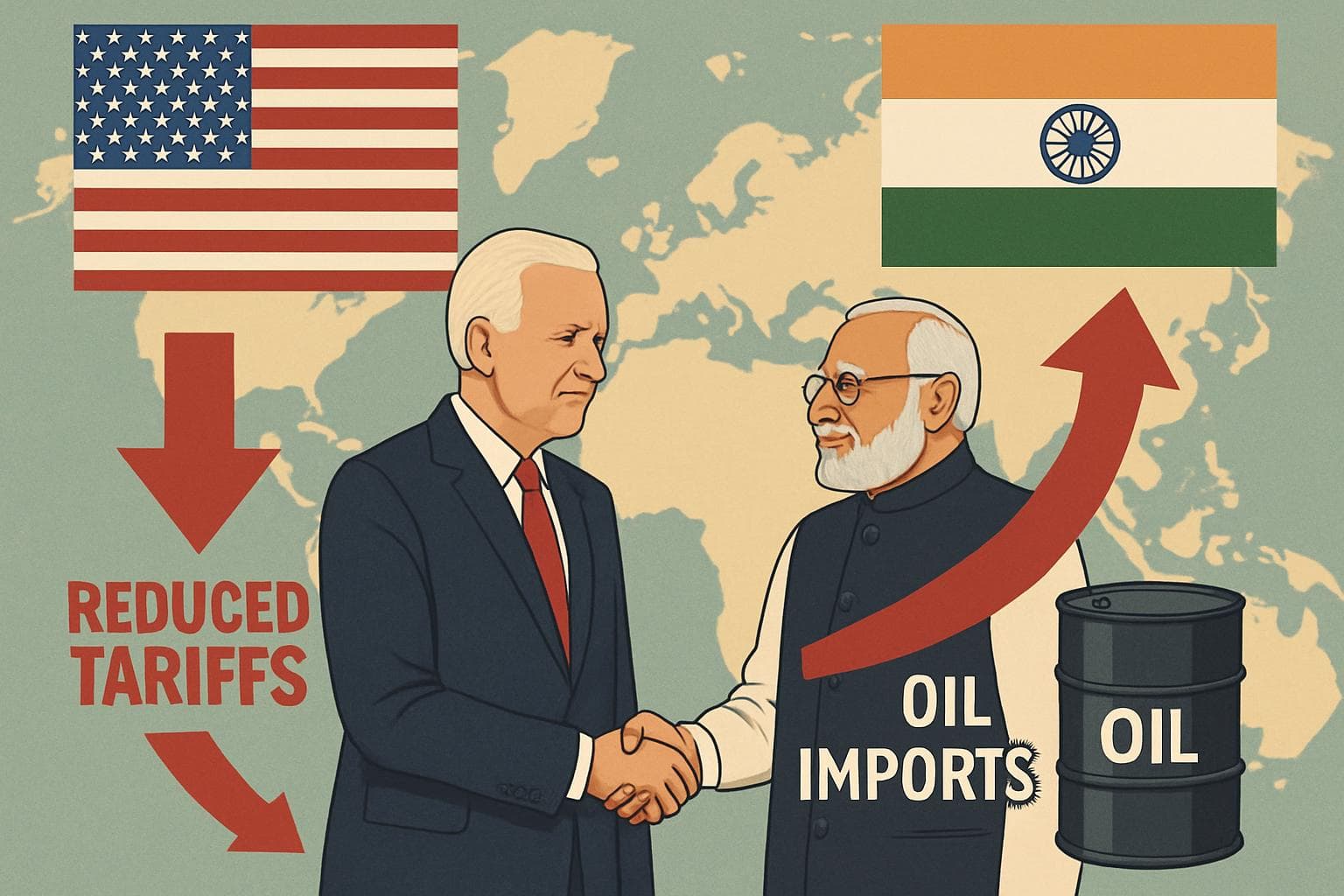
- The US has agreed to reduce tariffs on Indian goods from 50% to 18%, easing trade tensions.
- India has reportedly agreed to stop buying Russian oil, increasing purchases from the US and potentially Venezuela.
- The trade deal follows India's recent agreement with the EU, aimed at eliminating tariffs on 80-90% of goods.
- Indian markets reacted positively, with the Sensex index rising by 2.8% following the announcement.
- Despite the positive reception, experts caution that many details of the trade agreement remain unclear.
In a significant development, the United States and India have reached a trade agreement that reduces US tariffs on Indian goods from 50% to 18%. This decision, announced by US President Donald Trump, marks a pivotal moment in the trade relations between the two nations, which had been strained since the imposition of high tariffs last year.
Tariff Reduction and Economic Impact
The reduction in tariffs is expected to rejuvenate Indian exports to the US, which had suffered under the previous 50% tariff regime. The Confederation of Indian Textile Industry has welcomed the move, anticipating enhanced competitiveness in the US market, a key destination for India's textile and apparel exports. The tariff adjustment aligns India's trade conditions with other Asian economies, such as Vietnam and Thailand, which face duties between 19% and 40%.
Shift in Oil Imports
A notable aspect of the agreement is India's reported commitment to cease purchasing Russian oil, a move that aligns with US geopolitical interests amidst the ongoing Russia-Ukraine conflict. Instead, India plans to increase its oil imports from the United States and potentially Venezuela. This shift is part of a broader strategy to diversify energy sources and strengthen ties with the US.
Broader Trade Context
The US-India trade deal follows closely on the heels of India's landmark agreement with the European Union, which aims to eliminate tariffs on a majority of goods. This flurry of trade activity underscores India's efforts to expand its global trade partnerships and reduce reliance on any single market. The EU deal, described by European Commission President Ursula von der Leyen as "the mother of all deals," is expected to double EU exports to India by 2032.
Market Reactions and Future Prospects
The announcement of the trade deal has been met with optimism in financial markets. India's Sensex stock index surged by 2.8%, and the rupee strengthened by 1.4% against the dollar. However, trade experts caution that the specifics of the agreement, including product coverage and timelines, remain vague. As Nilesh Shah, a fund manager, noted, "While the devil is in the details, it removes a hanging sword over the rupee, equity, and rates market."
WHAT THIS MIGHT MEAN
The US-India trade agreement could herald a new era of economic cooperation between the two largest democracies, potentially leading to increased bilateral trade and investment. However, the geopolitical implications of India's shift away from Russian oil could strain its relations with Moscow, a long-standing partner. As the details of the agreement unfold, both nations will need to navigate these complexities carefully to ensure mutual benefits and sustained economic growth. Experts will be closely watching how this deal influences global trade dynamics and the strategic realignments it may prompt in the international arena.
Related Articles
China Sets Lowest GDP Growth Target in Decades Amid Economic Challenges

Cuba Faces Widespread Blackout Amid Deepening Fuel Crisis

Russian LNG Tanker Sinks in Mediterranean Amid Accusations of Ukrainian Drone Attack

Tech Giants Pledge to Cover AI Data Center Energy Costs Amid Rising Electricity Concerns

UK Faces Dilemmas Amid Iran Conflict and China Spying Allegations
Spain's Sánchez Stands Firm Against Trump's Trade Threat Over Iran Stance
US-India Trade Deal: A New Chapter in Bilateral Relations
In This Article
 Daniel Rivera| Published
 HIGHLIGHTS
- The US has agreed to reduce tariffs on Indian goods from 50% to 18%, easing trade tensions.
- India has reportedly agreed to stop buying Russian oil, increasing purchases from the US and potentially Venezuela.
- The trade deal follows India's recent agreement with the EU, aimed at eliminating tariffs on 80-90% of goods.
- Indian markets reacted positively, with the Sensex index rising by 2.8% following the announcement.
- Despite the positive reception, experts caution that many details of the trade agreement remain unclear.
In a significant development, the United States and India have reached a trade agreement that reduces US tariffs on Indian goods from 50% to 18%. This decision, announced by US President Donald Trump, marks a pivotal moment in the trade relations between the two nations, which had been strained since the imposition of high tariffs last year.
Tariff Reduction and Economic Impact
The reduction in tariffs is expected to rejuvenate Indian exports to the US, which had suffered under the previous 50% tariff regime. The Confederation of Indian Textile Industry has welcomed the move, anticipating enhanced competitiveness in the US market, a key destination for India's textile and apparel exports. The tariff adjustment aligns India's trade conditions with other Asian economies, such as Vietnam and Thailand, which face duties between 19% and 40%.
Shift in Oil Imports
A notable aspect of the agreement is India's reported commitment to cease purchasing Russian oil, a move that aligns with US geopolitical interests amidst the ongoing Russia-Ukraine conflict. Instead, India plans to increase its oil imports from the United States and potentially Venezuela. This shift is part of a broader strategy to diversify energy sources and strengthen ties with the US.
Broader Trade Context
The US-India trade deal follows closely on the heels of India's landmark agreement with the European Union, which aims to eliminate tariffs on a majority of goods. This flurry of trade activity underscores India's efforts to expand its global trade partnerships and reduce reliance on any single market. The EU deal, described by European Commission President Ursula von der Leyen as "the mother of all deals," is expected to double EU exports to India by 2032.
Market Reactions and Future Prospects
The announcement of the trade deal has been met with optimism in financial markets. India's Sensex stock index surged by 2.8%, and the rupee strengthened by 1.4% against the dollar. However, trade experts caution that the specifics of the agreement, including product coverage and timelines, remain vague. As Nilesh Shah, a fund manager, noted, "While the devil is in the details, it removes a hanging sword over the rupee, equity, and rates market."
WHAT THIS MIGHT MEAN
The US-India trade agreement could herald a new era of economic cooperation between the two largest democracies, potentially leading to increased bilateral trade and investment. However, the geopolitical implications of India's shift away from Russian oil could strain its relations with Moscow, a long-standing partner. As the details of the agreement unfold, both nations will need to navigate these complexities carefully to ensure mutual benefits and sustained economic growth. Experts will be closely watching how this deal influences global trade dynamics and the strategic realignments it may prompt in the international arena.
Related Articles
China Sets Lowest GDP Growth Target in Decades Amid Economic Challenges
Cuba Faces Widespread Blackout Amid Deepening Fuel Crisis
Russian LNG Tanker Sinks in Mediterranean Amid Accusations of Ukrainian Drone Attack
Tech Giants Pledge to Cover AI Data Center Energy Costs Amid Rising Electricity Concerns
UK Faces Dilemmas Amid Iran Conflict and China Spying Allegations
Spain's Sánchez Stands Firm Against Trump's Trade Threat Over Iran Stance