
Budapest Pride March Defies Legal Threats Amidst Global Support
In This Article
HIGHLIGHTS
- Budapest Pride is set to proceed despite Hungarian Prime Minister Viktor Orban's threats of legal action against participants and organizers.
- The event has become a symbol of resistance against Hungary's restrictive laws on LGBTQ rights, drawing international attention and support.
- Police have banned the march under a new "child protection" law, with potential fines for attendees and prison sentences for organizers.
- European leaders, including EU equalities commissioner Hadja Lahbib, have expressed solidarity with the marchers, emphasizing the importance of civil society.
- Budapest's mayor, Gergely Karacsony, insists the march is a municipal event, thus not requiring police approval, and assures no reprisals for participants.
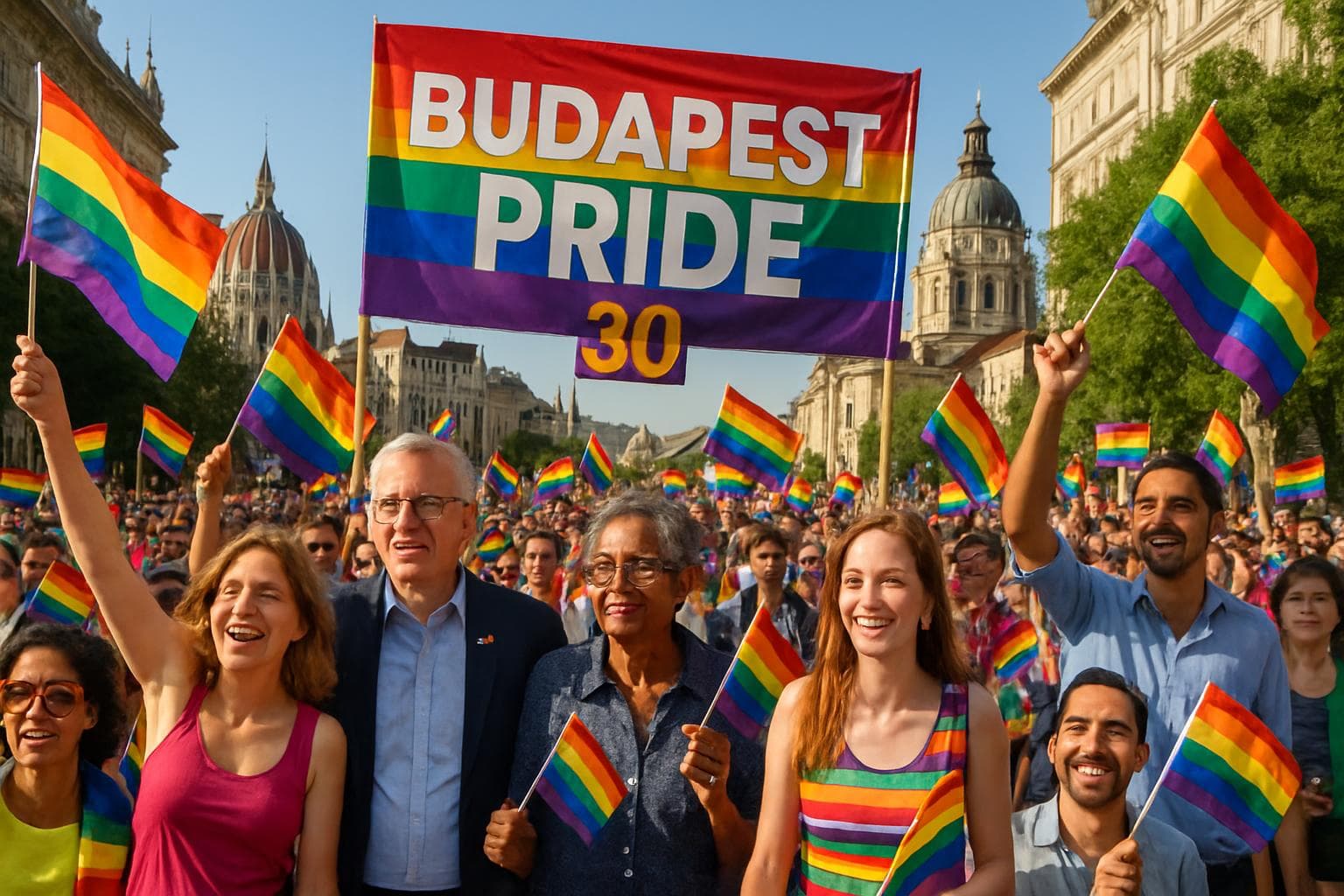
Budapest Pride is poised to take place this Saturday, standing firm against legal threats from Hungarian Prime Minister Viktor Orban's government. The march, which marks its 30th anniversary, has become a powerful symbol of resistance against the country's increasingly restrictive stance on LGBTQ rights.
A Symbol of Resistance
Organizers expect record attendance as Hungarians unite with international campaigners and politicians to challenge the government's rollback of rights. The event has drawn significant attention, with European Union leaders, including equalities commissioner Hadja Lahbib, voicing support. "This is about the right to be who you are, to love who you want," Lahbib stated, underscoring the march's broader significance beyond Hungary.
Legal and Political Tensions
The Hungarian government, led by the right-wing populist Viktor Orban, has enacted a "child protection" law that effectively bans the Pride march, citing it as a promotion of homosexuality. Police have been authorized to use facial recognition technology to identify participants, who risk fines of up to €500. Organizers could face up to a year in prison. Despite these threats, Budapest's progressive mayor, Gergely Karacsony, has declared the march a municipal event, negating the need for police approval and assuring participants of their safety.
International Solidarity
The march has garnered widespread international support, with European Commission President Ursula von der Leyen urging the Hungarian government to allow the event. Orban, however, remains defiant, likening EU intervention to past Soviet control. Notable figures, including former Irish Taoiseach Leo Varadkar and Spain's Minister of Culture Ernest Urtasun, are expected to join the march, alongside over 70 European Parliament members.
A Call for Civil Society
As uncertainty looms over the official response, the event is seen as a critical moment for civil society in Hungary. Nicolae Ștefănuță, vice-president of the European Parliament, emphasized the duty of police to protect citizens, a sentiment echoed by a petition signed by over 120,000 people worldwide. "LGBTQ people are an integral part of Hungarian society," stated Pride spokesperson Máté Hegedüs, reinforcing the community's resolve to assert their place in the nation's cultural fabric.
WHAT THIS MIGHT MEAN
The outcome of Budapest Pride could significantly impact Hungary's political landscape and its relationship with the European Union. Should the event proceed peacefully, it may embolden civil society movements and increase pressure on the Orban government to reconsider its stance on LGBTQ rights. Conversely, any legal action against participants could escalate tensions with the EU, potentially leading to further scrutiny and sanctions. Experts suggest that the international support for the march underscores a growing resistance to authoritarian measures within the EU, highlighting the importance of upholding democratic values and freedoms across member states.
Related Articles
Rubio Reaffirms US Commitment to Europe Amid Criticisms at Munich Conference
Spain's Sánchez Stands Firm Against Trump's Trade Threat Over Iran Stance

EU Launches Investigation into Shein Over Alleged Digital Law Breaches
UK PM Keir Starmer Calls for Stronger European Defence Ties at Munich Conference
Europe Urged to Assert Global Power Amid Rising Threats

Tragedy in the Mediterranean: 53 Feared Dead After Migrant Boat Capsizes Off Libyan Coast
Budapest Pride March Defies Legal Threats Amidst Global Support
In This Article
 Alex Carter| Published
 HIGHLIGHTS
- Budapest Pride is set to proceed despite Hungarian Prime Minister Viktor Orban's threats of legal action against participants and organizers.
- The event has become a symbol of resistance against Hungary's restrictive laws on LGBTQ rights, drawing international attention and support.
- Police have banned the march under a new "child protection" law, with potential fines for attendees and prison sentences for organizers.
- European leaders, including EU equalities commissioner Hadja Lahbib, have expressed solidarity with the marchers, emphasizing the importance of civil society.
- Budapest's mayor, Gergely Karacsony, insists the march is a municipal event, thus not requiring police approval, and assures no reprisals for participants.
Budapest Pride is poised to take place this Saturday, standing firm against legal threats from Hungarian Prime Minister Viktor Orban's government. The march, which marks its 30th anniversary, has become a powerful symbol of resistance against the country's increasingly restrictive stance on LGBTQ rights.
A Symbol of Resistance
Organizers expect record attendance as Hungarians unite with international campaigners and politicians to challenge the government's rollback of rights. The event has drawn significant attention, with European Union leaders, including equalities commissioner Hadja Lahbib, voicing support. "This is about the right to be who you are, to love who you want," Lahbib stated, underscoring the march's broader significance beyond Hungary.
Legal and Political Tensions
The Hungarian government, led by the right-wing populist Viktor Orban, has enacted a "child protection" law that effectively bans the Pride march, citing it as a promotion of homosexuality. Police have been authorized to use facial recognition technology to identify participants, who risk fines of up to €500. Organizers could face up to a year in prison. Despite these threats, Budapest's progressive mayor, Gergely Karacsony, has declared the march a municipal event, negating the need for police approval and assuring participants of their safety.
International Solidarity
The march has garnered widespread international support, with European Commission President Ursula von der Leyen urging the Hungarian government to allow the event. Orban, however, remains defiant, likening EU intervention to past Soviet control. Notable figures, including former Irish Taoiseach Leo Varadkar and Spain's Minister of Culture Ernest Urtasun, are expected to join the march, alongside over 70 European Parliament members.
A Call for Civil Society
As uncertainty looms over the official response, the event is seen as a critical moment for civil society in Hungary. Nicolae Ștefănuță, vice-president of the European Parliament, emphasized the duty of police to protect citizens, a sentiment echoed by a petition signed by over 120,000 people worldwide. "LGBTQ people are an integral part of Hungarian society," stated Pride spokesperson Máté Hegedüs, reinforcing the community's resolve to assert their place in the nation's cultural fabric.
WHAT THIS MIGHT MEAN
The outcome of Budapest Pride could significantly impact Hungary's political landscape and its relationship with the European Union. Should the event proceed peacefully, it may embolden civil society movements and increase pressure on the Orban government to reconsider its stance on LGBTQ rights. Conversely, any legal action against participants could escalate tensions with the EU, potentially leading to further scrutiny and sanctions. Experts suggest that the international support for the march underscores a growing resistance to authoritarian measures within the EU, highlighting the importance of upholding democratic values and freedoms across member states.
Related Articles
Rubio Reaffirms US Commitment to Europe Amid Criticisms at Munich Conference
Spain's Sánchez Stands Firm Against Trump's Trade Threat Over Iran Stance
EU Launches Investigation into Shein Over Alleged Digital Law Breaches
UK PM Keir Starmer Calls for Stronger European Defence Ties at Munich Conference
Europe Urged to Assert Global Power Amid Rising Threats
Tragedy in the Mediterranean: 53 Feared Dead After Migrant Boat Capsizes Off Libyan Coast