
California and Texas Clash Over Redistricting Plans Amid Political Tensions
In This Article
HIGHLIGHTS
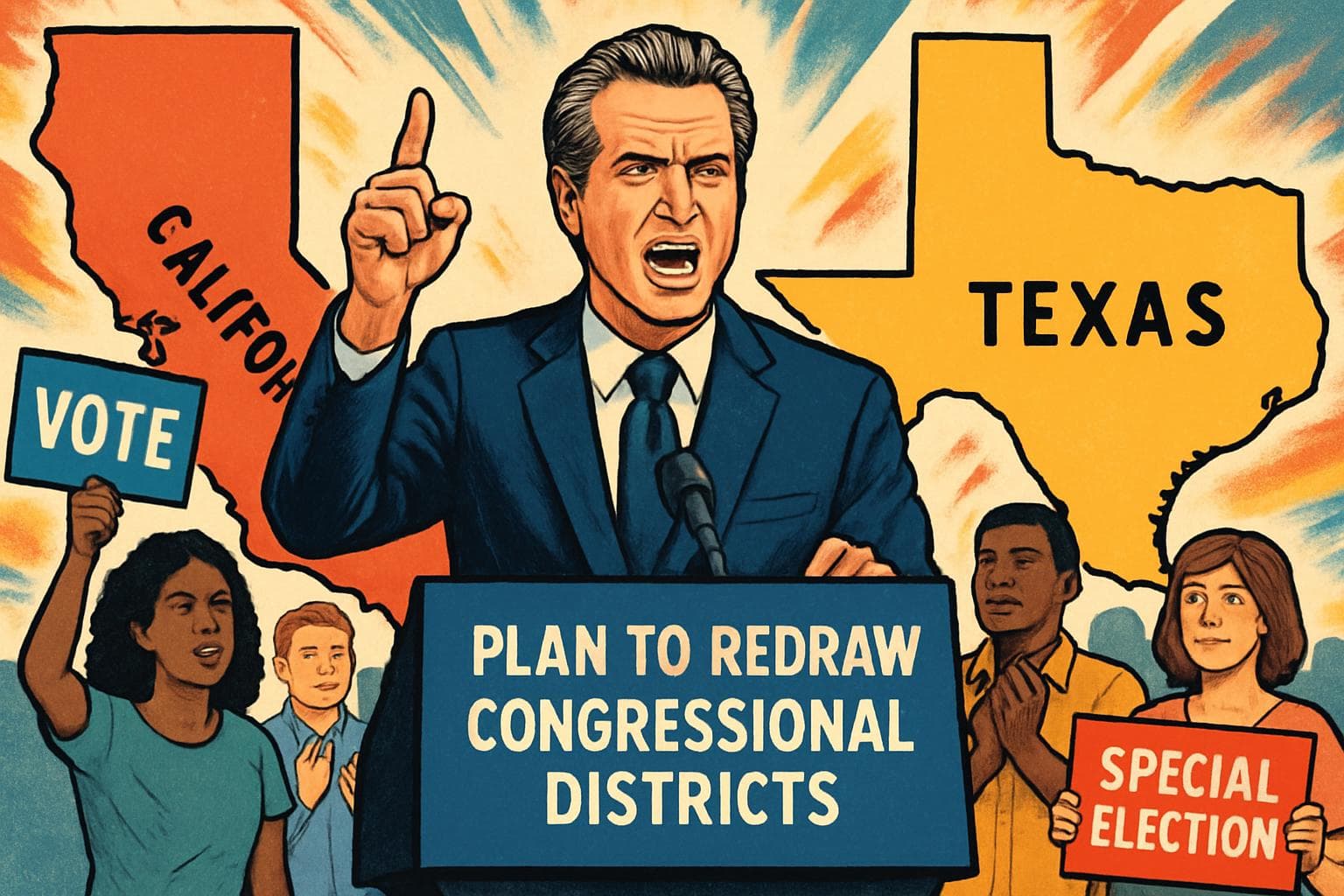
- California Governor Gavin Newsom announced a plan to redraw voting lines to counter a Republican-led effort in Texas.
- Newsom's proposal includes a special election in November to approve new congressional maps before the 2026 midterms.
- Texas Democrats, who fled the state to block a GOP redistricting vote, are prepared to return if California's plan proceeds.
- Texas Governor Greg Abbott has threatened continuous special sessions to pass the GOP's redistricting proposal.
- The nationwide debate over gerrymandering could impact control of the US House of Representatives.
In a bold political maneuver, California Governor Gavin Newsom has unveiled a plan to redraw the state's congressional districts, aiming to counter a Republican-led redistricting effort in Texas. This move, announced on Thursday, is part of a broader strategy to maintain Democratic influence in the finely balanced US House of Representatives.
California's Strategic Response
Newsom's proposal, dubbed the "Election Rigging Response Act," calls for a special election on November 4th, where voters will decide on new congressional maps. This initiative is a direct response to a Trump-backed plan in Texas that could potentially secure five additional seats for Republicans. "We can't stand back and watch this democracy disappear district by district," Newsom declared at a rally in Los Angeles, emphasizing the urgency of the situation.
Texas Democrats' Tactical Retreat
Meanwhile, Texas Democrats, who had fled the state to prevent a quorum for a vote on the GOP's redistricting proposal, have signaled their readiness to return. Their decision hinges on the progression of California's redistricting plan, which promises to offset the Republican gains in Texas. Gene Wu, chair of the Texas House Democratic Caucus, stated, "We have stood firm in our fight against a proposed Jim Crow congressional district map."
Political Implications and National Debate
The clash between California and Texas highlights the contentious issue of gerrymandering, where electoral boundaries are redrawn to favor a particular political party. While legal, the practice has sparked nationwide debates, especially as it could influence the control of the US House. Texas Governor Greg Abbott has vowed to continue calling special legislative sessions until the GOP's proposal is passed, further intensifying the political standoff.
Federal Involvement and Public Reaction
Adding to the tension, federal agents were present at Newsom's announcement, a move he criticized as an attempt to intimidate Democrats. Los Angeles Mayor Karen Bass condemned the federal presence, asserting that "Los Angeles doesn’t back down." The Department of Homeland Security, however, maintained that their operations were unrelated to Newsom's event.
WHAT THIS MIGHT MEAN
The unfolding redistricting battle between California and Texas could have significant implications for the political landscape in the United States. If Newsom's plan succeeds, it may inspire other Democratic-led states to adopt similar strategies, potentially altering the balance of power in Congress. Conversely, if Texas Republicans prevail, it could solidify GOP control in the House, complicating Democratic efforts to advance their legislative agenda. Legal challenges are likely to arise, as both parties seek judicial intervention to uphold or contest the new maps. As the situation develops, the national conversation on gerrymandering and electoral fairness is expected to intensify, with potential long-term impacts on American democracy.
Related Articles
James Talarico Secures Democratic Nomination in Texas Senate Race Amidst Republican Runoff
Senate Blocks Resolution to Limit Trump's Military Actions in Iran
California Avalanche Leaves Ten Skiers Missing Amid Severe Weather
Don Lemon Pleads Not Guilty in Minnesota Church Protest Case
Trump's Repeal of Climate Regulation Sparks Legal and Environmental Concerns

Anna Murdoch-Mann: Influential Figure in Media and Philanthropy Dies at 81
California and Texas Clash Over Redistricting Plans Amid Political Tensions
In This Article
 Alex Carter| Published
 HIGHLIGHTS
- California Governor Gavin Newsom announced a plan to redraw voting lines to counter a Republican-led effort in Texas.
- Newsom's proposal includes a special election in November to approve new congressional maps before the 2026 midterms.
- Texas Democrats, who fled the state to block a GOP redistricting vote, are prepared to return if California's plan proceeds.
- Texas Governor Greg Abbott has threatened continuous special sessions to pass the GOP's redistricting proposal.
- The nationwide debate over gerrymandering could impact control of the US House of Representatives.
In a bold political maneuver, California Governor Gavin Newsom has unveiled a plan to redraw the state's congressional districts, aiming to counter a Republican-led redistricting effort in Texas. This move, announced on Thursday, is part of a broader strategy to maintain Democratic influence in the finely balanced US House of Representatives.
California's Strategic Response
Newsom's proposal, dubbed the "Election Rigging Response Act," calls for a special election on November 4th, where voters will decide on new congressional maps. This initiative is a direct response to a Trump-backed plan in Texas that could potentially secure five additional seats for Republicans. "We can't stand back and watch this democracy disappear district by district," Newsom declared at a rally in Los Angeles, emphasizing the urgency of the situation.
Texas Democrats' Tactical Retreat
Meanwhile, Texas Democrats, who had fled the state to prevent a quorum for a vote on the GOP's redistricting proposal, have signaled their readiness to return. Their decision hinges on the progression of California's redistricting plan, which promises to offset the Republican gains in Texas. Gene Wu, chair of the Texas House Democratic Caucus, stated, "We have stood firm in our fight against a proposed Jim Crow congressional district map."
Political Implications and National Debate
The clash between California and Texas highlights the contentious issue of gerrymandering, where electoral boundaries are redrawn to favor a particular political party. While legal, the practice has sparked nationwide debates, especially as it could influence the control of the US House. Texas Governor Greg Abbott has vowed to continue calling special legislative sessions until the GOP's proposal is passed, further intensifying the political standoff.
Federal Involvement and Public Reaction
Adding to the tension, federal agents were present at Newsom's announcement, a move he criticized as an attempt to intimidate Democrats. Los Angeles Mayor Karen Bass condemned the federal presence, asserting that "Los Angeles doesn’t back down." The Department of Homeland Security, however, maintained that their operations were unrelated to Newsom's event.
WHAT THIS MIGHT MEAN
The unfolding redistricting battle between California and Texas could have significant implications for the political landscape in the United States. If Newsom's plan succeeds, it may inspire other Democratic-led states to adopt similar strategies, potentially altering the balance of power in Congress. Conversely, if Texas Republicans prevail, it could solidify GOP control in the House, complicating Democratic efforts to advance their legislative agenda. Legal challenges are likely to arise, as both parties seek judicial intervention to uphold or contest the new maps. As the situation develops, the national conversation on gerrymandering and electoral fairness is expected to intensify, with potential long-term impacts on American democracy.
Related Articles
James Talarico Secures Democratic Nomination in Texas Senate Race Amidst Republican Runoff
Senate Blocks Resolution to Limit Trump's Military Actions in Iran
California Avalanche Leaves Ten Skiers Missing Amid Severe Weather
Don Lemon Pleads Not Guilty in Minnesota Church Protest Case
Trump's Repeal of Climate Regulation Sparks Legal and Environmental Concerns
Anna Murdoch-Mann: Influential Figure in Media and Philanthropy Dies at 81