
Trump's Repeal of Climate Regulation Sparks Legal and Environmental Concerns
In This Article
HIGHLIGHTS
- President Donald Trump has repealed the 2009 endangerment finding, a key ruling that allowed the EPA to regulate greenhouse gases.
- The decision is expected to face legal challenges from environmental groups and states like California.
- The rollback could lead to an additional 7.5-18 billion tonnes of greenhouse gases by 2055, according to the Environmental Defense Fund.
- The Trump administration argues the repeal will reduce costs for vehicle manufacturers by approximately $2,400 per car.
- Critics, including Barack Obama and John Kerry, warn the move benefits the fossil fuel industry at the expense of public health and climate safety.
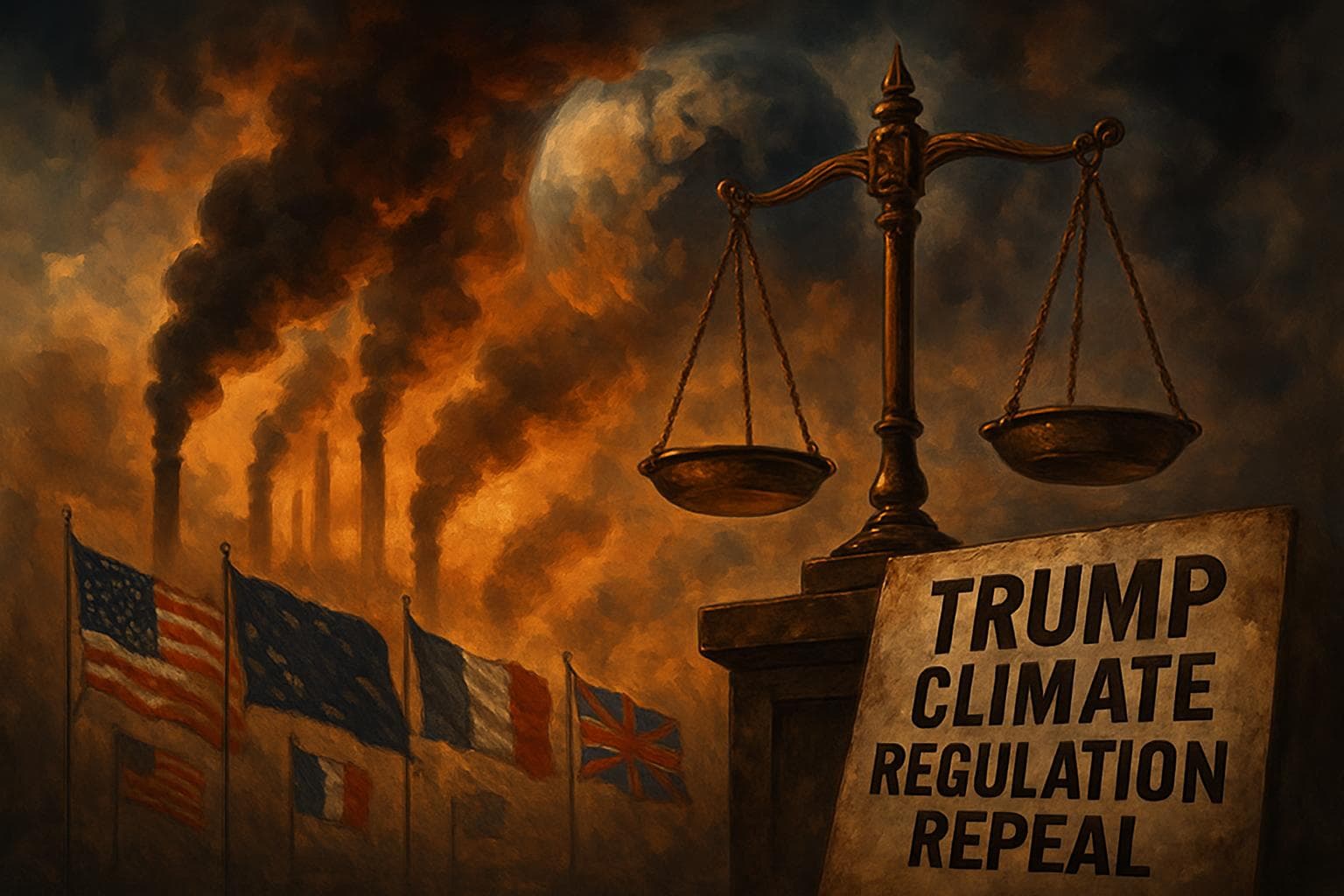
In a controversial move, President Donald Trump has repealed the endangerment finding, a pivotal 2009 scientific ruling that empowered the Environmental Protection Agency (EPA) to regulate greenhouse gases. This decision, hailed by Trump as "the single largest deregulatory action in American history," is poised to significantly alter the landscape of U.S. environmental policy.
Impact on Greenhouse Gas Emissions
The endangerment finding, established during the Obama administration, identified six greenhouse gases as threats to public health and welfare, forming the legal basis for regulating emissions from vehicles and industrial sources. With its repeal, the Environmental Defense Fund estimates an additional 7.5-18 billion tonnes of greenhouse gases could be emitted by 2055, potentially costing trillions of dollars in environmental damage.
Economic Arguments and Industry Reactions
The Trump administration argues that removing the endangerment finding will economically benefit industries, particularly vehicle manufacturers, by reducing production costs by approximately $2,400 per car. Ford and the Alliance for Automotive Innovation have expressed support, suggesting the change addresses "unachievable emissions regulations" from previous administrations. However, with international climate targets still in place, the extent of changes in production remains uncertain.
Legal and Political Backlash
The repeal has sparked significant backlash from environmental groups and political figures. Former President Barack Obama criticized the move, stating it leaves Americans "less safe, less healthy, and less able to fight climate change." Legal challenges are anticipated, with states like California and various environmental organizations pledging to contest the rollback in court. Additionally, political tensions are rising internationally, as European leaders debate their stance on Trump's environmental policies.
WHAT THIS MIGHT MEAN
The repeal of the endangerment finding is likely to face prolonged legal battles, potentially delaying its full implementation. Environmental groups and states like California are expected to challenge the decision in court, arguing it undermines efforts to combat climate change. Politically, the move may strain U.S. relations with European allies committed to stringent climate policies, as they navigate their diplomatic approach to the Trump administration. In the long term, the decision could influence the trajectory of U.S. climate policy, particularly if future administrations seek to reinstate or modify the regulatory framework.
Images from the Web

Related Articles

Tech Giants Pledge to Cover AI Data Center Energy Costs Amid Rising Electricity Concerns
Congress Subpoenas Attorney General Bondi in Epstein Investigation
Cuba Faces Widespread Blackout Amid Deepening Fuel Crisis

UK Faces Dilemmas Amid Iran Conflict and China Spying Allegations

Senate Blocks Resolution to Limit Trump's Military Actions in Iran

UK-Iran Tensions: Starmer Defends Cautious Approach Amid Trump Criticism
Trump's Repeal of Climate Regulation Sparks Legal and Environmental Concerns
In This Article
 Leila Hassan| Published
 HIGHLIGHTS
- President Donald Trump has repealed the 2009 endangerment finding, a key ruling that allowed the EPA to regulate greenhouse gases.
- The decision is expected to face legal challenges from environmental groups and states like California.
- The rollback could lead to an additional 7.5-18 billion tonnes of greenhouse gases by 2055, according to the Environmental Defense Fund.
- The Trump administration argues the repeal will reduce costs for vehicle manufacturers by approximately $2,400 per car.
- Critics, including Barack Obama and John Kerry, warn the move benefits the fossil fuel industry at the expense of public health and climate safety.
In a controversial move, President Donald Trump has repealed the endangerment finding, a pivotal 2009 scientific ruling that empowered the Environmental Protection Agency (EPA) to regulate greenhouse gases. This decision, hailed by Trump as "the single largest deregulatory action in American history," is poised to significantly alter the landscape of U.S. environmental policy.
Impact on Greenhouse Gas Emissions
The endangerment finding, established during the Obama administration, identified six greenhouse gases as threats to public health and welfare, forming the legal basis for regulating emissions from vehicles and industrial sources. With its repeal, the Environmental Defense Fund estimates an additional 7.5-18 billion tonnes of greenhouse gases could be emitted by 2055, potentially costing trillions of dollars in environmental damage.
Economic Arguments and Industry Reactions
The Trump administration argues that removing the endangerment finding will economically benefit industries, particularly vehicle manufacturers, by reducing production costs by approximately $2,400 per car. Ford and the Alliance for Automotive Innovation have expressed support, suggesting the change addresses "unachievable emissions regulations" from previous administrations. However, with international climate targets still in place, the extent of changes in production remains uncertain.
Legal and Political Backlash
The repeal has sparked significant backlash from environmental groups and political figures. Former President Barack Obama criticized the move, stating it leaves Americans "less safe, less healthy, and less able to fight climate change." Legal challenges are anticipated, with states like California and various environmental organizations pledging to contest the rollback in court. Additionally, political tensions are rising internationally, as European leaders debate their stance on Trump's environmental policies.
WHAT THIS MIGHT MEAN
The repeal of the endangerment finding is likely to face prolonged legal battles, potentially delaying its full implementation. Environmental groups and states like California are expected to challenge the decision in court, arguing it undermines efforts to combat climate change. Politically, the move may strain U.S. relations with European allies committed to stringent climate policies, as they navigate their diplomatic approach to the Trump administration. In the long term, the decision could influence the trajectory of U.S. climate policy, particularly if future administrations seek to reinstate or modify the regulatory framework.
Images from the Web
Related Articles
Tech Giants Pledge to Cover AI Data Center Energy Costs Amid Rising Electricity Concerns
Congress Subpoenas Attorney General Bondi in Epstein Investigation
Cuba Faces Widespread Blackout Amid Deepening Fuel Crisis
UK Faces Dilemmas Amid Iran Conflict and China Spying Allegations
Senate Blocks Resolution to Limit Trump's Military Actions in Iran
UK-Iran Tensions: Starmer Defends Cautious Approach Amid Trump Criticism