
Chicago Mayor Defies Trump with Order to Resist Immigration Crackdown
In This Article
HIGHLIGHTS
- Chicago Mayor Brandon Johnson signed an executive order to resist federal immigration enforcement under the Trump administration.
- The order prohibits Chicago police from assisting federal authorities in immigration-related activities and mandates transparency in law enforcement.
- Trump has threatened to deploy federal agents to Chicago, citing crime as a justification, which Illinois officials have criticized as unconstitutional.
- The White House argues the federal presence is necessary for crime reduction, while local officials see it as a political maneuver.
- Chicago's large immigrant population and sanctuary city status are central to the ongoing conflict with federal immigration policies.
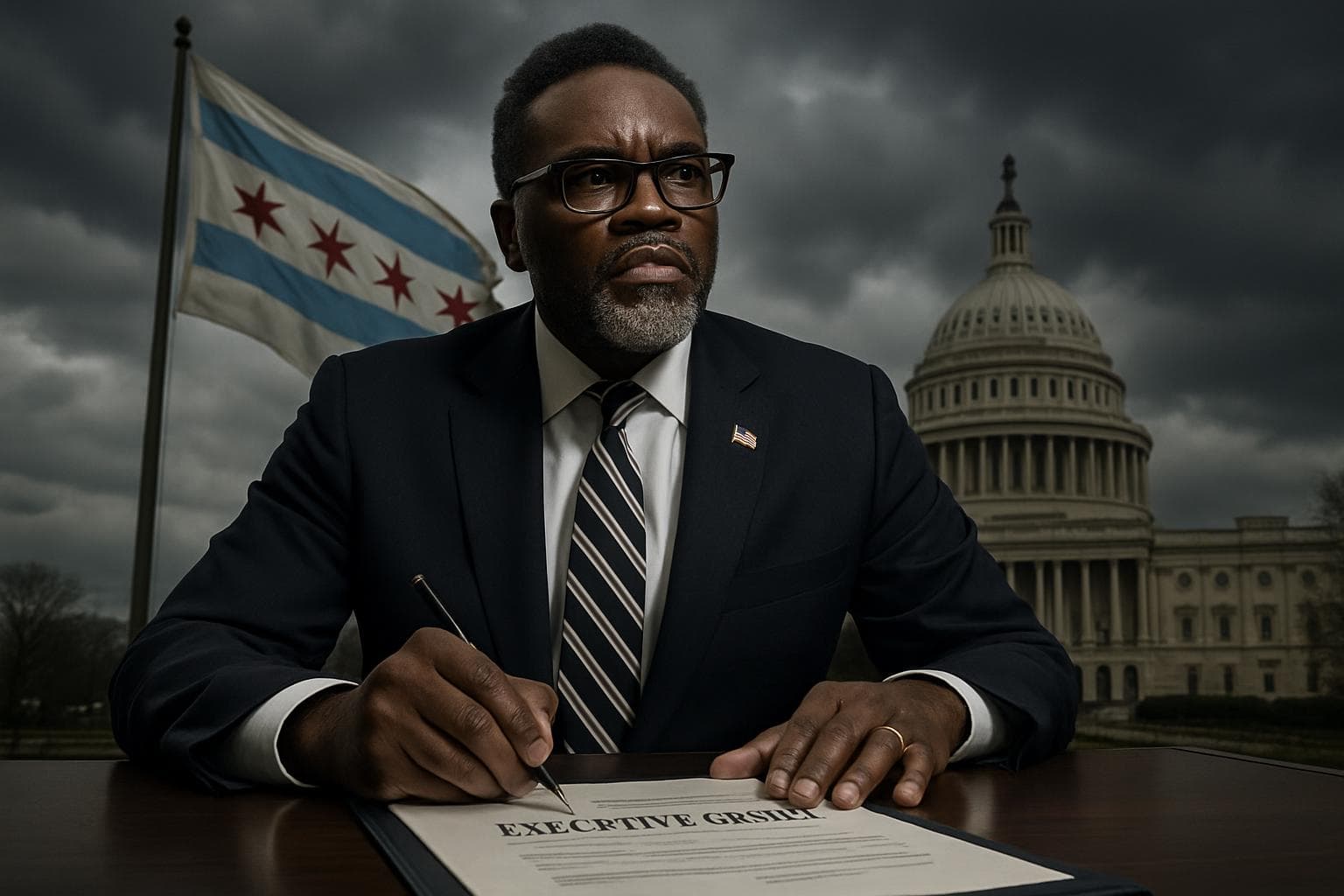
In a bold move against the Trump administration's immigration policies, Chicago Mayor Brandon Johnson has signed an executive order aimed at resisting federal enforcement actions in the city. The order, announced on Saturday, outlines measures to prevent local law enforcement from cooperating with federal immigration authorities, a stance that has intensified the ongoing feud between the city and the federal government.
Executive Order Details
Mayor Johnson's directive explicitly bars the Chicago Police Department from participating in federal immigration enforcement activities, including patrols, traffic stops, and checkpoints. The order also mandates that city officers refrain from concealing their identities, a practice criticized in other cities where Immigration and Customs Enforcement (ICE) officers have operated. Johnson emphasized the importance of protecting the constitutional rights of Chicago's residents, particularly amidst threats of a militarized federal presence.
Federal Response and Local Criticism
The Trump administration has threatened to deploy federal agents to Chicago, citing the city's crime rates as a national emergency. President Trump has described Chicago as a "killing field," justifying the potential deployment of the National Guard. However, Illinois Governor JB Pritzker and other local officials have condemned these threats as an abuse of power, accusing Trump of manufacturing a crisis for political gain. "Donald Trump is attempting to politicize the situation and distract from the real issues affecting working families," Pritzker stated.
Immigration and Sanctuary City Status
Chicago's status as a sanctuary city, with a significant immigrant population, has long placed it at odds with federal immigration policies. The city's refusal to cooperate with federal immigration enforcement aligns with Illinois' strong protections for immigrants. This resistance has been met with criticism from the White House, which argues that local officials are prioritizing political stunts over addressing crime.
Political and Legal Implications
The executive order and the broader conflict highlight the deep divisions between federal and local governments over immigration policy. As the Trump administration continues to push for stricter immigration enforcement, cities like Chicago are standing firm in their commitment to protect immigrant communities. The outcome of this standoff could have significant implications for the future of sanctuary cities and federal immigration policy.
WHAT THIS MIGHT MEAN
The standoff between Chicago and the Trump administration could escalate if federal agents are deployed, potentially leading to legal challenges over the constitutionality of such actions. Experts suggest that this conflict may set a precedent for other sanctuary cities facing similar federal pressures. Politically, the situation underscores the broader national debate on immigration policy and the balance of power between federal and local governments. As the 2024 elections approach, these issues are likely to remain at the forefront of political discourse, influencing both policy decisions and voter sentiment.
Related Articles
Spain's Sánchez Stands Firm Against Trump's Trade Threat Over Iran Stance

Tech Giants Pledge to Cover AI Data Center Energy Costs Amid Rising Electricity Concerns

Senate Blocks Resolution to Limit Trump's Military Actions in Iran
US-Iran Tensions Escalate Amid Renewed Nuclear Talks and Protests

Greenland Politely Declines Trump's Hospital Ship Offer Amid Healthcare Debate
Congress Subpoenas Attorney General Bondi in Epstein Investigation
Chicago Mayor Defies Trump with Order to Resist Immigration Crackdown
In This Article
 Ethan Brooks| Published
 HIGHLIGHTS
- Chicago Mayor Brandon Johnson signed an executive order to resist federal immigration enforcement under the Trump administration.
- The order prohibits Chicago police from assisting federal authorities in immigration-related activities and mandates transparency in law enforcement.
- Trump has threatened to deploy federal agents to Chicago, citing crime as a justification, which Illinois officials have criticized as unconstitutional.
- The White House argues the federal presence is necessary for crime reduction, while local officials see it as a political maneuver.
- Chicago's large immigrant population and sanctuary city status are central to the ongoing conflict with federal immigration policies.
In a bold move against the Trump administration's immigration policies, Chicago Mayor Brandon Johnson has signed an executive order aimed at resisting federal enforcement actions in the city. The order, announced on Saturday, outlines measures to prevent local law enforcement from cooperating with federal immigration authorities, a stance that has intensified the ongoing feud between the city and the federal government.
Executive Order Details
Mayor Johnson's directive explicitly bars the Chicago Police Department from participating in federal immigration enforcement activities, including patrols, traffic stops, and checkpoints. The order also mandates that city officers refrain from concealing their identities, a practice criticized in other cities where Immigration and Customs Enforcement (ICE) officers have operated. Johnson emphasized the importance of protecting the constitutional rights of Chicago's residents, particularly amidst threats of a militarized federal presence.
Federal Response and Local Criticism
The Trump administration has threatened to deploy federal agents to Chicago, citing the city's crime rates as a national emergency. President Trump has described Chicago as a "killing field," justifying the potential deployment of the National Guard. However, Illinois Governor JB Pritzker and other local officials have condemned these threats as an abuse of power, accusing Trump of manufacturing a crisis for political gain. "Donald Trump is attempting to politicize the situation and distract from the real issues affecting working families," Pritzker stated.
Immigration and Sanctuary City Status
Chicago's status as a sanctuary city, with a significant immigrant population, has long placed it at odds with federal immigration policies. The city's refusal to cooperate with federal immigration enforcement aligns with Illinois' strong protections for immigrants. This resistance has been met with criticism from the White House, which argues that local officials are prioritizing political stunts over addressing crime.
Political and Legal Implications
The executive order and the broader conflict highlight the deep divisions between federal and local governments over immigration policy. As the Trump administration continues to push for stricter immigration enforcement, cities like Chicago are standing firm in their commitment to protect immigrant communities. The outcome of this standoff could have significant implications for the future of sanctuary cities and federal immigration policy.
WHAT THIS MIGHT MEAN
The standoff between Chicago and the Trump administration could escalate if federal agents are deployed, potentially leading to legal challenges over the constitutionality of such actions. Experts suggest that this conflict may set a precedent for other sanctuary cities facing similar federal pressures. Politically, the situation underscores the broader national debate on immigration policy and the balance of power between federal and local governments. As the 2024 elections approach, these issues are likely to remain at the forefront of political discourse, influencing both policy decisions and voter sentiment.
Related Articles
Spain's Sánchez Stands Firm Against Trump's Trade Threat Over Iran Stance
Tech Giants Pledge to Cover AI Data Center Energy Costs Amid Rising Electricity Concerns
Senate Blocks Resolution to Limit Trump's Military Actions in Iran
US-Iran Tensions Escalate Amid Renewed Nuclear Talks and Protests
Greenland Politely Declines Trump's Hospital Ship Offer Amid Healthcare Debate
Congress Subpoenas Attorney General Bondi in Epstein Investigation