
Rescue Efforts Intensify After Chile Mine Collapse Traps Miners
In This Article
HIGHLIGHTS
- A 4.2 magnitude tremor caused a partial collapse at Chile's El Teniente copper mine, trapping five miners.
- Rescuers have found human remains, yet to be identified, while searching for the trapped miners.
- President Gabriel Boric has pledged full support for the rescue efforts, emphasizing Codelco's capabilities.
- The El Teniente mine, the world's largest underground copper mine, has suspended operations amid the rescue.
- Chile is a leading global copper producer, with El Teniente contributing significantly to its output.
Rescuers in Chile are racing against time to reach four miners trapped in the El Teniente copper mine following a partial collapse triggered by a seismic event. The incident, which occurred on Thursday, has already claimed one life, with human remains discovered but not yet identified. The collapse was caused by a 4.2 magnitude tremor, though it remains unclear whether the tremor was natural or linked to mining activities.
Ongoing Rescue Operations
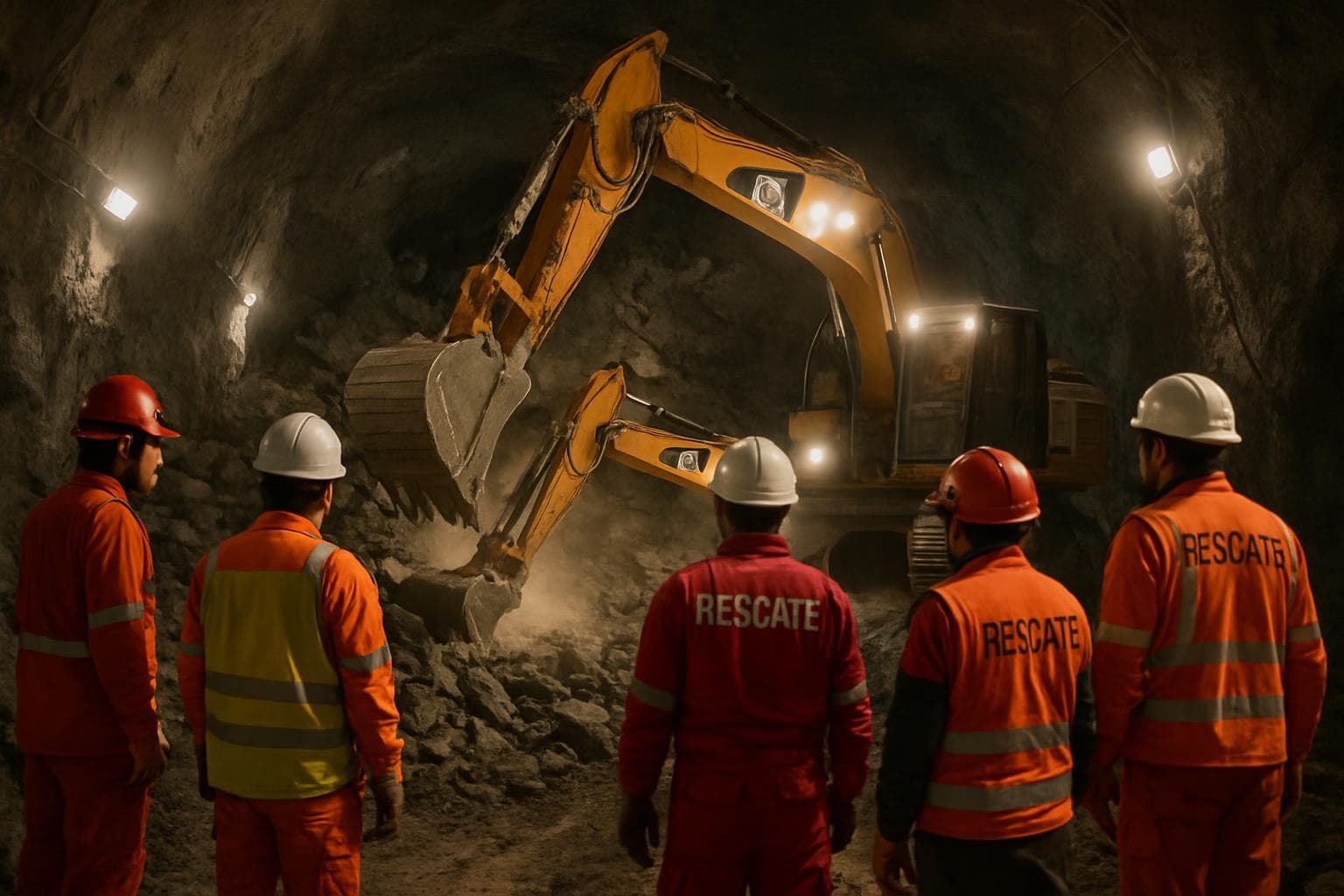
The state-owned Codelco company, which operates El Teniente, has mobilized over 100 personnel to aid in the rescue mission. Heavy machinery is being used to clear blocked tunnels, with rescuers advancing at a rate of 15-20 meters per day. The miners were reportedly working deep underground, extending the mine to a depth of 1,200 meters when the collapse occurred. Codelco's general manager, Andres Music, expressed both sorrow and determination, stating, "This discovery fills us with sadness, but it also tells us that we are in the right place."
Government Support and Industry Impact
Chilean President Gabriel Boric visited the miners' families on Saturday, assuring them of the government's commitment to the rescue efforts. He emphasized that Codelco possesses the necessary resources and expertise to conduct the search effectively. The El Teniente mine, located in the Andes mountains, is a critical component of Chile's copper production, contributing 356,000 metric tonnes last year alone. Operations at the mine have been suspended as the rescue continues.
Global Copper Production
As the world's largest copper producer, Chile plays a pivotal role in the global supply chain, accounting for nearly a quarter of the total output. The metal is essential for various industries, including wiring, motors, and renewable energy technologies. The current situation at El Teniente highlights the ongoing challenges and risks associated with underground mining operations.
WHAT THIS MIGHT MEAN
The ongoing rescue efforts at El Teniente underscore the inherent risks of underground mining, particularly in seismically active regions. Should the rescue succeed, it may prompt a reevaluation of safety protocols and emergency preparedness in Chile's mining industry. Additionally, the incident could influence global copper markets, given Chile's significant role in production. Experts may call for increased investment in technology to enhance safety and efficiency in mining operations, potentially setting new standards for the industry worldwide.
Related Articles

Chile Declares State of Catastrophe as Wildfires Devastate Regions

Global Outcry as US Captures Venezuelan President Maduro Amid Legal Controversy
Tragic Snowstorm in Chilean Patagonia Claims Lives of Five Tourists

Chile's Presidential Election Heads to Run-off Amid Crime and Immigration Concerns

Chile's Rightward Shift: José Antonio Kast's Election Victory and Its Implications

José Antonio Kast Elected Chile's President Amid Security and Immigration Concerns
Rescue Efforts Intensify After Chile Mine Collapse Traps Miners
In This Article
HIGHLIGHTS
- A 4.2 magnitude tremor caused a partial collapse at Chile's El Teniente copper mine, trapping five miners.
- Rescuers have found human remains, yet to be identified, while searching for the trapped miners.
- President Gabriel Boric has pledged full support for the rescue efforts, emphasizing Codelco's capabilities.
- The El Teniente mine, the world's largest underground copper mine, has suspended operations amid the rescue.
- Chile is a leading global copper producer, with El Teniente contributing significantly to its output.
Rescuers in Chile are racing against time to reach four miners trapped in the El Teniente copper mine following a partial collapse triggered by a seismic event. The incident, which occurred on Thursday, has already claimed one life, with human remains discovered but not yet identified. The collapse was caused by a 4.2 magnitude tremor, though it remains unclear whether the tremor was natural or linked to mining activities.
Ongoing Rescue Operations
The state-owned Codelco company, which operates El Teniente, has mobilized over 100 personnel to aid in the rescue mission. Heavy machinery is being used to clear blocked tunnels, with rescuers advancing at a rate of 15-20 meters per day. The miners were reportedly working deep underground, extending the mine to a depth of 1,200 meters when the collapse occurred. Codelco's general manager, Andres Music, expressed both sorrow and determination, stating, "This discovery fills us with sadness, but it also tells us that we are in the right place."
Government Support and Industry Impact
Chilean President Gabriel Boric visited the miners' families on Saturday, assuring them of the government's commitment to the rescue efforts. He emphasized that Codelco possesses the necessary resources and expertise to conduct the search effectively. The El Teniente mine, located in the Andes mountains, is a critical component of Chile's copper production, contributing 356,000 metric tonnes last year alone. Operations at the mine have been suspended as the rescue continues.
Global Copper Production
As the world's largest copper producer, Chile plays a pivotal role in the global supply chain, accounting for nearly a quarter of the total output. The metal is essential for various industries, including wiring, motors, and renewable energy technologies. The current situation at El Teniente highlights the ongoing challenges and risks associated with underground mining operations.
WHAT THIS MIGHT MEAN
The ongoing rescue efforts at El Teniente underscore the inherent risks of underground mining, particularly in seismically active regions. Should the rescue succeed, it may prompt a reevaluation of safety protocols and emergency preparedness in Chile's mining industry. Additionally, the incident could influence global copper markets, given Chile's significant role in production. Experts may call for increased investment in technology to enhance safety and efficiency in mining operations, potentially setting new standards for the industry worldwide.
Related Articles
Chile Declares State of Catastrophe as Wildfires Devastate Regions
Global Outcry as US Captures Venezuelan President Maduro Amid Legal Controversy
Tragic Snowstorm in Chilean Patagonia Claims Lives of Five Tourists
Chile's Presidential Election Heads to Run-off Amid Crime and Immigration Concerns
Chile's Rightward Shift: José Antonio Kast's Election Victory and Its Implications
José Antonio Kast Elected Chile's President Amid Security and Immigration Concerns