
Chile's Rightward Shift: José Antonio Kast's Election Victory and Its Implications
In This Article
HIGHLIGHTS
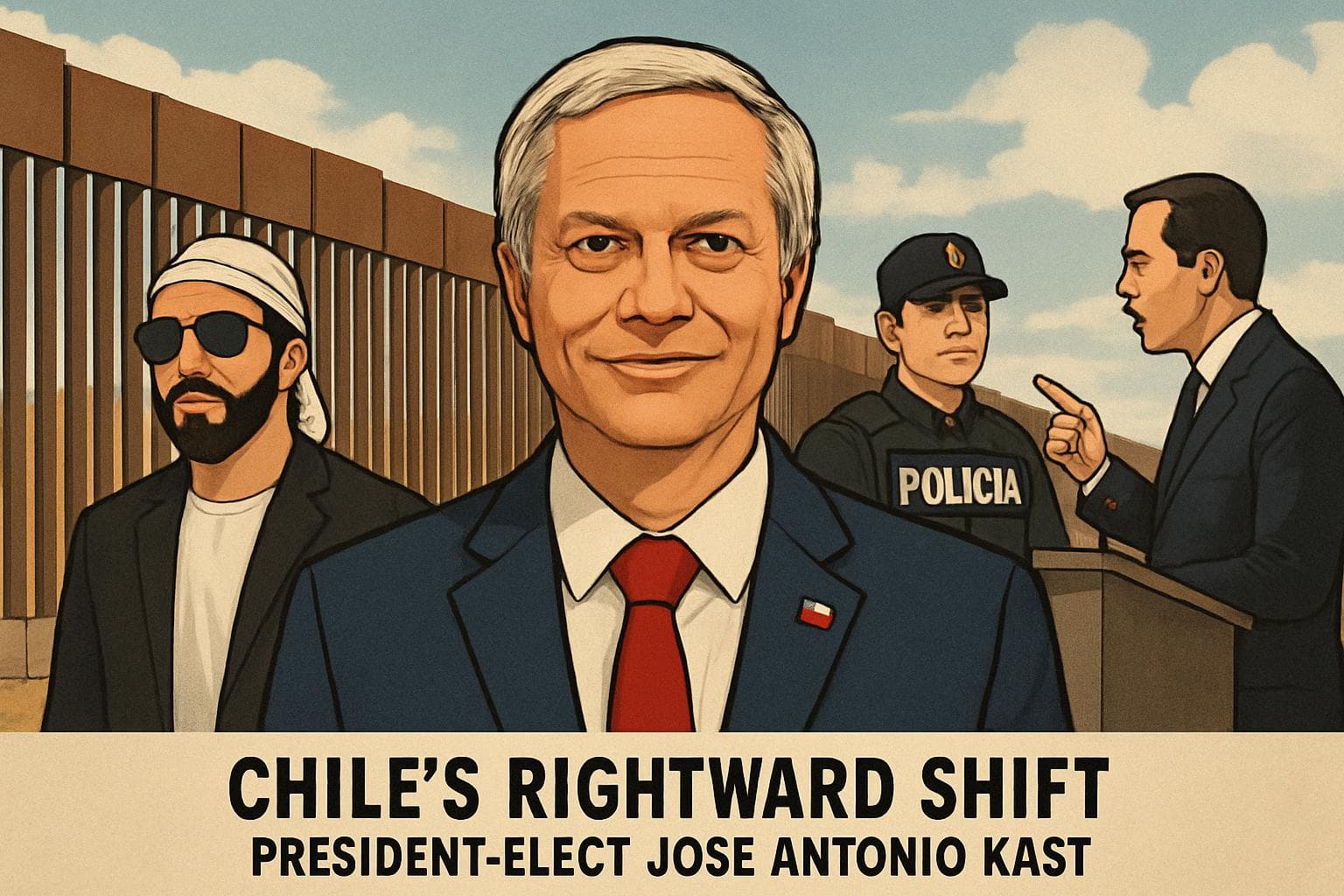
- José Antonio Kast, a hardline conservative, won Chile's presidential election with 58.16% of the vote, marking a significant rightward shift in the country's politics.
- Kast's campaign focused on immigration and crime, promising mass deportations and border fortifications, echoing policies of former US President Donald Trump.
- His victory aligns Chile with a broader regional trend of right-wing electoral successes in Latin America, including Argentina and Bolivia.
- Kast's admiration for former dictator Augusto Pinochet has raised concerns about potential authoritarianism, despite his assurances against it.
- The rapid increase in Chile's foreign-born population, particularly from Venezuela, has fueled public anxiety over immigration and security.
Chile has taken a decisive turn to the right with the election of José Antonio Kast as president, a move that reflects broader regional trends in Latin America. Kast, a staunch conservative, secured 58.16% of the vote in the runoff, defeating leftist candidate Jeannette Jara by over two million votes. His victory is seen as part of a wave of right-wing electoral successes across the continent, including in Argentina, Bolivia, and Ecuador.
Immigration and Security: Central Campaign Themes
Kast's campaign was heavily focused on immigration and crime, issues that have resonated with many Chileans amid a significant increase in the foreign-born population. Government figures indicate nearly two million non-nationals reside in Chile, with a notable portion being undocumented migrants from Venezuela. Kast has pledged to address these concerns by implementing strict immigration controls, including the construction of border walls and the deportation of approximately 330,000 undocumented migrants.
Historical Echoes and Political Concerns
Kast's open admiration for former dictator Augusto Pinochet has sparked debate and concern. Pinochet's regime, which lasted from 1973 to 1990, was marked by human rights abuses, including torture and disappearances. Despite these associations, Kast has assured the public that his administration will not resort to authoritarianism. However, his rhetoric and policies have drawn comparisons to other right-wing leaders in the region, such as El Salvador's Nayib Bukele, known for his hardline stance on crime.
Regional and Global Reactions
Kast's election has been met with congratulations from right-wing leaders worldwide, including Hungary's Viktor Orbán and Italy's Giorgia Meloni. This alignment suggests potential shifts in Chile's international relations, particularly with the United States under a conservative leadership. Domestically, his victory has raised questions about the future of Chile's democratic institutions and the potential for further polarization in the country's political landscape.
WHAT THIS MIGHT MEAN
Kast's presidency could lead to significant changes in Chile's domestic and foreign policies, particularly concerning immigration and security. His proposed measures may face legal challenges and public protests, especially from human rights organizations and immigrant communities. Politically, Chile's shift to the right may influence upcoming elections in neighboring countries, potentially reinforcing the regional trend towards conservative governance. Experts caution that while Kast's policies may address immediate concerns over crime and immigration, they could also exacerbate social tensions and undermine democratic norms if not carefully managed.
Related Articles
Cuba Faces Widespread Blackout Amid Deepening Fuel Crisis
Venezuelan Political Prisoners Seek Amnesty Amidst Hopes for Democratic Transition
El Mencho's Death Sparks Violent Unrest Across Mexico

St Francis of Assisi's Bones Draw Global Pilgrims to Italy

China Sets Lowest GDP Growth Target in Decades Amid Economic Challenges

UK Faces Dilemmas Amid Iran Conflict and China Spying Allegations
Chile's Rightward Shift: José Antonio Kast's Election Victory and Its Implications
In This Article
HIGHLIGHTS
- José Antonio Kast, a hardline conservative, won Chile's presidential election with 58.16% of the vote, marking a significant rightward shift in the country's politics.
- Kast's campaign focused on immigration and crime, promising mass deportations and border fortifications, echoing policies of former US President Donald Trump.
- His victory aligns Chile with a broader regional trend of right-wing electoral successes in Latin America, including Argentina and Bolivia.
- Kast's admiration for former dictator Augusto Pinochet has raised concerns about potential authoritarianism, despite his assurances against it.
- The rapid increase in Chile's foreign-born population, particularly from Venezuela, has fueled public anxiety over immigration and security.
Chile has taken a decisive turn to the right with the election of José Antonio Kast as president, a move that reflects broader regional trends in Latin America. Kast, a staunch conservative, secured 58.16% of the vote in the runoff, defeating leftist candidate Jeannette Jara by over two million votes. His victory is seen as part of a wave of right-wing electoral successes across the continent, including in Argentina, Bolivia, and Ecuador.
Immigration and Security: Central Campaign Themes
Kast's campaign was heavily focused on immigration and crime, issues that have resonated with many Chileans amid a significant increase in the foreign-born population. Government figures indicate nearly two million non-nationals reside in Chile, with a notable portion being undocumented migrants from Venezuela. Kast has pledged to address these concerns by implementing strict immigration controls, including the construction of border walls and the deportation of approximately 330,000 undocumented migrants.
Historical Echoes and Political Concerns
Kast's open admiration for former dictator Augusto Pinochet has sparked debate and concern. Pinochet's regime, which lasted from 1973 to 1990, was marked by human rights abuses, including torture and disappearances. Despite these associations, Kast has assured the public that his administration will not resort to authoritarianism. However, his rhetoric and policies have drawn comparisons to other right-wing leaders in the region, such as El Salvador's Nayib Bukele, known for his hardline stance on crime.
Regional and Global Reactions
Kast's election has been met with congratulations from right-wing leaders worldwide, including Hungary's Viktor Orbán and Italy's Giorgia Meloni. This alignment suggests potential shifts in Chile's international relations, particularly with the United States under a conservative leadership. Domestically, his victory has raised questions about the future of Chile's democratic institutions and the potential for further polarization in the country's political landscape.
WHAT THIS MIGHT MEAN
Kast's presidency could lead to significant changes in Chile's domestic and foreign policies, particularly concerning immigration and security. His proposed measures may face legal challenges and public protests, especially from human rights organizations and immigrant communities. Politically, Chile's shift to the right may influence upcoming elections in neighboring countries, potentially reinforcing the regional trend towards conservative governance. Experts caution that while Kast's policies may address immediate concerns over crime and immigration, they could also exacerbate social tensions and undermine democratic norms if not carefully managed.
Related Articles
Cuba Faces Widespread Blackout Amid Deepening Fuel Crisis
Venezuelan Political Prisoners Seek Amnesty Amidst Hopes for Democratic Transition
El Mencho's Death Sparks Violent Unrest Across Mexico
St Francis of Assisi's Bones Draw Global Pilgrims to Italy
China Sets Lowest GDP Growth Target in Decades Amid Economic Challenges
UK Faces Dilemmas Amid Iran Conflict and China Spying Allegations