
China's Fujian Aircraft Carrier Enters Service, Signaling Naval Expansion
In This Article
HIGHLIGHTS
- China's newest aircraft carrier, the Fujian, has officially entered service, marking a significant milestone in its naval expansion.
- The Fujian is equipped with an advanced electromagnetic catapult system, similar to the US's Ford-class carriers, enhancing its aircraft launch capabilities.
- This development is part of Xi Jinping's broader strategy to modernize the People's Liberation Army and extend China's reach into international waters.
- The Fujian's commissioning underscores China's growing naval power, now boasting the world's largest navy by ship count.
- Analysts note the Fujian's capabilities, though advanced, do not yet match the concurrent takeoff and landing abilities of the latest US carriers.
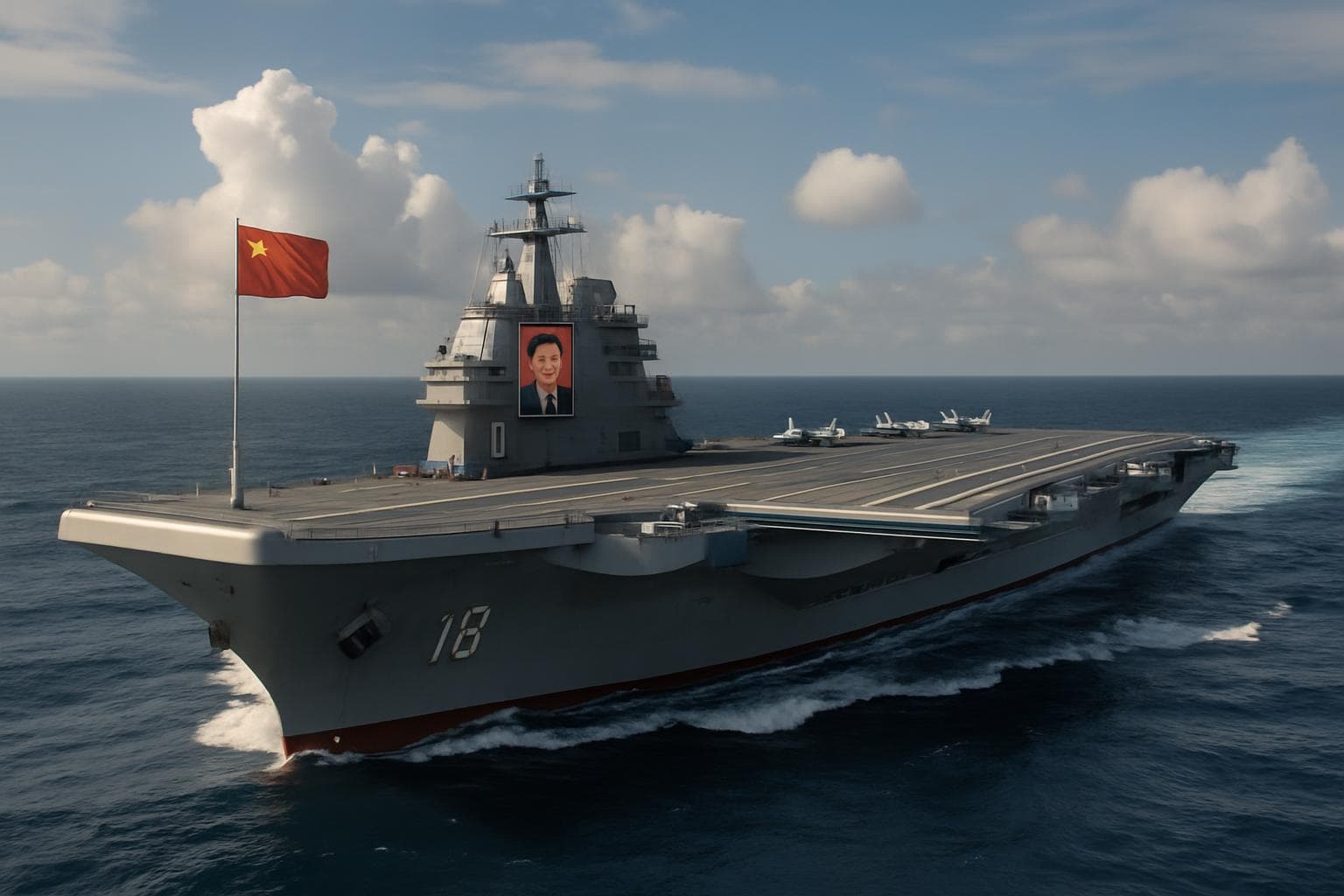
China has officially commissioned its most advanced aircraft carrier, the Fujian, in a move that underscores its growing naval capabilities and strategic ambitions. The commissioning ceremony, presided over by Chinese leader Xi Jinping, took place in the southern Hainan province, marking a pivotal moment in China's military expansion.
Advanced Capabilities and Strategic Implications
The Fujian, China's third aircraft carrier and the first to be domestically designed and built, features an electromagnetic catapult system. This technology, shared only by the US's latest Ford-class carriers, allows for the launch of a wider range of aircraft with greater precision and less stress on both the aircraft and the ship. This advancement enables the Fujian to deploy heavier aircraft with full fuel loads, enhancing its operational range and strike capabilities.
State media have hailed the Fujian as a "major milestone" in the modernization of the People's Liberation Army (PLA), aligning with Xi Jinping's long-term vision to overhaul China's military forces. The carrier joins the older Liaoning and Shandong in active service, positioning China as the nation with the second most aircraft carriers globally, behind the United States.
Expanding Naval Reach and Regional Influence
The Fujian's entry into service is a testament to China's rapid shipbuilding pace, which has resulted in the world's largest navy by ship count. This expansion is part of a broader strategy to extend China's influence in contested regions such as the South China Sea and East China Sea. The PLA's advancements are also seen as a move to bolster capabilities for potential operations involving Taiwan, amid ongoing tensions with the US.
Despite its advanced features, US military analysts point out that the Fujian's configuration does not yet allow for concurrent takeoffs and landings, a capability present in the US's newer carriers. Nonetheless, the Fujian's commissioning highlights China's determination to enhance its naval power and assert its presence on the global stage.
WHAT THIS MIGHT MEAN
The commissioning of the Fujian represents a significant step in China's naval strategy, with potential implications for regional security dynamics. As China continues to expand its naval capabilities, neighboring countries and global powers like the US may feel compelled to reassess their own military strategies and alliances in the Asia-Pacific region.
Experts suggest that China's growing naval presence could lead to increased tensions in contested waters, particularly in the South China Sea, where territorial disputes are ongoing. Additionally, the development of a fourth carrier, as speculated by analysts, could further shift the balance of power in the region, prompting a strategic response from other nations.
As China continues to modernize its military, the international community will closely monitor its actions and the potential impact on global maritime security.
Related Articles
China Sets Lowest GDP Growth Target in Decades Amid Economic Challenges

UK Faces Dilemmas Amid Iran Conflict and China Spying Allegations

Google Faces Legal Battle Over AI Chatbot's Alleged Role in Tragic Death

Cuba Faces Widespread Blackout Amid Deepening Fuel Crisis

Labour MP's Husband Arrested in UK-China Espionage Probe

Iran Postpones Khamenei Funeral Amid Escalating US-Israeli Strikes
China's Fujian Aircraft Carrier Enters Service, Signaling Naval Expansion
In This Article
 Himanshu Kaushik| Published
 HIGHLIGHTS
- China's newest aircraft carrier, the Fujian, has officially entered service, marking a significant milestone in its naval expansion.
- The Fujian is equipped with an advanced electromagnetic catapult system, similar to the US's Ford-class carriers, enhancing its aircraft launch capabilities.
- This development is part of Xi Jinping's broader strategy to modernize the People's Liberation Army and extend China's reach into international waters.
- The Fujian's commissioning underscores China's growing naval power, now boasting the world's largest navy by ship count.
- Analysts note the Fujian's capabilities, though advanced, do not yet match the concurrent takeoff and landing abilities of the latest US carriers.
China has officially commissioned its most advanced aircraft carrier, the Fujian, in a move that underscores its growing naval capabilities and strategic ambitions. The commissioning ceremony, presided over by Chinese leader Xi Jinping, took place in the southern Hainan province, marking a pivotal moment in China's military expansion.
Advanced Capabilities and Strategic Implications
The Fujian, China's third aircraft carrier and the first to be domestically designed and built, features an electromagnetic catapult system. This technology, shared only by the US's latest Ford-class carriers, allows for the launch of a wider range of aircraft with greater precision and less stress on both the aircraft and the ship. This advancement enables the Fujian to deploy heavier aircraft with full fuel loads, enhancing its operational range and strike capabilities.
State media have hailed the Fujian as a "major milestone" in the modernization of the People's Liberation Army (PLA), aligning with Xi Jinping's long-term vision to overhaul China's military forces. The carrier joins the older Liaoning and Shandong in active service, positioning China as the nation with the second most aircraft carriers globally, behind the United States.
Expanding Naval Reach and Regional Influence
The Fujian's entry into service is a testament to China's rapid shipbuilding pace, which has resulted in the world's largest navy by ship count. This expansion is part of a broader strategy to extend China's influence in contested regions such as the South China Sea and East China Sea. The PLA's advancements are also seen as a move to bolster capabilities for potential operations involving Taiwan, amid ongoing tensions with the US.
Despite its advanced features, US military analysts point out that the Fujian's configuration does not yet allow for concurrent takeoffs and landings, a capability present in the US's newer carriers. Nonetheless, the Fujian's commissioning highlights China's determination to enhance its naval power and assert its presence on the global stage.
WHAT THIS MIGHT MEAN
The commissioning of the Fujian represents a significant step in China's naval strategy, with potential implications for regional security dynamics. As China continues to expand its naval capabilities, neighboring countries and global powers like the US may feel compelled to reassess their own military strategies and alliances in the Asia-Pacific region.
Experts suggest that China's growing naval presence could lead to increased tensions in contested waters, particularly in the South China Sea, where territorial disputes are ongoing. Additionally, the development of a fourth carrier, as speculated by analysts, could further shift the balance of power in the region, prompting a strategic response from other nations.
As China continues to modernize its military, the international community will closely monitor its actions and the potential impact on global maritime security.
Related Articles
China Sets Lowest GDP Growth Target in Decades Amid Economic Challenges
UK Faces Dilemmas Amid Iran Conflict and China Spying Allegations
Google Faces Legal Battle Over AI Chatbot's Alleged Role in Tragic Death
Cuba Faces Widespread Blackout Amid Deepening Fuel Crisis
Labour MP's Husband Arrested in UK-China Espionage Probe
Iran Postpones Khamenei Funeral Amid Escalating US-Israeli Strikes