
China's Economy Meets Growth Target Amid Trade Surplus and Domestic Struggles
In This Article
HIGHLIGHTS
- China's economy grew by 5% in 2025, meeting its official target, despite US tariffs and a property market crisis.
- The country recorded a record trade surplus of $1.19 trillion, driven by exports to non-US markets.
- Economic growth slowed to 4.5% in the last quarter of 2025, highlighting domestic challenges.
- Analysts question the accuracy of China's growth figures, suggesting they may be overstated by 1.5 percentage points.
- China's declining birth rate and population drop pose long-term economic challenges.
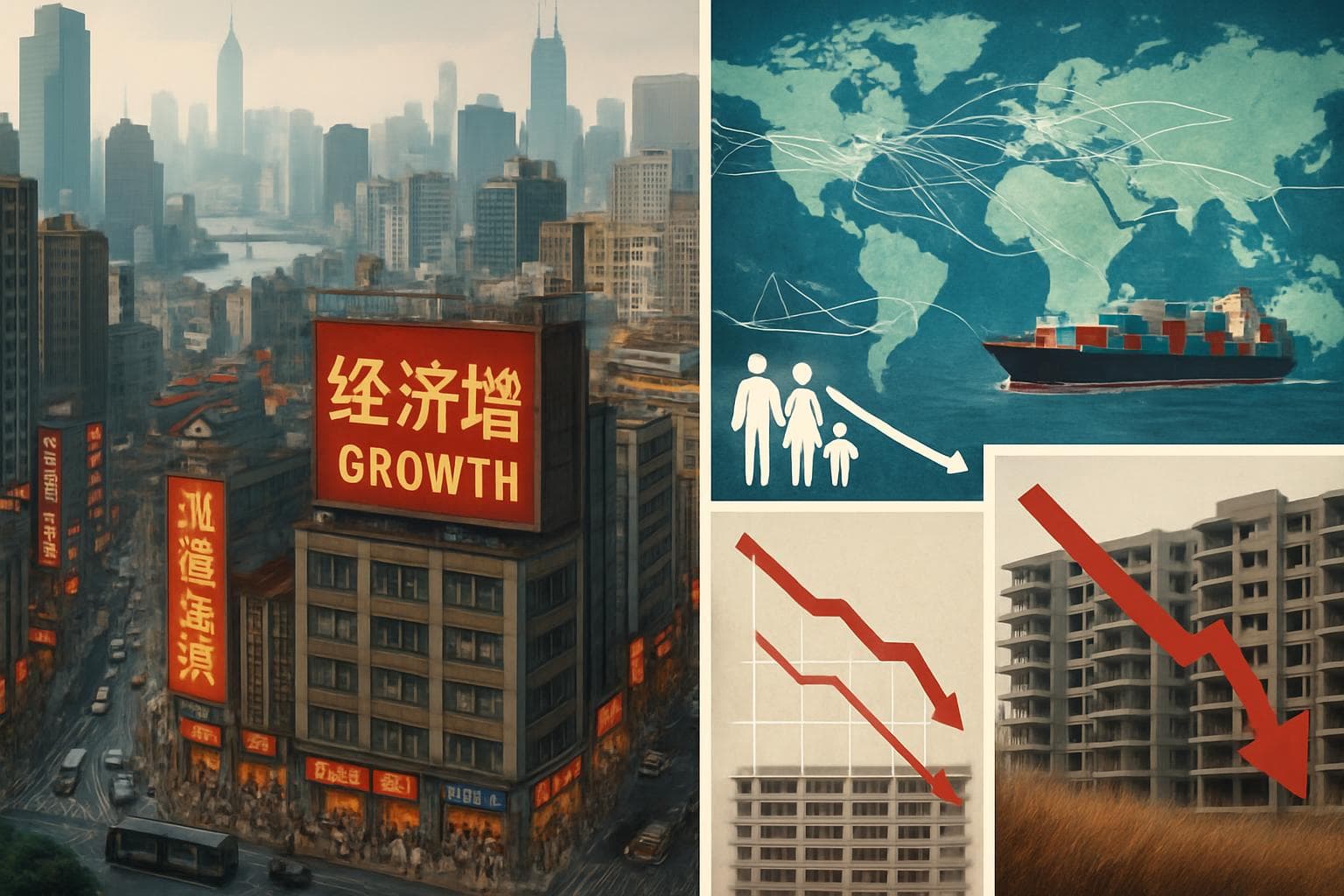
China's economy achieved a 5% growth rate in 2025, aligning with Beijing's official target, despite facing significant hurdles such as US tariffs and a prolonged property market crisis. The National Bureau of Statistics reported this growth, which was bolstered by a record trade surplus of $1.19 trillion, largely due to increased exports to markets outside the United States.
Trade Surplus and Export Strategy
The trade surplus, the largest in China's history, was a key driver of economic growth. By redirecting exports to alternative markets, China managed to mitigate the impact of US tariffs, which were less severe than initially anticipated. Alicia Garcia-Herrero, chief economist for Asia Pacific at Natixis, noted that while this strategy supports growth, it may not be sustainable long-term due to potential profit erosion.
Domestic Economic Challenges
Despite the headline growth figures, China's economy faces significant internal challenges. The final quarter of 2025 saw growth slow to 4.5%, the weakest since late 2022. Analysts from Capital Economics suggest that the official growth figures might be overstated by 1.5 percentage points, pointing to weak domestic consumption and investment.
The property market remains a critical concern, with home prices having fallen over 20% since their peak in 2021. This decline has dampened consumer confidence and exacerbated a looming debt crisis within the sector. Luke Yeaman, chief economist at the Commonwealth Bank of Australia, warned that these structural issues could hinder China's economic prospects for years.
Demographic and Consumption Concerns
Compounding these economic challenges is China's demographic crisis. The country recorded its lowest birth rate since 1949, with only 7.9 million births in 2025. The population decreased by 3.4 million, continuing a four-year decline. This demographic shift threatens to weaken demand for housing and consumer goods, further straining the economy.
The Chinese government has attempted to boost domestic consumption, which remains below 40% of economic output, by offering subsidies for household goods. However, experts like those at Moody's Analytics caution that these measures may not be sufficient to stabilize growth.
WHAT THIS MIGHT MEAN
Looking ahead, China's economic resilience will be tested by its reliance on exports amid global trade tensions. The potential for increased US tariffs and geopolitical uncertainties could impact future growth. Domestically, addressing the property market crisis and boosting consumer spending will be crucial for sustainable economic development.
The demographic challenges pose a long-term threat, as a shrinking population could lead to labor shortages and reduced economic dynamism. Experts suggest that without significant policy interventions to encourage higher birth rates and increase domestic consumption, China may struggle to maintain its growth trajectory.
As China navigates these complex issues, its ability to adapt and implement effective economic policies will be critical in shaping its future economic landscape.
Related Articles
China Sets Lowest GDP Growth Target in Decades Amid Economic Challenges

UK Faces Dilemmas Amid Iran Conflict and China Spying Allegations
Trump's New Tariff Strategy Sparks Global Trade Uncertainty

Cuba Faces Widespread Blackout Amid Deepening Fuel Crisis

Google Faces Legal Battle Over AI Chatbot's Alleged Role in Tragic Death

Labour MP's Husband Arrested in UK-China Espionage Probe
China's Economy Meets Growth Target Amid Trade Surplus and Domestic Struggles
In This Article
 Daniel Rivera| Published
 HIGHLIGHTS
- China's economy grew by 5% in 2025, meeting its official target, despite US tariffs and a property market crisis.
- The country recorded a record trade surplus of $1.19 trillion, driven by exports to non-US markets.
- Economic growth slowed to 4.5% in the last quarter of 2025, highlighting domestic challenges.
- Analysts question the accuracy of China's growth figures, suggesting they may be overstated by 1.5 percentage points.
- China's declining birth rate and population drop pose long-term economic challenges.
China's economy achieved a 5% growth rate in 2025, aligning with Beijing's official target, despite facing significant hurdles such as US tariffs and a prolonged property market crisis. The National Bureau of Statistics reported this growth, which was bolstered by a record trade surplus of $1.19 trillion, largely due to increased exports to markets outside the United States.
Trade Surplus and Export Strategy
The trade surplus, the largest in China's history, was a key driver of economic growth. By redirecting exports to alternative markets, China managed to mitigate the impact of US tariffs, which were less severe than initially anticipated. Alicia Garcia-Herrero, chief economist for Asia Pacific at Natixis, noted that while this strategy supports growth, it may not be sustainable long-term due to potential profit erosion.
Domestic Economic Challenges
Despite the headline growth figures, China's economy faces significant internal challenges. The final quarter of 2025 saw growth slow to 4.5%, the weakest since late 2022. Analysts from Capital Economics suggest that the official growth figures might be overstated by 1.5 percentage points, pointing to weak domestic consumption and investment.
The property market remains a critical concern, with home prices having fallen over 20% since their peak in 2021. This decline has dampened consumer confidence and exacerbated a looming debt crisis within the sector. Luke Yeaman, chief economist at the Commonwealth Bank of Australia, warned that these structural issues could hinder China's economic prospects for years.
Demographic and Consumption Concerns
Compounding these economic challenges is China's demographic crisis. The country recorded its lowest birth rate since 1949, with only 7.9 million births in 2025. The population decreased by 3.4 million, continuing a four-year decline. This demographic shift threatens to weaken demand for housing and consumer goods, further straining the economy.
The Chinese government has attempted to boost domestic consumption, which remains below 40% of economic output, by offering subsidies for household goods. However, experts like those at Moody's Analytics caution that these measures may not be sufficient to stabilize growth.
WHAT THIS MIGHT MEAN
Looking ahead, China's economic resilience will be tested by its reliance on exports amid global trade tensions. The potential for increased US tariffs and geopolitical uncertainties could impact future growth. Domestically, addressing the property market crisis and boosting consumer spending will be crucial for sustainable economic development.
The demographic challenges pose a long-term threat, as a shrinking population could lead to labor shortages and reduced economic dynamism. Experts suggest that without significant policy interventions to encourage higher birth rates and increase domestic consumption, China may struggle to maintain its growth trajectory.
As China navigates these complex issues, its ability to adapt and implement effective economic policies will be critical in shaping its future economic landscape.
Related Articles
China Sets Lowest GDP Growth Target in Decades Amid Economic Challenges
UK Faces Dilemmas Amid Iran Conflict and China Spying Allegations
Trump's New Tariff Strategy Sparks Global Trade Uncertainty
Cuba Faces Widespread Blackout Amid Deepening Fuel Crisis
Google Faces Legal Battle Over AI Chatbot's Alleged Role in Tragic Death
Labour MP's Husband Arrested in UK-China Espionage Probe