
Clintons Defy Subpoenas in Epstein Probe, Risk Contempt Charges
In This Article
HIGHLIGHTS
- Bill Clinton faces potential contempt of Congress charges after failing to testify in the Epstein investigation.
- The House Oversight Committee, led by James Comer, issued subpoenas to both Clintons, which they have deemed "unenforceable."
- The Clintons argue the subpoenas lack a valid legislative purpose and infringe on the separation of powers.
- Bill Clinton's historical association with Epstein includes multiple flights on Epstein's private plane in the early 2000s.
- The committee's investigation has been criticized for its limited scope and perceived political motivations.
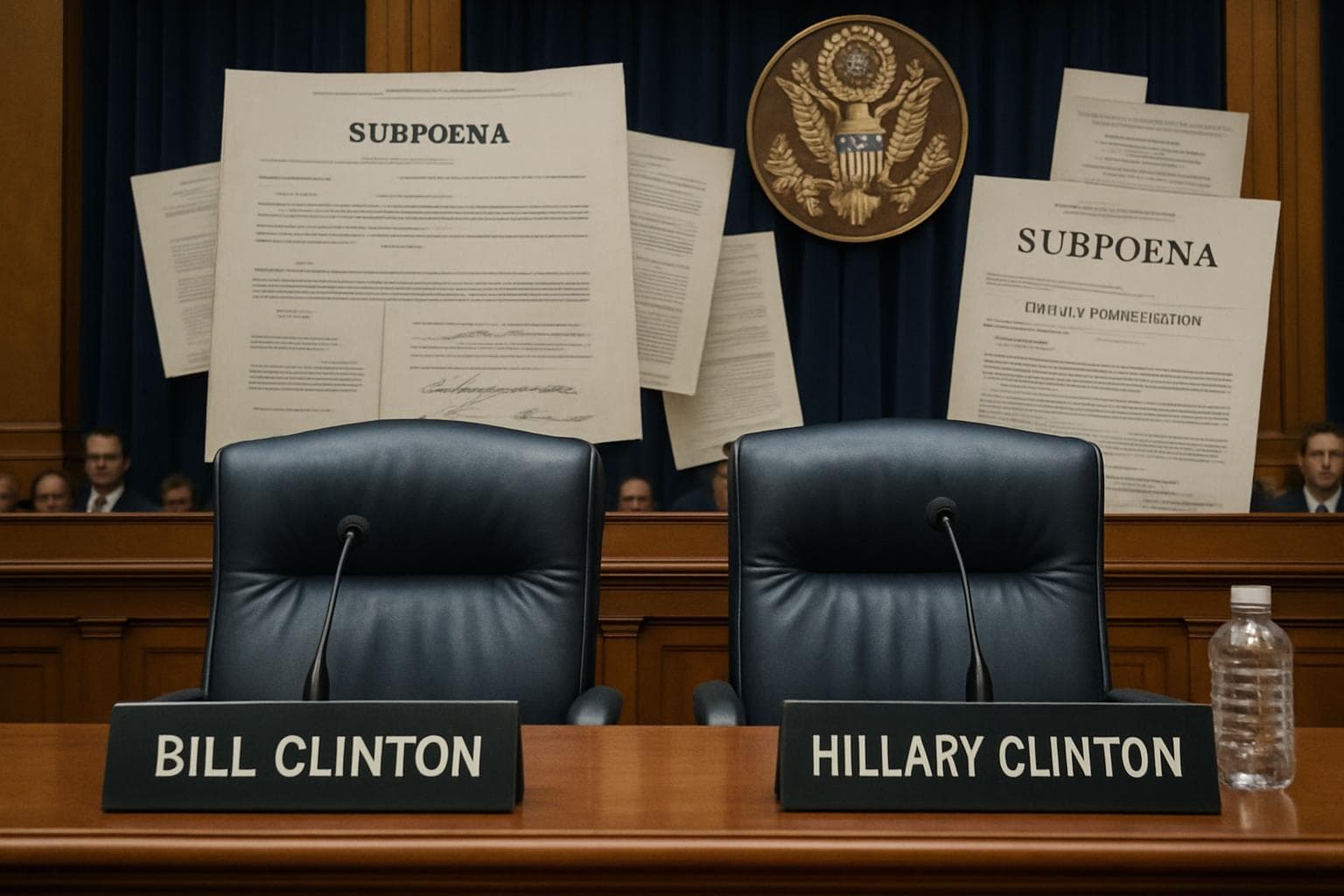
In a dramatic escalation of political tensions, former President Bill Clinton may face contempt of Congress charges after failing to comply with a subpoena to testify before the House Oversight Committee regarding his ties to the late financier Jeffrey Epstein. The committee, chaired by Republican James Comer, had also subpoenaed former Secretary of State Hillary Clinton, who similarly refused to testify.
The subpoenas, issued in August, are part of a broader investigation into the government's handling of Epstein, a convicted sex offender who died by suicide in 2019 while awaiting trial. The Clintons' legal team has dismissed the subpoenas as "unenforceable," arguing they lack a valid legislative purpose and represent an unprecedented infringement on the separation of powers. They further contend that the subpoenas are politically motivated, aimed at embarrassing the Clintons as directed by former President Donald Trump.
Despite the Clintons' refusal to testify, the committee maintains that the subpoenas were issued in a bipartisan manner. "No one's accusing Bill Clinton of any wrongdoing," Comer stated, emphasizing the committee's intent to gather information rather than levy accusations. Nonetheless, the Clintons have criticized the investigation's limited scope, noting that only two individuals have been interviewed so far.
Bill Clinton's historical connections to Epstein have been scrutinized, with records indicating he flew on Epstein's private jet multiple times in the early 2000s. However, Clinton has denied any knowledge of Epstein's criminal activities, and survivors of Epstein's abuse have not accused him of wrongdoing. The Clintons' spokesperson reiterated that their interactions with Epstein ceased before his criminal activities became public.
The committee's authority to enforce subpoenas includes detaining individuals until compliance, sending a contempt certification to the Justice Department, or seeking court intervention. As the situation unfolds, the political and legal ramifications continue to reverberate through Washington.
WHAT THIS MIGHT MEAN
The potential contempt charges against Bill Clinton could lead to a protracted legal battle, testing the limits of congressional subpoena power. If pursued, the case may set a precedent for future congressional investigations involving high-profile figures. Politically, the situation could further polarize the already divided Congress, with Republicans and Democrats clashing over the investigation's legitimacy and motivations.
Experts suggest that the Clintons' refusal to testify may embolden other political figures to resist congressional subpoenas, potentially complicating future oversight efforts. As the investigation proceeds, the focus may shift to the broader implications for congressional authority and the balance of power between branches of government.
Related Articles
Congress Subpoenas Attorney General Bondi in Epstein Investigation

Armed Intruder Fatally Shot at Mar-a-Lago by Secret Service

Tech Giants Pledge to Cover AI Data Center Energy Costs Amid Rising Electricity Concerns

Cuba Faces Widespread Blackout Amid Deepening Fuel Crisis

UK Faces Dilemmas Amid Iran Conflict and China Spying Allegations
Senate Blocks Resolution to Limit Trump's Military Actions in Iran
Clintons Defy Subpoenas in Epstein Probe, Risk Contempt Charges
In This Article
 Sofia Romano| Published
 HIGHLIGHTS
- Bill Clinton faces potential contempt of Congress charges after failing to testify in the Epstein investigation.
- The House Oversight Committee, led by James Comer, issued subpoenas to both Clintons, which they have deemed "unenforceable."
- The Clintons argue the subpoenas lack a valid legislative purpose and infringe on the separation of powers.
- Bill Clinton's historical association with Epstein includes multiple flights on Epstein's private plane in the early 2000s.
- The committee's investigation has been criticized for its limited scope and perceived political motivations.
In a dramatic escalation of political tensions, former President Bill Clinton may face contempt of Congress charges after failing to comply with a subpoena to testify before the House Oversight Committee regarding his ties to the late financier Jeffrey Epstein. The committee, chaired by Republican James Comer, had also subpoenaed former Secretary of State Hillary Clinton, who similarly refused to testify.
The subpoenas, issued in August, are part of a broader investigation into the government's handling of Epstein, a convicted sex offender who died by suicide in 2019 while awaiting trial. The Clintons' legal team has dismissed the subpoenas as "unenforceable," arguing they lack a valid legislative purpose and represent an unprecedented infringement on the separation of powers. They further contend that the subpoenas are politically motivated, aimed at embarrassing the Clintons as directed by former President Donald Trump.
Despite the Clintons' refusal to testify, the committee maintains that the subpoenas were issued in a bipartisan manner. "No one's accusing Bill Clinton of any wrongdoing," Comer stated, emphasizing the committee's intent to gather information rather than levy accusations. Nonetheless, the Clintons have criticized the investigation's limited scope, noting that only two individuals have been interviewed so far.
Bill Clinton's historical connections to Epstein have been scrutinized, with records indicating he flew on Epstein's private jet multiple times in the early 2000s. However, Clinton has denied any knowledge of Epstein's criminal activities, and survivors of Epstein's abuse have not accused him of wrongdoing. The Clintons' spokesperson reiterated that their interactions with Epstein ceased before his criminal activities became public.
The committee's authority to enforce subpoenas includes detaining individuals until compliance, sending a contempt certification to the Justice Department, or seeking court intervention. As the situation unfolds, the political and legal ramifications continue to reverberate through Washington.
WHAT THIS MIGHT MEAN
The potential contempt charges against Bill Clinton could lead to a protracted legal battle, testing the limits of congressional subpoena power. If pursued, the case may set a precedent for future congressional investigations involving high-profile figures. Politically, the situation could further polarize the already divided Congress, with Republicans and Democrats clashing over the investigation's legitimacy and motivations.
Experts suggest that the Clintons' refusal to testify may embolden other political figures to resist congressional subpoenas, potentially complicating future oversight efforts. As the investigation proceeds, the focus may shift to the broader implications for congressional authority and the balance of power between branches of government.
Related Articles
Congress Subpoenas Attorney General Bondi in Epstein Investigation
Armed Intruder Fatally Shot at Mar-a-Lago by Secret Service
Tech Giants Pledge to Cover AI Data Center Energy Costs Amid Rising Electricity Concerns
Cuba Faces Widespread Blackout Amid Deepening Fuel Crisis
UK Faces Dilemmas Amid Iran Conflict and China Spying Allegations
Senate Blocks Resolution to Limit Trump's Military Actions in Iran