
Coca-Cola Faces Ingredient Debate Amid Trump's Cane Sugar Claims
In This Article
HIGHLIGHTS
- President Trump claims Coca-Cola will switch from corn syrup to cane sugar in its US products, though the company has not confirmed this change.
- Coca-Cola appreciates Trump's enthusiasm but defends corn syrup, citing its safety and similar caloric content to cane sugar.
- Health Secretary Robert F. Kennedy Jr. supports reducing corn syrup use, linking it to health issues, as part of his "Make America Healthy Again" initiative.
- The Corn Refiners Association warns that a switch to cane sugar could harm American agriculture and manufacturing jobs.
- Coca-Cola's potential ingredient change could impact the $285 billion US soft drinks market, affecting trade and consumer preferences.
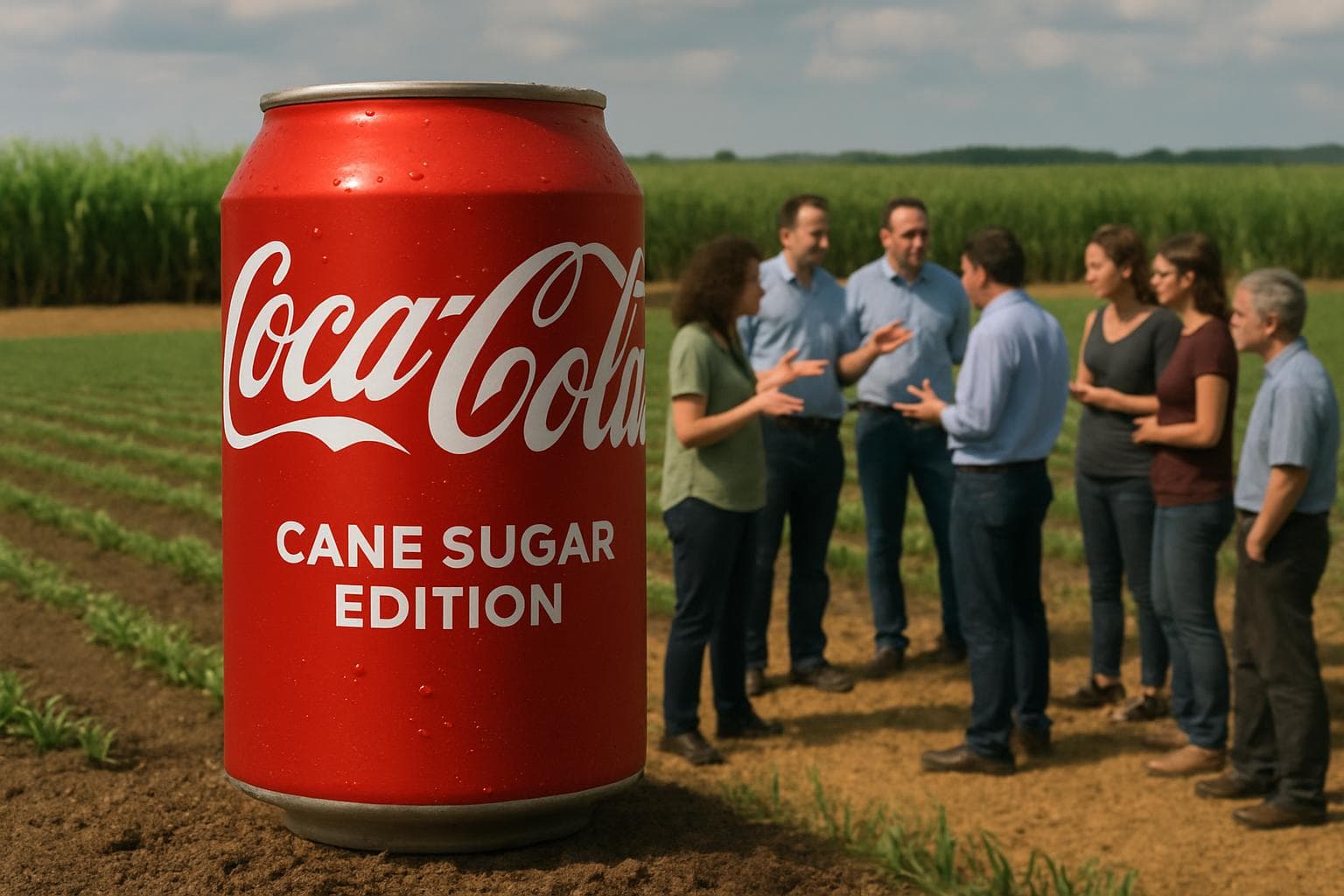
President Donald Trump has stirred a new debate in the US soft drinks market by announcing that Coca-Cola plans to replace high fructose corn syrup with cane sugar in its American products. While Coca-Cola has not confirmed this change, the company has acknowledged Trump's enthusiasm and hinted at upcoming innovations in its product range.
Trump's Announcement and Coca-Cola's Response
On social media, Trump expressed gratitude to Coca-Cola for agreeing to use "REAL Cane Sugar" in its US beverages, a move he described as "just better." However, Coca-Cola's response was measured, appreciating Trump's interest but stopping short of confirming any recipe change. The company emphasized its commitment to innovation and hinted at future product developments.
Health and Economic Implications
The potential shift from corn syrup to cane sugar aligns with Health Secretary Robert F. Kennedy Jr.'s "Make America Healthy Again" campaign, which advocates for the removal of certain ingredients linked to health issues. Kennedy has been vocal about the health risks associated with high sugar consumption and plans to update dietary guidelines.
However, the Corn Refiners Association has raised concerns about the economic impact of such a change. John Bode, the association's president, warned that replacing corn syrup with cane sugar could lead to job losses in food manufacturing, reduced farm income, and increased sugar imports, without offering any nutritional benefits.
Market and Trade Considerations
Coca-Cola's potential ingredient change could have significant implications for the $285 billion US soft drinks market. The use of cane sugar, common in Coca-Cola products sold in countries like Mexico and the UK, could alter trade dynamics and consumer preferences. In the US, "Mexican Coke," made with cane sugar, is already sold at a premium, highlighting the potential market shift.
WHAT THIS MIGHT MEAN
If Coca-Cola proceeds with the ingredient change, it could reshape the US soft drinks market, influencing consumer choices and trade policies. The move might also intensify the debate over sugar consumption and its health impacts, potentially leading to stricter dietary guidelines. Economically, the shift could challenge domestic corn syrup producers, prompting discussions on agricultural subsidies and trade tariffs. As the situation unfolds, stakeholders will closely monitor Coca-Cola's next steps and their broader implications.
Related Articles

Breakthrough Drug Offers Hope for Children with Severe Epilepsy

Greenland Politely Declines Trump's Hospital Ship Offer Amid Healthcare Debate

Tech Giants Pledge to Cover AI Data Center Energy Costs Amid Rising Electricity Concerns

Congress Subpoenas Attorney General Bondi in Epstein Investigation
Cuba Faces Widespread Blackout Amid Deepening Fuel Crisis

UK Faces Dilemmas Amid Iran Conflict and China Spying Allegations
Coca-Cola Faces Ingredient Debate Amid Trump's Cane Sugar Claims
In This Article
 Maya Singh| Published
 HIGHLIGHTS
- President Trump claims Coca-Cola will switch from corn syrup to cane sugar in its US products, though the company has not confirmed this change.
- Coca-Cola appreciates Trump's enthusiasm but defends corn syrup, citing its safety and similar caloric content to cane sugar.
- Health Secretary Robert F. Kennedy Jr. supports reducing corn syrup use, linking it to health issues, as part of his "Make America Healthy Again" initiative.
- The Corn Refiners Association warns that a switch to cane sugar could harm American agriculture and manufacturing jobs.
- Coca-Cola's potential ingredient change could impact the $285 billion US soft drinks market, affecting trade and consumer preferences.
President Donald Trump has stirred a new debate in the US soft drinks market by announcing that Coca-Cola plans to replace high fructose corn syrup with cane sugar in its American products. While Coca-Cola has not confirmed this change, the company has acknowledged Trump's enthusiasm and hinted at upcoming innovations in its product range.
Trump's Announcement and Coca-Cola's Response
On social media, Trump expressed gratitude to Coca-Cola for agreeing to use "REAL Cane Sugar" in its US beverages, a move he described as "just better." However, Coca-Cola's response was measured, appreciating Trump's interest but stopping short of confirming any recipe change. The company emphasized its commitment to innovation and hinted at future product developments.
Health and Economic Implications
The potential shift from corn syrup to cane sugar aligns with Health Secretary Robert F. Kennedy Jr.'s "Make America Healthy Again" campaign, which advocates for the removal of certain ingredients linked to health issues. Kennedy has been vocal about the health risks associated with high sugar consumption and plans to update dietary guidelines.
However, the Corn Refiners Association has raised concerns about the economic impact of such a change. John Bode, the association's president, warned that replacing corn syrup with cane sugar could lead to job losses in food manufacturing, reduced farm income, and increased sugar imports, without offering any nutritional benefits.
Market and Trade Considerations
Coca-Cola's potential ingredient change could have significant implications for the $285 billion US soft drinks market. The use of cane sugar, common in Coca-Cola products sold in countries like Mexico and the UK, could alter trade dynamics and consumer preferences. In the US, "Mexican Coke," made with cane sugar, is already sold at a premium, highlighting the potential market shift.
WHAT THIS MIGHT MEAN
If Coca-Cola proceeds with the ingredient change, it could reshape the US soft drinks market, influencing consumer choices and trade policies. The move might also intensify the debate over sugar consumption and its health impacts, potentially leading to stricter dietary guidelines. Economically, the shift could challenge domestic corn syrup producers, prompting discussions on agricultural subsidies and trade tariffs. As the situation unfolds, stakeholders will closely monitor Coca-Cola's next steps and their broader implications.
Related Articles
Breakthrough Drug Offers Hope for Children with Severe Epilepsy
Greenland Politely Declines Trump's Hospital Ship Offer Amid Healthcare Debate
Tech Giants Pledge to Cover AI Data Center Energy Costs Amid Rising Electricity Concerns
Congress Subpoenas Attorney General Bondi in Epstein Investigation
Cuba Faces Widespread Blackout Amid Deepening Fuel Crisis
UK Faces Dilemmas Amid Iran Conflict and China Spying Allegations