
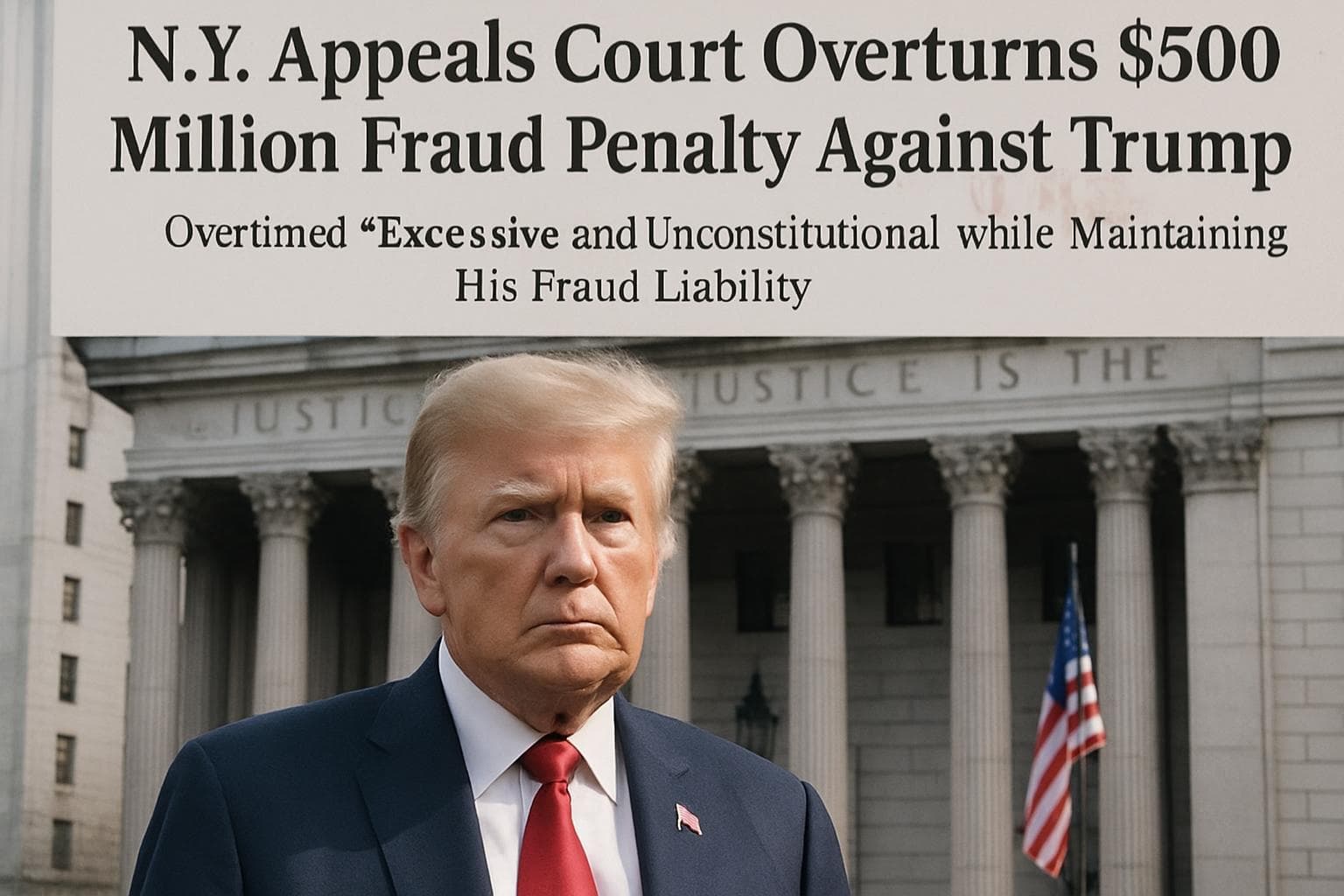
Appeals Court Overturns $500 Million Fraud Penalty Against Trump
In This Article
HIGHLIGHTS
- A New York appeals court overturned a $500 million civil fraud penalty against Donald Trump, citing constitutional concerns over excessive fines.
- The court upheld Trump's liability for fraud, maintaining non-monetary penalties, including a ban on serving as a company director for three years.
- The New York Attorney General's Office plans to appeal the decision on the fine to the state's highest court.
- Trump celebrated the ruling as a "total victory," while the Attorney General's Office emphasized the court's affirmation of Trump's fraud liability.
- The decision revealed divisions among the judges, with some suggesting the need for a new trial of limited scope.
In a significant legal development, a New York appeals court has overturned a $500 million civil fraud penalty against former President Donald Trump. The decision, announced on Thursday, stems from a lawsuit accusing Trump of inflating the value of his properties to secure favorable loans. The court found the penalty excessive and potentially unconstitutional, though it upheld Trump's liability for fraud.
Court's Rationale and Legal Context
The ruling from the New York Supreme Court's Appellate Division was not unanimous, reflecting a complex legal landscape. Judge Arthur Engoron initially imposed a $355 million penalty on Trump, which grew to over $500 million with interest. However, the appeals court deemed this fine a violation of the Eighth Amendment, which protects against excessive fines. Judges Dianne T. Renwick and Peter H. Moulton noted that while the injunctive relief was appropriate, the financial penalty was disproportionate.
Reactions from Trump and Legal Parties
Trump hailed the decision as a "total victory" on his social media platform, Truth Social, criticizing the lawsuit as a "Political Witch Hunt." Meanwhile, the New York Attorney General's Office, led by Letitia James, plans to appeal the decision on the fine to the state's highest court. The office emphasized that the court's ruling affirmed Trump's fraud liability, maintaining non-monetary penalties such as a three-year ban on Trump serving as a company director.
Judicial Divisions and Future Legal Steps
The 323-page ruling exposed divisions among the five-judge panel. While some judges supported the lawsuit's legitimacy, others called for a new trial with a narrower focus. Despite these disagreements, the decision to overturn the financial penalty was unanimous, aimed at ensuring finality in the case.
WHAT THIS MIGHT MEAN
The appeals court's decision to overturn the financial penalty against Trump could have significant legal and political implications. The New York Attorney General's planned appeal to the state's highest court may prolong the legal battle, potentially impacting Trump's business operations and political aspirations. Legal experts suggest that the case could set a precedent for how courts handle penalties in high-profile fraud cases, particularly concerning constitutional protections against excessive fines. As the legal proceedings continue, the outcome may influence public perception of Trump's business practices and his ongoing political narrative.
Related Articles
Congress Subpoenas Attorney General Bondi in Epstein Investigation
Senate Blocks Resolution to Limit Trump's Military Actions in Iran

Greenland Politely Declines Trump's Hospital Ship Offer Amid Healthcare Debate

Tech Giants Pledge to Cover AI Data Center Energy Costs Amid Rising Electricity Concerns

Cuba Faces Widespread Blackout Amid Deepening Fuel Crisis

UK Faces Dilemmas Amid Iran Conflict and China Spying Allegations
Appeals Court Overturns $500 Million Fraud Penalty Against Trump
In This Article
 Alex Carter| Published
 HIGHLIGHTS
- A New York appeals court overturned a $500 million civil fraud penalty against Donald Trump, citing constitutional concerns over excessive fines.
- The court upheld Trump's liability for fraud, maintaining non-monetary penalties, including a ban on serving as a company director for three years.
- The New York Attorney General's Office plans to appeal the decision on the fine to the state's highest court.
- Trump celebrated the ruling as a "total victory," while the Attorney General's Office emphasized the court's affirmation of Trump's fraud liability.
- The decision revealed divisions among the judges, with some suggesting the need for a new trial of limited scope.
In a significant legal development, a New York appeals court has overturned a $500 million civil fraud penalty against former President Donald Trump. The decision, announced on Thursday, stems from a lawsuit accusing Trump of inflating the value of his properties to secure favorable loans. The court found the penalty excessive and potentially unconstitutional, though it upheld Trump's liability for fraud.
Court's Rationale and Legal Context
The ruling from the New York Supreme Court's Appellate Division was not unanimous, reflecting a complex legal landscape. Judge Arthur Engoron initially imposed a $355 million penalty on Trump, which grew to over $500 million with interest. However, the appeals court deemed this fine a violation of the Eighth Amendment, which protects against excessive fines. Judges Dianne T. Renwick and Peter H. Moulton noted that while the injunctive relief was appropriate, the financial penalty was disproportionate.
Reactions from Trump and Legal Parties
Trump hailed the decision as a "total victory" on his social media platform, Truth Social, criticizing the lawsuit as a "Political Witch Hunt." Meanwhile, the New York Attorney General's Office, led by Letitia James, plans to appeal the decision on the fine to the state's highest court. The office emphasized that the court's ruling affirmed Trump's fraud liability, maintaining non-monetary penalties such as a three-year ban on Trump serving as a company director.
Judicial Divisions and Future Legal Steps
The 323-page ruling exposed divisions among the five-judge panel. While some judges supported the lawsuit's legitimacy, others called for a new trial with a narrower focus. Despite these disagreements, the decision to overturn the financial penalty was unanimous, aimed at ensuring finality in the case.
WHAT THIS MIGHT MEAN
The appeals court's decision to overturn the financial penalty against Trump could have significant legal and political implications. The New York Attorney General's planned appeal to the state's highest court may prolong the legal battle, potentially impacting Trump's business operations and political aspirations. Legal experts suggest that the case could set a precedent for how courts handle penalties in high-profile fraud cases, particularly concerning constitutional protections against excessive fines. As the legal proceedings continue, the outcome may influence public perception of Trump's business practices and his ongoing political narrative.
Related Articles
Congress Subpoenas Attorney General Bondi in Epstein Investigation
Senate Blocks Resolution to Limit Trump's Military Actions in Iran
Greenland Politely Declines Trump's Hospital Ship Offer Amid Healthcare Debate
Tech Giants Pledge to Cover AI Data Center Energy Costs Amid Rising Electricity Concerns
Cuba Faces Widespread Blackout Amid Deepening Fuel Crisis
UK Faces Dilemmas Amid Iran Conflict and China Spying Allegations